

More news on this day
Dozens of cancellations and hundreds of delays at five of Europe’s busiest airports left passengers stranded and itineraries in disarray on Sunday, as disruption at Copenhagen, Reykjavik Keflavik, Paris Charles de Gaulle, London Heathrow and Amsterdam Schiphol rippled through air travel across the continent.
Get the latest news straight to your inbox!
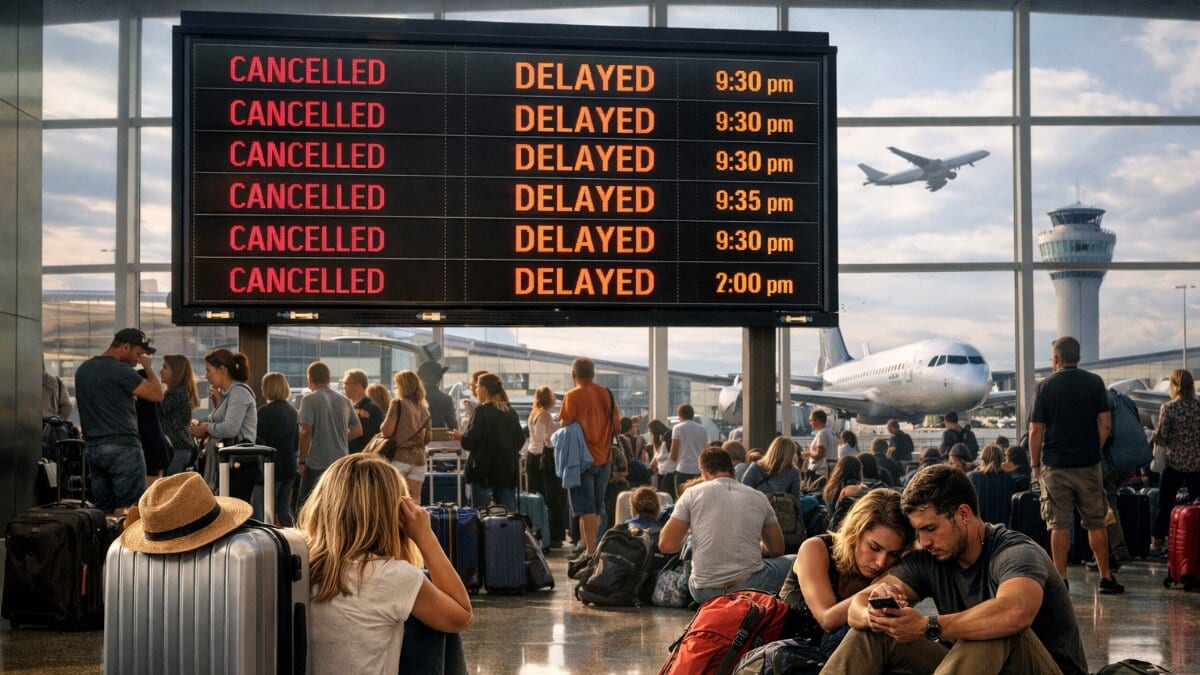
Image by Travel And Tour World
Wave of Cancellations and Delays Across Key Hubs
Operational data compiled from airline trackers and airport information screens on Sunday indicated that at least 33 flights were cancelled and around 517 were delayed across the five hubs. While the absolute figures are modest by the standards of major disruption days, the timing and concentration at leading transfer airports meant the impact was felt far beyond the terminals themselves.
Publicly available information shows that London Heathrow, Paris Charles de Gaulle and Amsterdam Schiphol, which handle a high volume of connecting passengers, accounted for the bulk of delayed services. Even relatively small schedule changes can cascade through tightly timed networks, causing missed connections and forcing airlines to rebook passengers on later flights.
At Copenhagen and Keflavik, where traffic volumes are lower than at Heathrow or Schiphol, the effect was nonetheless visible in crowded departure halls, stretched customer-service desks and rolling updates to departure boards. Reports from passengers on social media and travel forums described long lines for rebooking and uncertainty over onward journeys.
The disruption followed a winter and early spring in which European aviation has already faced several bouts of severe weather, staffing constraints and earlier episodes of large-scale cancellations at Schiphol and other hubs. Although Sunday’s figures were smaller than some of those earlier shocks, they underscored the fragility of the system during peak travel periods.
Local Issues Trigger Continental Knock-On Effects
Initial assessments suggest that a mix of local factors at each airport contributed to the combined disruption. Weather-related constraints, ground-operations bottlenecks and air-traffic flow restrictions in crowded airspace all played a role, according to publicly available operational summaries and media coverage from across the region.
At Amsterdam Schiphol and London Heathrow, dense schedules and limited spare runway capacity meant that relatively short-lived slowdowns translated quickly into stacked departure queues and arrival holding patterns. Once peak-hour banks of flights began to run behind schedule, airlines had few opportunities to recover lost time before afternoon and evening services.
In Paris, reports indicate that air-traffic control constraints and congestion in sectors above northern France and the Low Countries forced some carriers to lengthen routings or adjust departure times. Even when flights were able to depart, extended taxi times and arrival sequencing at busy hubs contributed to further delays.
Reykjavik Keflavik and Copenhagen were affected in part because of their roles as transfer points linking North America and Europe as well as northern and central Europe. Delayed inbound transatlantic services created additional pressure on tightly scheduled onward connections, particularly for passengers headed for secondary cities that may only have one direct flight per day.
Stranded Passengers Face Long Queues and Limited Options
For travellers caught in the middle of the disruption, the most immediate impact was visible in long queues at transfer and ticket desks, scarcity of same-day alternatives and uncertainty around accommodation and meal support. Accounts posted by passengers described scrambling to rebook seats, waiting for hours in line and, in some cases, sleeping in terminal seating when hotel options near the airport became scarce.
At major hubs such as Heathrow, Charles de Gaulle and Schiphol, the concentration of cancellations in specific time windows left some travellers with few realistic rerouting options. Popular evening services to long-haul destinations were reported as fully booked, leaving stranded passengers to accept departures the following day or reroutes via less direct paths.
Families and travellers with time-sensitive plans, including cruises, tours and events, appeared particularly exposed. With aircraft and crew operating close to their duty limits, even modest schedule changes could push flights beyond permitted operating windows, resulting in cancellations that further squeezed available capacity.
Low-cost and network carriers alike were affected, although the impact varied depending on fleet size and route structure. Airlines with larger European networks had more flexibility to reroute passengers via alternative hubs, while smaller operators often had to rely on a limited number of replacement options.
Passenger Rights and Compensation Under EU Rules
The disruption once again drew attention to passenger protections under European regulations. Under EU Regulation 261/2004, travellers departing from EU and many associated airports may be entitled to care, rerouting and, in some cases, financial compensation when flights are significantly delayed or cancelled for reasons within an airline’s control.
Public guidance explains that airlines are generally required to provide meals, refreshments and access to communication when delays reach certain thresholds, as well as hotel accommodation if an overnight stay becomes necessary. In addition, fixed-sum compensation can be due for cancellations or long delays, depending on flight distance and the extent of the delay, provided the cause is not classified as extraordinary.
However, determining eligibility can be complex. Weather, air-traffic control restrictions and certain safety-related issues are often treated as extraordinary circumstances, which can exempt carriers from paying financial compensation even though they must still provide basic care. Operational causes such as crew rostering issues or technical problems unrelated to extraordinary events may fall on the other side of the line.
Consumer advocates routinely advise passengers to keep receipts for any additional expenses incurred during disruption and to submit claims directly to airlines, rather than relying solely on third-party intermediaries. Travel insurance can also play an important role, especially when missed connections and additional nights of accommodation are not fully covered by airline obligations.
Ongoing Vulnerability in Europe’s Air Travel Network
Sunday’s pattern of scattered cancellations and widespread delays across multiple hubs served as a reminder that Europe’s air travel network remains vulnerable to relatively small shocks. High load factors, constrained runway capacity at major airports and tight crew scheduling leave limited margin for recovery when things go wrong.
Industry analyses published in recent months have pointed to structural pressures, including persistent staffing challenges in ground handling and air-traffic management, as well as the continued integration of new flight paths and environmental constraints. These underlying issues can magnify the effect of localised weather or technical problems on any given day.
For travellers, the episode reinforces the importance of monitoring flight status closely in the 24 hours before departure, allowing extra time for connections where possible and considering flexible booking options. Many airlines have expanded the ability for passengers to self-rebook via apps and websites during disruptions, though non-technical travellers and those on complex itineraries may still need in-person assistance at the airport.
As the busy spring and summer travel season approaches, Europe’s main hubs will likely face further tests of their resilience. While Sunday’s disruption fell well short of the worst recent episodes, it showed how even a few dozen cancellations and several hundred delayed flights can quickly translate into a difficult travel day for thousands of people spread across the continent.