

More news on this day
A wave of flight cancellations and lengthy delays involving Batik Air, China Eastern, Malindo Air and other regional carriers has disrupted travel across Asia, with reports indicating 182 flights affected at major gateways including Jakarta, Kuala Lumpur, Beijing and several South Asian hubs.
Get the latest news straight to your inbox!
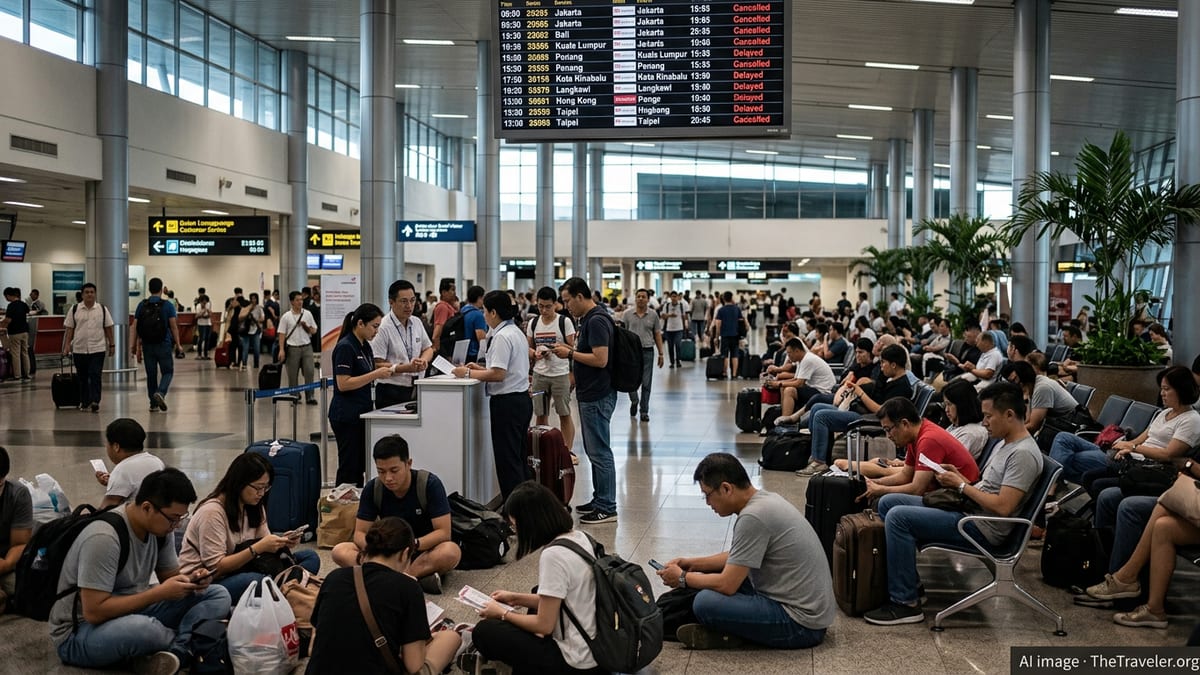
Major Asian Hubs Grapple With Operational Turbulence
Airports serving Jakarta, Kuala Lumpur and Beijing, along with key gateways in India and Nepal, have experienced a sharp rise in schedule disruptions, leaving passengers facing overnight waits, missed connections and unplanned stopovers. Publicly available flight tracking data and regional media coverage indicate that at least 182 flights have been cancelled or significantly delayed in recent days, affecting both domestic and international routes.
Jakarta’s Soekarno Hatta International Airport and Kuala Lumpur International Airport have been among the hardest hit, as they serve as primary transfer points between Southeast Asia, China and the Indian subcontinent. Disruptions at these hubs ripple quickly through airline networks, making it difficult for carriers to reassign aircraft and crews and compounding delays for subsequent departures.
In Beijing, congestion from late arriving aircraft and changing traffic flows between China and Southeast Asia has added to the strain. Passengers connecting onward to South Asia have reported extended layovers and multiple rebookings as airlines attempt to consolidate lightly loaded or delayed flights into fewer departures.
In India and Nepal, where many routes depend on narrow scheduling margins and limited spare aircraft, the knock-on effects have been particularly visible. Travellers on services linking Delhi, Mumbai and Kathmandu with Southeast Asian cities have described delays stretching well beyond the original departure time, sometimes with little advance warning.
Batik Air, Malindo and China Eastern Under Scrutiny
Among the airlines drawing attention are Batik Air and Malindo Air, which share common ownership and operate dense schedules between Indonesia, Malaysia and wider Asia. Passenger accounts compiled on travel forums in recent months describe repeated re-timings, late departures and, in some cases, last minute cancellations on routes connecting Jakarta and Kuala Lumpur with destinations in India and China.
Operational statistics published by independent aviation data providers show that Batik Air and Malindo Air have both faced measurable punctuality challenges on high traffic corridors such as Jakarta to Kuala Lumpur. These figures point to elevated cancellation and delay rates on certain city pairs, suggesting that even small disruptions can quickly cascade when aircraft are tightly scheduled throughout the day.
China Eastern has also featured prominently in regional coverage of the current wave of disruptions, particularly on services linking Chinese cities with Southeast Asian hubs. Recent analyses of flight performance and passenger surveys across Asia have consistently placed the carrier among airlines with higher than average delay experiences on some long haul and regional routes.
Other full service and low cost operators in the region, including several based in India, have been drawn into the turmoil as shared airports, airways and connecting traffic spread the operational impact beyond any single airline. Where multiple carriers operate the same routes, one airline’s delay in turning around an aircraft can contribute to airside congestion that slows ground handling and departure sequencing for others.
Weather, Congested Skies and Tight Schedules Drive Disruptions
A combination of seasonal weather patterns, saturated air corridors and tight aircraft utilisation is widely cited in industry analysis as a key driver of the current disruption. Heavy rainfall and shifting wind patterns around equatorial hubs can trigger temporary ground stops or require greater spacing between takeoffs and landings, reducing runway capacity just as peak travel periods build.
Across Asia’s busiest airways, growing demand has pushed many carriers to schedule shorter turnaround times on the ground and back to back rotations for aircraft and crews. This approach increases efficiency in normal conditions but leaves little buffer when a technical inspection takes longer than planned or an inbound flight arrives late. Once early morning operations are delayed, knock-on effects can spread across the day’s remaining departures.
Infrastructure constraints in some South and Southeast Asian airports add further stress. Gate shortages and limited taxiway capacity can force aircraft to wait on remote stands, lengthening boarding and disembarkation times. In combination with stricter air traffic flow management over heavily used routes between China, Southeast Asia and India, these bottlenecks create an environment in which relatively small incidents can result in widespread delays.
Analysts also point to lingering imbalances in aircraft and crew availability following the rapid recovery of air travel demand. Several carriers in the region are still rebuilding fleets and training pipelines that were reduced or paused during the pandemic period, contributing to staffing challenges when irregular operations require extra flying.
Passengers Face Missed Connections and Mounting Costs
For travellers, the immediate impact of the disruptions has been felt in missed long haul connections, additional accommodation costs and rapidly changing itineraries. Reports from travellers moving through Jakarta, Kuala Lumpur and Beijing describe scenes of crowded transfer desks, long queues at airline counters and limited information boards struggling to keep up with schedule changes.
Those relying on tight connections to Europe, the Middle East or North America have been particularly vulnerable. When a regional feeder flight on a carrier such as Batik Air, Malindo or China Eastern arrives late into a hub, onward departures on other airlines often cannot be held, forcing passengers into rebooking negotiations and, in some cases, multiple day delays before the next available seat.
Travel insurance policies and passenger rights frameworks in countries such as Indonesia, Malaysia, India and China offer varying levels of protection, and travellers’ experiences with compensation and care have been mixed. Some accounts reference meal vouchers and hotel accommodation provided after significant delays, while others describe difficulty in contacting airline customer service and uncertainty about entitlements.
For families and business travellers alike, the cumulative costs of additional nights in transit hotels, last minute ticket changes and lost work time can quickly outstrip the price of the original airfare. Consumer advocates in several markets have used the latest disruption cycle to renew calls for clearer communication standards and more consistent minimum care obligations across the region.
Regional Outlook and Practical Advice for Upcoming Trips
Industry observers note that Asia’s aviation sector remains fundamentally strong, with passenger numbers in many markets now exceeding pre pandemic levels. However, the recent pattern of cancellations and delays has highlighted structural vulnerabilities that may take time to resolve, particularly as carriers continue to expand networks linking Indonesia, Malaysia, China, India and Nepal.
In the near term, travellers planning itineraries that involve airlines such as Batik Air, China Eastern and Malindo Air, or connections through Jakarta, Kuala Lumpur, Beijing and key Indian and Nepali hubs, are being advised by travel planners to factor in additional buffers. Longer connection times, flexible tickets and advance familiarity with alternative routings can reduce the risk of becoming stranded if schedules change unexpectedly.
Publicly available guidance from aviation agencies and consumer groups across Asia consistently recommends that passengers monitor their flight status frequently in the 24 to 48 hours before departure. Checking airline mobile applications, airport information feeds and local news reports can provide early indications of disruption and allow rebooking to begin before airport queues build.
While the current wave of disruptions has created significant short term frustration, many analysts argue that it also provides an opportunity for airlines and airport operators to refine contingency planning, invest in more resilient infrastructure and improve communication systems. For passengers across the region, the experience is a reminder that in one of the world’s fastest growing air travel markets, even routine journeys can quickly become complex when the system comes under strain.