

More news on this day
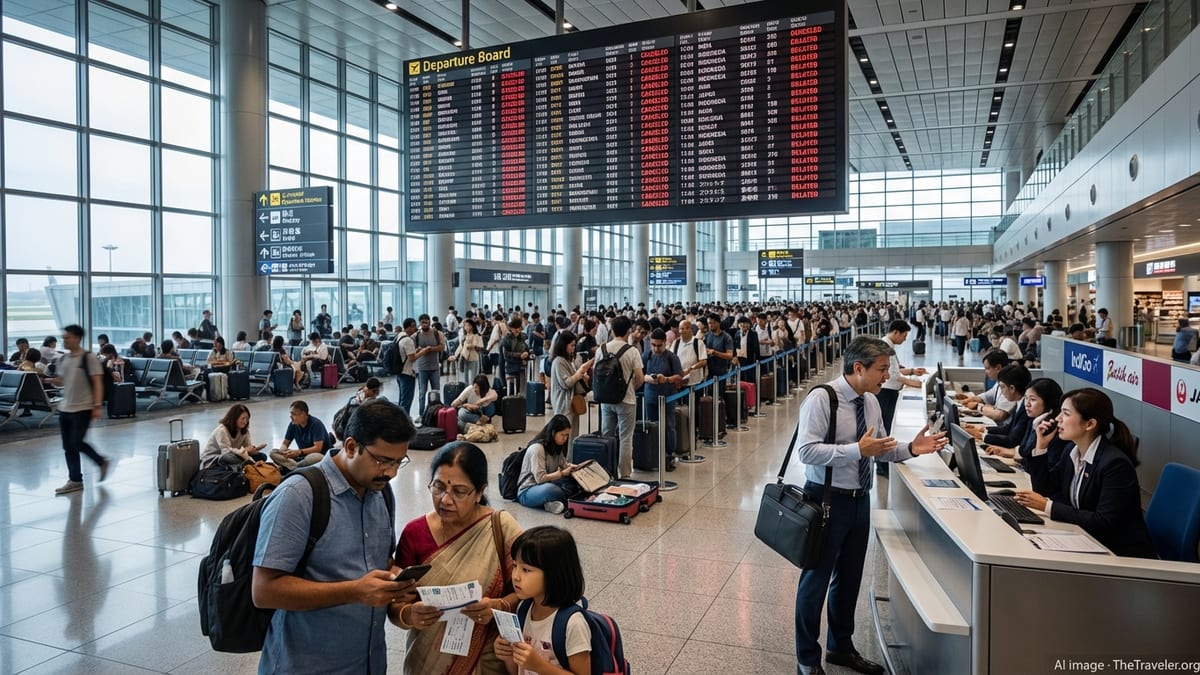
Hundreds of airline passengers across Asia faced missed connections and overnight delays as nearly 100 flights were delayed and close to 50 were cancelled at major hubs in Indonesia, Japan, South Korea, China and India, affecting services operated by Batik Air, Korean Air, China Eastern, IndiGo and several other carriers.
Get the latest news straight to your inbox!
Hubs From Jakarta to Seoul Register Waves of Disruptions
Published operational data and industry trackers for early April indicate that airports in Jakarta, Nagoya, Mumbai and Seoul experienced sustained schedule disruption over a 24 hour period, with a combined tally of 97 flight delays and 47 cancellations tied to multiple Asian and Middle Eastern routes. The impact was concentrated in short and medium haul services, where tight turnarounds make operations more vulnerable to even minor shocks.
At Jakarta’s main international gateway, Soekarno Hatta, reports indicate that a cluster of delays and a small number of cancellations rippled through domestic and regional departures, including services operated by Batik Air. The knock-on effect was visible in missed onward connections for passengers heading to secondary Indonesian cities and nearby Southeast Asian destinations.
In Japan, Nagoya’s Chubu Centrair International Airport recorded a noticeable spike in delayed departures, including flights operated by Korean Air and other regional carriers serving Korea, China and Southeast Asia. Schedules in and out of Seoul were similarly affected, as late arriving aircraft disturbed carefully tuned banked departures.
Mumbai’s Chhatrapati Shivaji Maharaj International Airport, which has already been grappling with wider regional disruption in recent weeks, saw part of the 97 recorded delays and 47 cancellations concentrated on domestic and South Asia services. IndiGo and other Indian airlines adjusted departure times, while some flights were removed from schedules entirely to restore network stability.
Multiple Carriers Hit as Networks Remain Under Strain
The combined disruption figures reflect a cross section of airlines rather than a single operational failure. Publicly available flight status feeds and industry coverage show that Batik Air, Korean Air, China Eastern and IndiGo were among the most visible names in the affected schedules, alongside several smaller regional operators.
For Batik Air, the issues in Jakarta came amid a period of tighter capacity management across parts of its network. Recent coverage of Asian airline operations has highlighted that Batik Air’s Malaysian affiliate has already trimmed domestic capacity in response to cost and fuel challenges, a move that leaves less buffer to absorb sudden delays or aircraft rotations.
China Eastern’s operations around Chinese coastal cities, combined with links into Japan and South Korea, meant that delays at one end of a route quickly propagated into secondary hubs such as Nagoya and Seoul. Flight tracking data showed aircraft arriving late from Chinese mainland airports, compressing turnaround times and triggering rolling delays through the day.
IndiGo, which has been navigating a challenging operating environment since late 2025, faced fresh pressure on its reliability. The airline has recently contended with regulatory scheduling adjustments and ongoing detours around conflict affected airspace, factors that together reduce slack in the system and heighten the risk that modest disruptions develop into wider schedule instability.
Weather, Fuel Logistics and Airspace Constraints Intertwine
While no single cause has been identified for the cluster of 97 delays and 47 cancellations, recent patterns across the region suggest a mix of adverse weather, fuel supply constraints and airspace restrictions contributing to fragile airline timetables. Industry analyses published this week note that several Asian carriers have begun trimming schedules and tankering extra fuel as supplies tighten in some markets.
China and Thailand have limited exports of jet fuel, and South Korea has capped shipments at prior year levels, exerting pressure on airports and carriers in fuel importing economies. In this environment, even localized supply issues or refuelling bottlenecks can extend ground times, particularly on long haul or high demand regional sectors that must depart with full tanks.
At the same time, continuing restrictions and reroutes around conflict affected airspace in West Asia have lengthened flight times on certain corridors connecting South and Southeast Asia to Europe and the Middle East. Airlines including Indian and Gulf carriers have periodically cancelled or consolidated services on those routes, which in turn affects aircraft availability for intra Asian operations based out of hubs such as Mumbai and Jakarta.
Weather related constraints, including seasonal storms and periods of reduced visibility, can then act as a tipping point. When runway capacity is temporarily reduced or arrival rates are slowed, airports are forced to push back departures or hold arrivals, creating precisely the sort of rolling delays that were recorded across the affected hubs.
Passenger Impact: Missed Connections and Overnight Stays
For travellers, the statistics translated into long queues, changing boarding times and, in some cases, unexpected overnight stays. Flight status data for the affected period shows multiple services departing more than an hour behind schedule, a delay length that often renders onward connections unworkable at busy transfer airports.
Airports such as Jakarta and Mumbai, which serve as key domestic and regional connectors, were particularly challenging for those holding tight same day itineraries. Passengers connecting from Batik Air and IndiGo flights to smaller cities in Indonesia and India faced the prospect of rebooking onto later services or switching to ground transport where available.
At Nagoya and Seoul, the disruptions were felt most acutely by travellers linking between Japan, Korea and China on a mix of Korean Air, China Eastern and partner carriers. With certain late evening departures cancelled outright, affected passengers were left to negotiate overnight accommodation arrangements and alternative routings for the following day.
Consumer advocates note that the complexity of the causes, involving a blend of operational pressures, airspace issues and fuel logistics, can make it harder for travellers to understand their options. Publicly available guidance from travel rights groups continues to emphasize the importance of monitoring flight status in real time and documenting disruption details to assist with any later claims under applicable local or regional compensation frameworks.
Airlines Adjust Schedules as Summer Travel Approaches
The cluster of disruptions arrives as Asian airlines prepare for a busy late spring and summer travel season, when demand typically rises on both leisure and business routes. Industry commentary suggests that many carriers are now re examining their schedules, trimming marginal frequencies and building in additional buffers where aircraft and crew resources allow.
Some operators are reportedly prioritizing key trunk routes and high yield international services while scaling back thinner domestic or secondary city connections, a strategy intended to protect core networks from unpredictable shocks. This approach, however, also increases the risk that any cancellation on remaining routes leaves travellers with few same day alternatives.
Infrastructure upgrades in major hubs are proceeding, but capacity increases are gradual. Until additional gates, taxiways and air traffic control capabilities come online in airports such as Jakarta and Mumbai, airlines and passengers alike are likely to face periodic bouts of disruption whenever external pressures on fuel, weather or airspace intensify.
For now, the tally of 97 delays and 47 cancellations across Indonesia, Japan, South Korea, China and India serves as another reminder of how interconnected the region’s aviation ecosystem has become. A late aircraft in one hub can disrupt evening departures thousands of kilometres away, stranding passengers who only see the consequence on departure boards, not the cascading operational challenges behind them.