

More news on this day
Thousands of air travelers across China faced extensive disruption on April 6, 2026, as a wave of cancellations and delays involving Tianjin Airlines, China Southern Airlines and China Eastern Airlines rippled through major hubs in Beijing, Guangzhou and several regional cities.
Get the latest news straight to your inbox!
Key Numbers Behind the Latest Wave of Disruptions
According to publicly available aviation data and industry coverage, a total of 44 flights operated by Tianjin Airlines (TBA), China Southern Airlines (CSN) and China Eastern Airlines (CES) were cancelled on April 6, while a further 482 services were delayed. The disruption affected a mix of trunk and regional routes, leaving passengers stranded or facing multi-hour waits at airports across the country.
The figures form part of a wider pattern of operational strain within China’s domestic aviation network in early April. In recent days, monitoring by travel-industry outlets has highlighted repeated spikes in delays at Beijing, Guangzhou, Shenzhen, Shanghai and Chengdu, with China Southern and China Eastern frequently among the most affected carriers. These latest totals underscore how quickly localized problems can cascade into nationwide schedule instability.
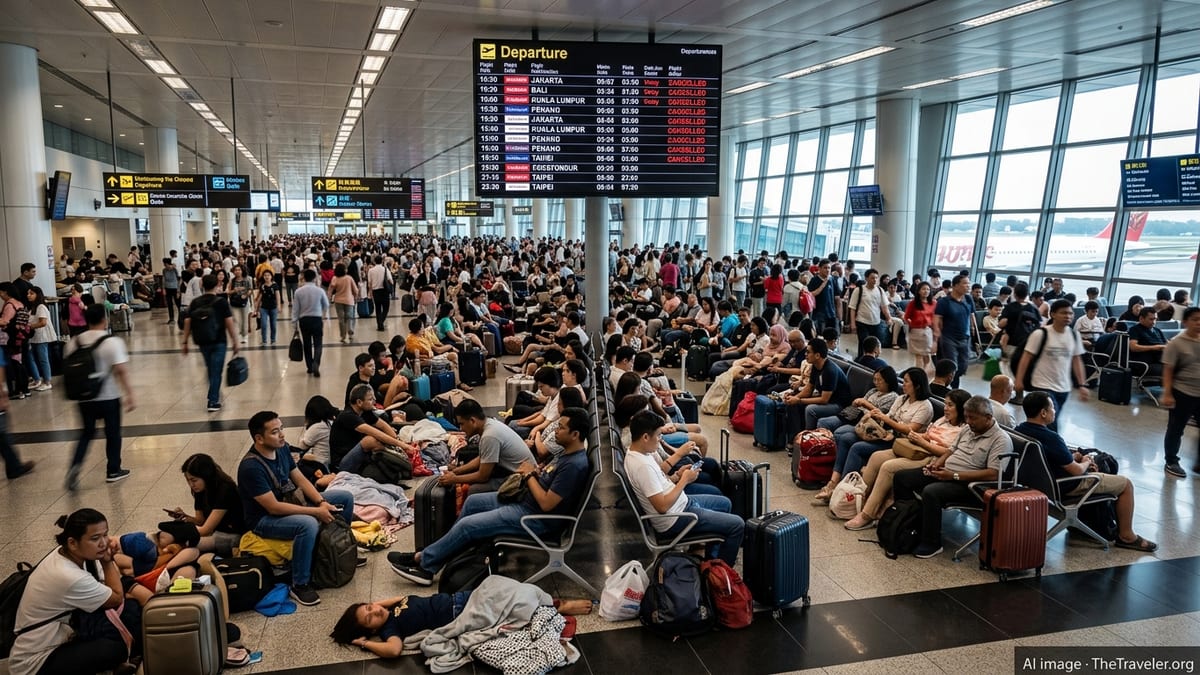
While the absolute number of cancellations remained relatively contained compared with some previous disruption days, the scale of delays meant that even flights that eventually departed often did so hours behind schedule. That combination created long queues at check-in, crowded departure halls and rolling knock-on effects for connecting passengers and evening departures.
The disruption also overlapped with a busy domestic travel period, amplifying the impact on leisure and business travelers alike. Many travelers were attempting to return from early April trips or position themselves for onward journeys later in the week, leaving limited flexibility to absorb last-minute schedule changes.
Beijing and Guangzhou Bear the Brunt
Beijing and Guangzhou emerged as two of the most heavily affected hubs in the April 6 disruption, reflecting their central role in China Southern and China Eastern’s route networks. Beijing’s airports, particularly the newer Daxing facility, recorded dense clusters of delays on key evening departures, including services linking the capital to major commercial and industrial centers.
In Guangzhou, home base for China Southern, publicly available flight-tracking snapshots showed a significant proportion of the carrier’s departures operating behind schedule, with a smaller number cancelled outright. These interruptions affected both high-traffic north–south routes and services linking the Pearl River Delta to central and western provinces.
Secondary and regional airports also felt the ripple effects. Industry reports highlighted disruption on routes such as Urumqi to Changsha, a key domestic corridor that plays an important role in connecting western and central China. When such flights are cancelled or heavily delayed, passengers often struggle to secure same-day alternatives, especially on days where schedules are already compressed.
As aircraft and crews arrived late into hubs like Beijing and Guangzhou, knock-on delays spread to later rotations. This dynamic, common during high-disruption days, meant that even airports initially operating close to schedule saw deterioration in on-time performance as the day progressed.
Operational and Weather Factors Converge
Recent coverage of China’s domestic aviation performance suggests that operational constraints and seasonal weather have combined to create challenging conditions for airlines. Earlier in the month, storms, fog and low visibility across parts of southern China contributed to widespread delays, particularly around Guangzhou and Shenzhen. Those weather-related backlogs can take days to fully clear, especially when aircraft are tightly scheduled.
On April 6, the disruption pattern pointed to a mixture of factors. Congestion at major hubs, slot constraints during peak waves of departures, and ongoing efforts to rebalance aircraft and crew placements after earlier storms likely all played a role. Publicly accessible airline customer information also indicates that carriers continue to adjust schedules in response to demand shifts and operational planning, which can result in short-notice cancellations on thinner routes.
China Southern and China Eastern, as two of the country’s largest carriers, are particularly exposed when conditions tighten. With fleets stretched across dense networks and high daily utilization, any series of delays can quickly limit available spare aircraft and crew, reducing the ability to recover when new disruptions occur.
Aviation analysts note that similar patterns are emerging in other Asia-Pacific markets, where rapid demand recovery, constrained resources and periodic weather events are driving higher day-to-day variability in on-time performance. The April 6 figures for China fit within that broader regional context of heightened operational volatility.
Impact on Travelers and Limited Compensation Options
For passengers caught in the April 6 disruption, the immediate consequences included missed connections, extended overnight stays and hastily rearranged itineraries. Reports from recent disruption days across China describe long lines at airline service counters, difficulty accessing alternative seats on the same day and confusion over revised departure times as schedules were updated repeatedly.
Publicly available policy summaries indicate that major Chinese carriers, including China Southern and China Eastern, typically provide rebooking assistance and basic care obligations during significant delays or cancellations. However, cash compensation is often limited, and eligibility thresholds vary by airline and delay duration. That framework can leave passengers facing significant out-of-pocket costs for accommodation or onward travel, particularly when cancellations occur late in the day.
Travel forums and consumer advice platforms have increasingly emphasized the importance of monitoring airline apps and flight-tracking tools during periods of instability in China’s domestic market. Recent traveler accounts suggest that real-time notifications from official airline channels can arrive before airport display systems are updated, providing a crucial head start on securing rebooked seats.
For international passengers connecting onto or off Chinese domestic legs, the disruption poses additional complications. Tight connections in hubs like Beijing and Guangzhou are particularly vulnerable to multi-hour delays, potentially affecting long-haul services to Europe, North America and Southeast Asia when minimum connection times are breached.
What the Disruption Signals for China’s Aviation Network
The wave of cancellations and delays on April 6 adds to mounting evidence that China’s aviation system is entering a period of more frequent high-disruption days. Industry coverage from late March and early April has documented repeated instances of several hundred cancellations and thousands of delays across Chinese and regional airports, often concentrated among the same major carriers.
For Tianjin Airlines, China Southern and China Eastern, the April 6 figures highlight the challenge of maintaining reliability across large networks that span multiple hubs and climate zones. While the number of outright cancellations remained limited relative to the overall schedule, the 482 delayed flights illustrate how even modest levels of disruption can significantly erode on-time performance and traveler confidence.
The situation also raises questions about resilience investments within the system. Observers point to the potential benefits of greater schedule padding on key routes, expanded spare aircraft capacity during high-risk weather windows and improved coordination between airports and airlines when congestion builds rapidly.
In the near term, travelers planning domestic itineraries in China are likely to face continued volatility in departure and arrival times, particularly around the country’s largest hubs. As the latest disruption involving TBA, CSN and CES demonstrates, even a single day of elevated delays can leave thousands of passengers stranded across multiple cities, reinforcing the importance of flexible planning and close monitoring of flight status throughout the journey.