

More news on this day
Hundreds of passengers traveling through Hartsfield Jackson Atlanta International Airport faced unexpected overnight stays and missed connections as Delta Air Lines, SkyWest, Endeavor Air, Air Canada and other carriers reported 129 delays and 23 cancellations, disrupting links to destinations including Fort Lauderdale, Aspen, Puerto Rico and Querétaro.
Get the latest news straight to your inbox!
Targeted Turmoil at the World’s Busiest Hub
Published coverage indicates that the disruption emerged over the weekend as Atlanta once again became a focal point for wider operational stress across the United States network. While nationwide figures show thousands of delayed flights on April 11 and 12, the cluster of 129 delays and 23 cancellations at Atlanta International concentrated the impact for travelers relying on the airport’s role as a connecting hub.
Delta Air Lines, the dominant carrier at Atlanta, featured prominently in the irregular operations, with regional affiliates such as SkyWest and Endeavor Air also affected. Publicly available data compiled from flight tracking services and travel-industry reports shows that these operators together account for a significant share of the delayed and canceled services touching Atlanta.
Air Canada and several other North American and international airlines were drawn into the disruption as shared gates, air traffic control constraints and rolling schedule changes at Atlanta rippled through their operations. This combination transformed what might have been isolated delays into a broader pattern of missed connections and extended airport holds for connecting passengers.
Despite the relatively modest number of outright cancellations, the concentration of delays at a major hub amplified the disruption. With many Atlanta routes scheduled at tight intervals for banked connections, even short hold-ups on inbound services had knock-on effects for departing flights and onward itineraries.
Key Routes Hit: Fort Lauderdale, Aspen, Puerto Rico and Querétaro
According to travel-industry reporting, several leisure focused and cross border routes were among the most visible casualties of the Atlanta disruption. Flights linking the Georgia hub with Fort Lauderdale experienced schedule pressure, affecting travelers headed to and from South Florida cruise departures and beach vacations. A combination of weather along the Southeast corridor and congestion at major Florida airports has left this route particularly sensitive to operational shocks.
Service to Aspen was also impacted, a notable issue during a period when late season mountain travel and residual ski traffic still support demand. Delays on regional jets operating into high elevation airports can cascade quickly, as aircraft and crew rotations are tightly scheduled and subject to stricter performance requirements.
Connections to Puerto Rico, including services to San Juan and regional links beyond, faced schedule disruption as well. Public data shows that traffic between Atlanta and the Caribbean remains strong, and even a small number of delayed or canceled flights can leave travelers with limited same day alternatives, especially on weekend peak days.
Flights involving Querétaro in central Mexico were similarly affected. Cross border operations rely heavily on precise timing to meet immigration processing windows and onward domestic connections. Any prolonged disruption at Atlanta can therefore create complications on both sides of the border, adding to queues at rebooking desks and stretching hotel availability near major airports.
Weather, Congested Skies and Operational Strain
Published coverage and flight status trackers point to a familiar combination of factors behind the latest wave of disruptions. Persistent spring weather systems across the eastern and central United States have periodically narrowed arrival and departure windows at busy hubs like Atlanta, forcing airlines to compress schedules or hold aircraft on the ground while conditions stabilize.
At the same time, the broader national picture shows high overall traffic volumes and limited spare capacity. Recent tallies for April indicate several thousand delayed flights on peak days nationwide, with a substantial share involving Atlanta and other megahubs. When traffic levels are this elevated, even routine thunderstorms or air traffic flow restrictions can tip operations into significant delay territory.
Operational strain at regional affiliates appears to be another contributing factor. Reports note that SkyWest and Endeavor Air have both logged notable numbers of delayed and canceled flights across the United States in recent weeks, reflecting tight crew availability and aircraft utilization. Because these carriers feed larger networks on behalf of major airlines, any disruption at the regional level can quickly affect mainline schedules.
Industry wide data from the U.S. Department of Transportation shows that delays are commonly attributed to a mix of air carrier issues, weather and national aviation system constraints. The Atlanta event fits that pattern, with a combination of localized weather challenges, heavy traffic and limited slack in airline schedules leaving little room to recover once irregular operations began.
Stranded Travelers Face Long Lines and Limited Options
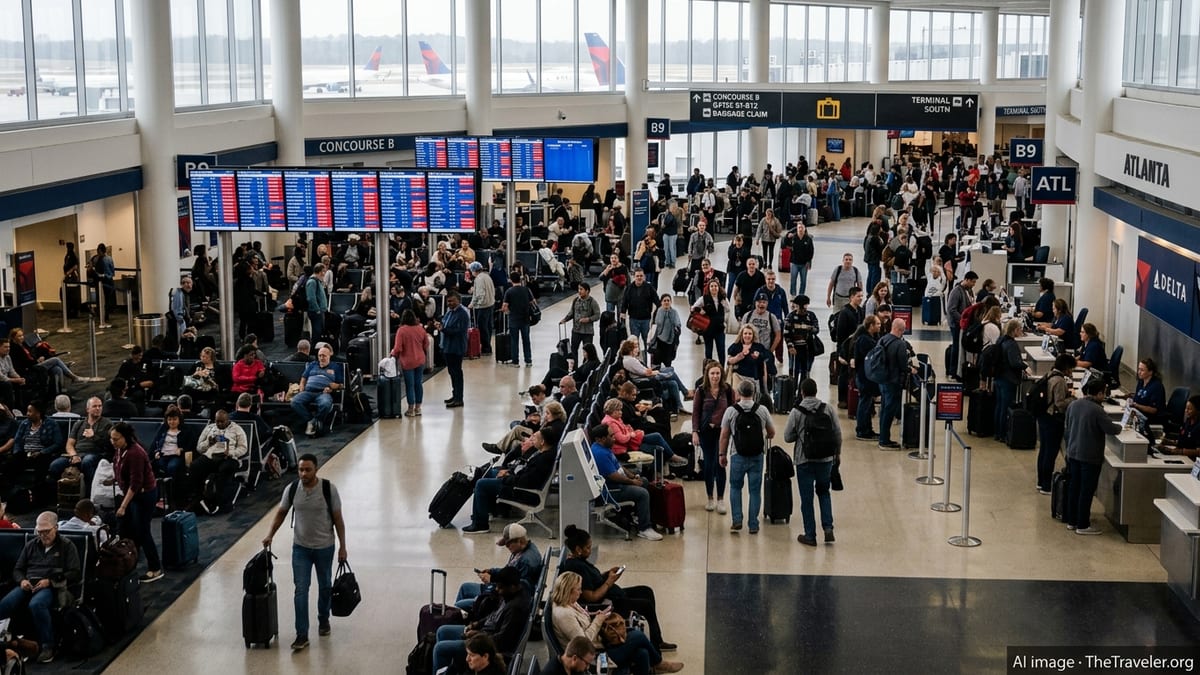
For affected travelers, the statistics translated into crowded concourses, long customer service lines and late night searches for hotel rooms around Atlanta. Social media posts and traveler accounts referenced extended waits at rebooking counters and difficulty securing same day alternatives for flights to smaller markets like Aspen and Querétaro, where service is less frequent.
With 23 flights canceled outright and many more delayed, travelers with connections through Atlanta often found their carefully timed itineraries unraveling. Missed last departures of the day to Fort Lauderdale or Caribbean gateways meant overnight stays, while early morning flights the following day quickly filled as airlines attempted to clear the backlog.
Families returning from vacations in Florida and Puerto Rico, as well as business travelers heading to regional meetings, were among those most affected. Weekend disruptions tend to catch passengers at the tail end of holidays or en route to Monday commitments, raising the stakes for timely rebooking and increasing demand for rental cars and nearby accommodation.
Travel advisories published in parallel with the disruptions urged passengers to monitor their airline apps, enable push notifications and arrive early for departures from Atlanta and other large hubs. Although some travelers were able to reroute through alternative airports, seat availability on short notice remained limited on popular leisure routes.
What Travelers Can Do Before the Next Wave of Delays
Consumer advocates and aviation analysts routinely highlight several practical steps for travelers moving through complex hubs like Atlanta, particularly during seasons prone to storms or heavy traffic. Public guidance emphasizes booking longer connection windows where possible, especially when traveling on separate tickets or to destinations served by only a few flights per day.
Travel guidance also notes the importance of keeping airline apps updated and boarding passes stored digitally, as these tools often provide the earliest indication of schedule changes and may allow passengers to self rebook without waiting in airport queues. Many carriers now enable same day changes, standby listings and hotel or meal vouchers to be issued through digital channels during major disruptions.
Experts additionally suggest familiarizing oneself with airline policies and federal consumer protections. Publicly available Department of Transportation information outlines minimum standards for refunds when flights are canceled, as well as guidelines around lengthy tarmac delays and involuntary schedule changes. Understanding these rights in advance can help travelers make faster decisions when disruptions occur.
For those planning near term trips through Atlanta, the latest disruptions serve as a reminder that even modest numbers of cancellations and delays at a major hub can quickly affect onward travel. Building flexibility into itineraries, considering alternative routings and staying informed about weather and traffic patterns can all help reduce the risk of being among the next group of stranded passengers when operations falter.