

More news on this day
Travelers moving through Hartsfield-Jackson Atlanta International Airport on April 3 are facing a new round of disruption, with published tracking data showing 18 flight cancellations and 143 delays affecting services on Delta Air Lines, United Airlines, Frontier Airlines and other major carriers, snarling connections to New York, Los Angeles and cities across the United States.
Get the latest news straight to your inbox!
Targeted Cancellations, Widespread Delays
Publicly available flight-tracking dashboards for April 3 indicate that disruptions at Hartsfield-Jackson are concentrated in a mix of mainline and regional operations, with a relatively modest number of outright cancellations but a much larger volume of delayed departures and arrivals. The current tally of 18 cancellations, compared with 143 delays, suggests airlines are attempting to preserve as much of the schedule as possible while absorbing operational stress through extended hold times on the ground and in the air.
Delta, United and Frontier feature prominently in the latest data, reflecting their heavy use of Atlanta as either a primary hub or key connecting point. Flights linking Atlanta with major markets such as New York and Los Angeles are among those reporting delays, along with services to Washington, Chicago and several secondary cities. The imbalance between cancellations and delays leaves many aircraft still operating, but often outside their planned time banks, complicating onward connections.
Operational summaries compiled by aviation analysts describe a familiar pattern in which a cluster of disrupted departures at a hub like Atlanta quickly spreads across the network. When an aircraft operating an early-morning leg out of Hartsfield-Jackson departs late, its subsequent rotations into cities such as New York, Dallas or Denver frequently require retiming, leading to rolling delays throughout the day.
For passengers, the numbers translate into missed connections, rearranged itineraries and extended time in already busy terminals. Even when flights are not canceled, late departures from Atlanta can push arrivals into overnight hours at distant airports, affecting ground transport plans and accommodation arrangements.
Weather, Congestion and Crew Limitations Combine
Recent coverage of U.S. aviation conditions highlights a mix of spring weather instability, tight scheduling at major hubs and crew availability constraints as key drivers of this week’s disruptions. Across the Southeast, forecasters have pointed to unsettled conditions that periodically reduce runway capacity, forcing traffic managers to meter departures and arrivals at airports including Atlanta. When thunderstorms or low clouds pass over a critical hub, traffic-management initiatives often slow the rate of operations, rapidly creating backlogs.
Analyses of earlier storms this year note that Hartsfield-Jackson has already experienced periods with hundreds of delays on a single day, illustrating how quickly weather can tip the nation’s busiest hub into congestion. When similar patterns reappear, airlines may attempt to operate through the disturbance with smaller schedule adjustments, but even short holds and reroutings can cascade into extended delays by afternoon and evening.
In parallel, transportation researchers point to crew duty-time regulations and aircraft positioning as additional pressure points. If a flight arrives late into Atlanta, pilots and cabin crew may reach federally mandated time limits before they can operate subsequent legs, leaving aircraft temporarily without legal crews. In those cases, operations teams face choices between canceling flights outright or holding them until replacement crews can be assembled, often contributing to the day’s mix of limited cancellations and numerous prolonged delays.
Industry-focused guidance on irregular operations also notes that airlines must juggle maintenance windows and fleet rotations while coping with disruptions. When schedule buffers are slim, a single unscheduled inspection or minor mechanical issue can cascade through a bank of flights, especially at complex hubs like Atlanta where ground-time between legs is often tightly planned.
Impact on New York, Los Angeles and Other Major Hubs
The immediate disruptions at Hartsfield-Jackson are resonating most strongly along high-demand corridors linking Atlanta with New York, Los Angeles and Washington, according to publicly accessible route data. Delta and United operate multiple daily frequencies between Atlanta and New York area airports, while Delta and Frontier provide connections between Atlanta and Los Angeles. Delays on these trunk routes can disrupt both origin-and-destination travelers and large numbers of connecting passengers using Atlanta as a midpoint.
Travel analysis notes that delayed departures from Atlanta toward New York often arrive into already constrained slot-controlled airports, where late afternoon and evening congestion limits flexibility to recover lost time. This can lead to further holding patterns in the air and airborne sequencing delays, compounding frustration for passengers who have already spent time waiting at the gate.
On the West Coast, services from Atlanta to Los Angeles and other California gateways serve as key links for transcontinental itineraries and onward international flights. When these flights operate substantially behind schedule, passengers risk missing connections to overnight services bound for Asia or Oceania, especially where minimum connection times are tight. In some cases, this can turn a few hours of delay into an unplanned overnight stay.
Secondary hubs such as Chicago, Denver and Dallas are also feeling the effects as delayed inbound aircraft from Atlanta arrive out of sequence. Airport operations reports indicate that irregular arrival flows disrupt gate assignments and baggage handling, which can extend turn times and contribute to further knock-on delays across multiple airlines.
Passenger Experience: Long Lines, Tight Connections and Limited Options
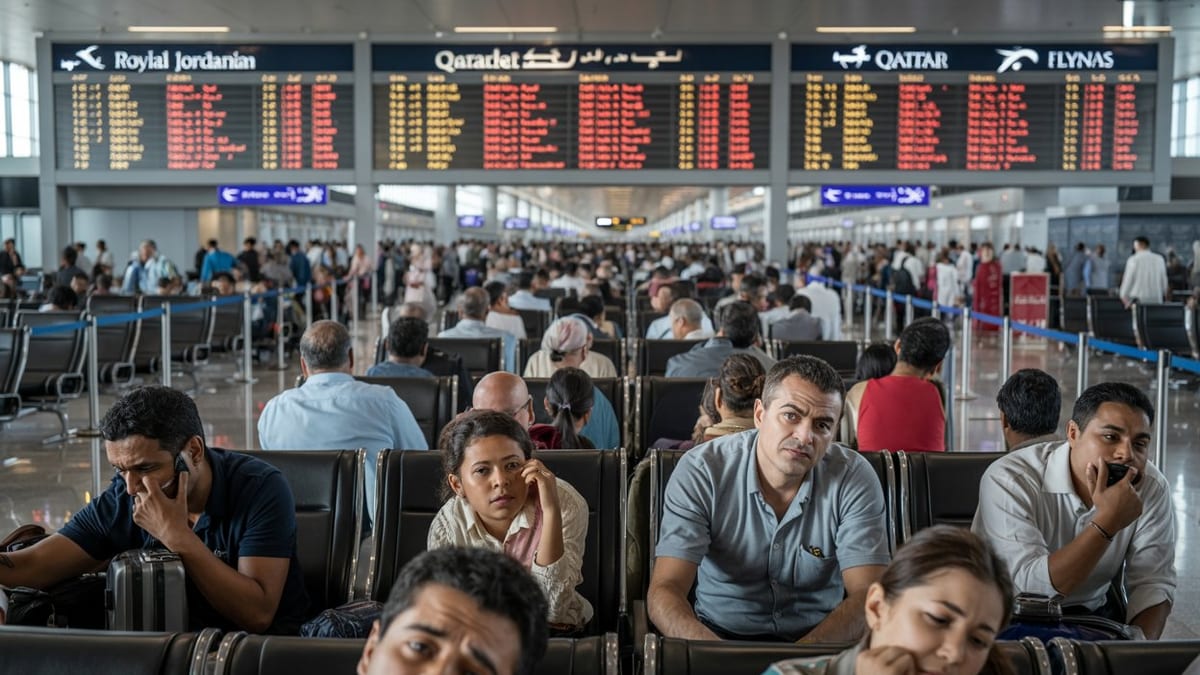
For travelers on the ground, today’s figures translate into crowded departure halls, lengthy customer-service queues and heightened competition for alternative routing. Publicly available accounts from recent disruption days at Atlanta describe security lines at times stretching well beyond the usual checkpoints, particularly during early-morning and late-afternoon banks when multiple delayed flights converge.
Consumer travel guidance emphasizes that when disruptions are concentrated in delays rather than cancellations, passengers may find it harder to secure clear-cut rebooking or refund options. With flights still technically operating, albeit hours late, many travelers face difficult choices between waiting out a delay or attempting to negotiate new itineraries through call centers, airline apps or self-service channels in the terminal.
Observers note that passengers connecting through Atlanta to New York or Los Angeles are particularly vulnerable to misaligned schedules. A delayed inbound flight from a smaller city might still arrive in time to meet the original minimum connection standard on paper, yet leave travelers rushing across terminals or arriving at the gate just as boarding closes. In such situations, missed flights can occur even without an official schedule change.
Public information from passenger advocacy groups underscores the importance of documenting notifications and keeping records of out-of-pocket expenses when disruptions occur. While compensation rules vary depending on the cause of the delay and the airline involved, receipts and written confirmations can be important if travelers later seek reimbursement for hotels, meals or alternative transport.
Planning Ahead as Spring Travel Ramps Up
The latest disruption figures at Hartsfield-Jackson arrive just as spring leisure and business travel are ramping up across the United States, raising the prospect that similar days of concentrated delays could recur in the coming weeks. Analysts tracking airline capacity note that carriers have scheduled robust seat counts into Atlanta, New York and Los Angeles for April, often with tight turn times designed to maximize aircraft utilization.
Travel publications advise that in periods of elevated disruption risk, passengers may benefit from choosing earlier flights in the day when possible, allowing more room to recover from delays. Routes involving Atlanta and other weather-sensitive hubs are frequently singled out as ones where additional connection time can provide a useful buffer, especially for itineraries that continue onward to international destinations.
Publicly available airline guidance also encourages travelers to monitor flight status across multiple channels, including official apps and airport information boards, since gate changes and revised departure times can occur repeatedly on disruption days. In some cases, same-day changes to nearby airports or alternative routings through different hubs may appear in booking tools as airlines attempt to rebalance their operations.
As the day progresses at Hartsfield-Jackson, observers will be watching whether the current pattern of 18 cancellations and more than a hundred delays stabilizes or intensifies. For now, the situation underscores how even a relatively contained disruption at the nation’s busiest airport can reverberate quickly through long-distance corridors linking Atlanta with New York, Los Angeles and other major U.S. cities.