

More news on this day
Passengers across the United States and on several major international routes faced mounting frustration today as disruptions at Washington Dulles International Airport led to 16 flight cancellations and 117 delays, snarling operations for American Airlines, United, Delta, and other major carriers on services to New York, London, Frankfurt, Dubai, Toronto, and beyond.
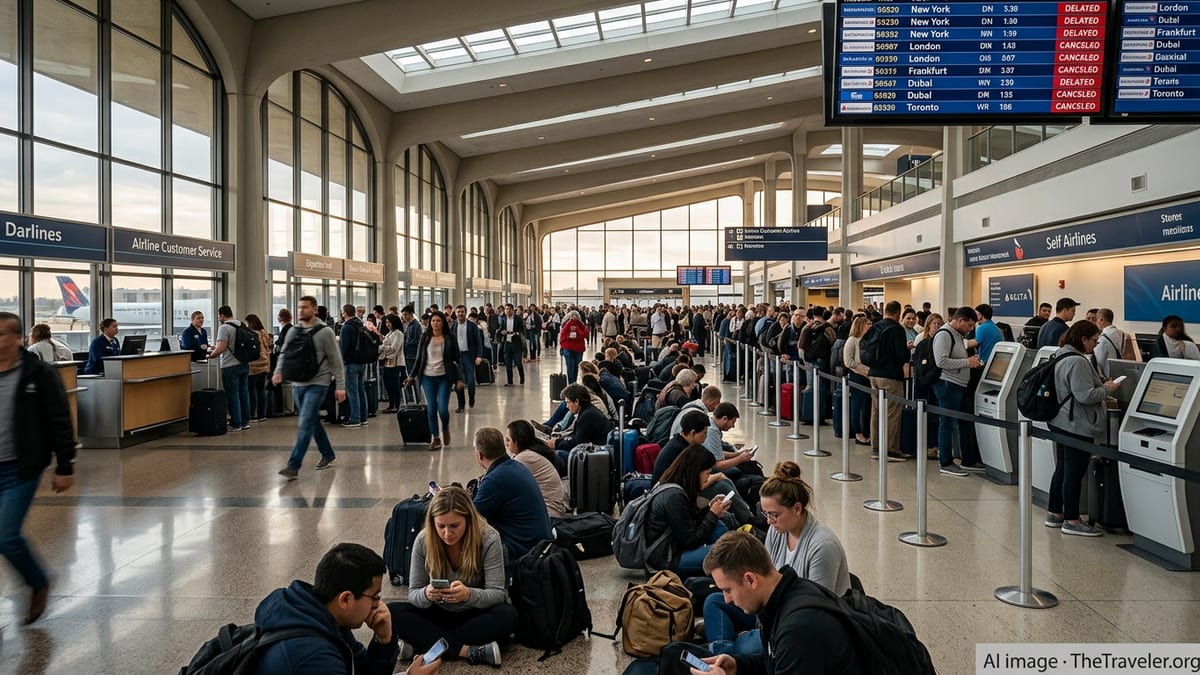
Knock-on Chaos from a Busy East Coast Hub
The latest disruption at Washington Dulles, one of the primary international gateways for the U.S. capital region, triggered a chain reaction across the country’s air network as early-morning delays cascaded into the afternoon and evening schedules. With dozens of departures and arrivals pushed back, flights that rely on tight aircraft and crew rotations quickly fell out of sync, affecting travelers far from the Washington area.
Air traffic data compiled today showed that while 16 flights were formally canceled at Dulles, more than a hundred additional services were significantly delayed, forcing rebookings, missed connections, and extended waits in crowded terminals. The impact was particularly pronounced on routes linking Dulles with major North American and transatlantic hubs that feed large volumes of connecting traffic.
Airlines and airport officials described the situation as a rolling operational challenge, noting that even a relatively small number of outright cancellations can compound into widespread disruption when paired with high passenger loads and constrained crew availability. As the day progressed, carriers were forced to reshuffle aircraft assignments and adjust departure times to restore some stability to their schedules.
Major Airlines Scramble to Recover Schedules
United Airlines, which operates a significant hub at Washington Dulles, was among the hardest hit as delayed departures and late arrivals rippled through its domestic and international banks of flights. Aircraft slated for transatlantic and cross-country services often arrived late into Dulles, compressing ground times and creating tight turnarounds that were vulnerable to even minor additional delays.
American Airlines and Delta, while maintaining a smaller presence at Dulles compared with United, also reported schedule disruptions on key domestic routes, including connections to New York area airports and other East Coast and Midwest cities. Passengers at airports hundreds or even thousands of miles away were affected as aircraft originating or passing through Dulles failed to depart on time, triggering gate changes, rolling delay notifications, and in some cases last-minute cancellations.
Smaller and partner carriers were not spared. Regional jets operating under major airline brands faced crew duty-time limits as delays accumulated, leaving some flights without legally available pilots or flight attendants. Airlines sought to mitigate the impact with rebookings and, where possible, by upgauging aircraft to accommodate additional passengers on consolidated services.
Key Routes to New York, Europe, and the Middle East Affected
Among the most visible consequences for travelers were disruptions on high-demand routes linking Washington Dulles with New York, London, Frankfurt, Dubai, and Toronto, all critical nodes in the global aviation network. Delays on these sectors not only inconvenienced origin and destination passengers but also jeopardized tight international connections on both sides of the Atlantic.
Services to New York, a vital shuttle corridor for government officials, business travelers, and tourists, experienced rolling delays that clogged already busy terminals at both ends. Passengers connecting onward to domestic and international flights from New York area airports reported missed connections and unplanned overnight stays.
On transatlantic and long-haul routes, including flights to London and Frankfurt, departure pushes from Dulles threatened to misalign with carefully timed morning arrival waves in Europe. Some travelers reported being rebooked onto later services or rerouted through alternative hubs, adding hours to their journeys. Flights to Dubai and Toronto, important links for Middle East and Canadian connectivity, also felt the strain as departure slots shifted, squeezing already tight overnight and early-morning connection banks.
Stranded Travelers Face Long Lines and Limited Options
Inside Dulles and at airports across the United States, travelers contended with lengthy queues at check-in counters and customer service desks as they sought new itineraries. Many passengers described spending hours in line only to learn that alternative flights were fully booked or departed from other airports not easily accessible at short notice.
Families traveling with children, international visitors unfamiliar with U.S. rebooking rules, and those on tight business schedules were among the most affected. With hotel availability around major hubs already tight on busy travel days, some passengers resorted to sleeping in terminal seating areas while awaiting rebooked flights the following morning.
Airport concessions saw a surge in demand as passengers waited out delays, with food outlets and charging stations particularly crowded. At some gates, airline staff made repeated announcements urging patience and promising regular updates, while also encouraging customers to use mobile apps and automated rebooking tools to bypass congested service lines.
Airlines Urge Use of Digital Tools as System Strains
As the day’s disruption unfolded, major airlines operating at Dulles urged customers to monitor flight status closely and take advantage of mobile apps and websites for rebooking and notifications. Many carriers issued flexible travel waivers for affected routes, allowing passengers to change flights without standard penalties, subject to seat availability.
Travel advisors recommend that passengers facing irregular operations keep boarding passes, receipts, and documentation of delays in case they qualify for compensation or reimbursement under airline policies or credit card protections. While U.S. regulations do not guarantee broad compensation for delays, carriers often provide meal vouchers or hotel accommodations in certain circumstances, particularly when disruptions stem from controllable operational issues rather than weather.
With Dulles expected to work through residual delays into the late evening, airline operations teams continued to adjust aircraft and crew rotations in an effort to normalize schedules before the next day’s morning peak. For many travelers caught up in today’s disruption, however, the immediate concern remained finding a seat on any available flight that could get them closer to their intended destination.