

More news on this day
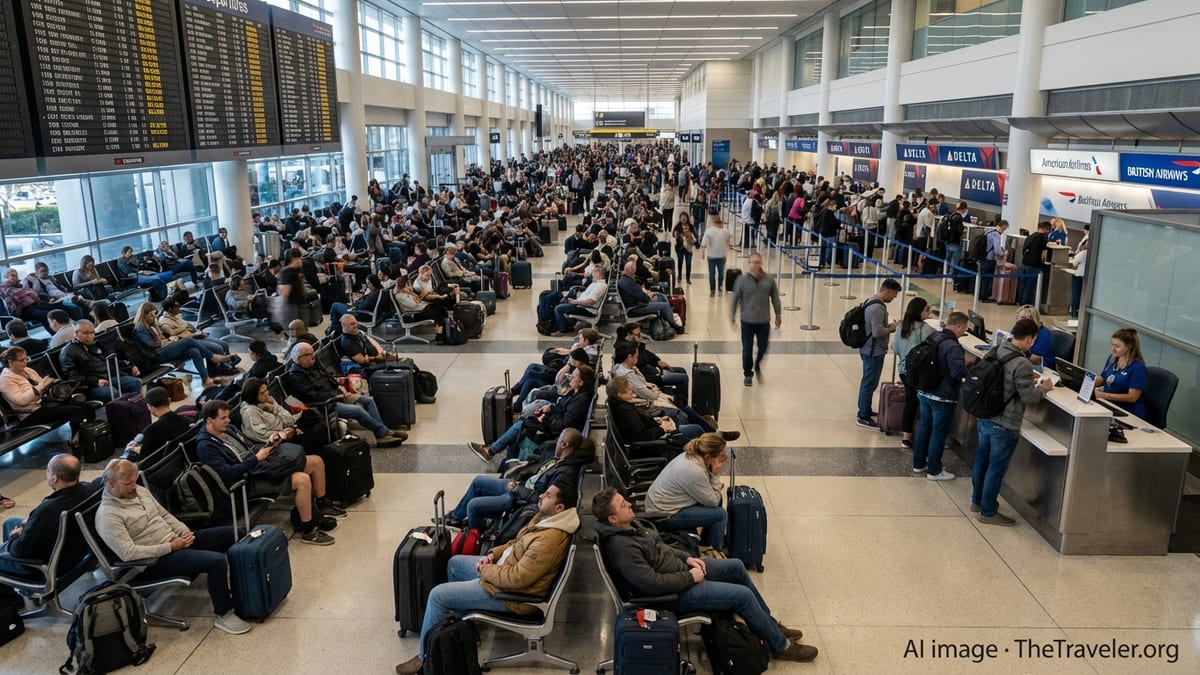
Hundreds of passengers were left stranded at Los Angeles International Airport on Thursday after a wave of disruptions rippled across major carriers, delaying more than 180 flights and forcing at least 13 cancellations on routes to and from key global hubs including New York, Tokyo, Dubai and San Francisco.
Get the latest news straight to your inbox!
Major Carriers Struggle With Knock-On Disruptions
By midafternoon, departure boards across several LAX terminals showed long clusters of orange and red status alerts as Delta Air Lines, United Airlines, American Airlines and other carriers worked to recover from cascading delays on their networks. Many of the impacted flights were headed to or arriving from some of the world’s busiest corridors, including transcontinental routes to New York, transpacific services to Tokyo and long-haul links to Dubai.
While some delays were limited to 45 to 90 minutes, others stretched into several hours, forcing aircraft and crew rotations to fall out of place. Airline representatives on-site said congestion and weather-related slowdowns at other major hubs had triggered a domino effect, pushing back departure times at LAX even when local skies remained clear.
Gate agents for Delta, United and American spent much of the day rebooking passengers and issuing meal vouchers where required, as travelers formed long lines at customer service desks. Several regional and international partners were also affected as code-share flights were rescheduled to accommodate displaced passengers.
Operational experts noted that even a relatively small number of cancellations can severely disrupt a tightly choreographed hub like LAX, where peak-hour runway and gate usage leaves little margin for last-minute changes. With limited spare aircraft and crews already stretched, airlines faced tough choices over which routes to prioritize.
Passengers Face Long Waits, Missed Connections and Uncertain Plans
Inside the terminals, weary travelers tried to make the best of the disruption, occupying every available power outlet, queuing for food and searching for alternative itineraries on their phones. Families headed to New York reported missed connections onward to Europe, while business travelers bound for Tokyo and Dubai scrambled to inform colleagues and clients of last-minute schedule changes.
Some passengers who had arrived early for morning departures saw their flights pushed into the evening, raising the prospect of overnight stays if onward connections could not be rebooked in time. Others whose flights were among the 13 cancellations said they were offered seats on services departing one or even two days later, particularly on already busy transpacific routes.
For travelers with nonrefundable hotel bookings or cruise departures, the uncertainty was particularly stressful. Several described waiting more than an hour to speak with an airline representative at the airport while simultaneously attempting to reach call centers, which were also experiencing heavy demand from affected customers nationwide.
Despite the frustrations, airport staff urged passengers to stay near their gates and monitor departure screens closely, noting that recovery operations can sometimes open up earlier opportunities as aircraft and crews free up elsewhere in the system.
Key Routes to New York, Tokyo, Dubai and San Francisco Hit Hard
Among the most heavily affected services were high-frequency flights between Los Angeles and New York, which serve both leisure travelers and a large volume of time-sensitive business traffic. Delays on early departures from LAX quickly cascaded into later schedules at East Coast airports, sharply reducing options for same-day rebooking.
On the Pacific side, several flights to Tokyo faced multi-hour delays, complicating connections to other Asian destinations. Travelers reported that some evening departures were retimed to depart after midnight, raising questions about crew duty limits and the availability of arrival slots at Japan’s congested airports.
Long-haul routes to Dubai also experienced knock-on effects, with at least one outbound service from LAX delayed significantly as the operating aircraft arrived late from another international destination. Passengers on these flights often have onward connections through the Middle East to Africa, South Asia and beyond, increasing the potential for missed onward segments and extended disruptions to travel plans.
Closer to home, popular shuttle routes between Los Angeles and San Francisco saw a mix of delays and schedule shuffling as airlines repositioned aircraft for longer-haul commitments. Frequent fliers on those routes said they were accustomed to minor delays but described Thursday’s disruptions as more extensive than usual.
Airlines Outline Options and Passenger Rights
As lines grew at check-in counters and kiosks, airlines reminded customers of available self-service tools, including mobile apps that can process same-day changes, list stand-by options and deliver digital boarding passes. Several carriers temporarily relaxed change-fee rules for affected flights, allowing stranded passengers more flexibility to adjust their plans.
U.S. Department of Transportation rules require airlines to refund customers if a flight is canceled and the passenger chooses not to travel, even if a nonrefundable ticket was originally purchased. For significant delays caused by the airline, many major carriers now commit to providing meal vouchers and, when overnight stays are unavoidable, hotel accommodations and ground transportation, subject to availability.
Consumer advocates urged travelers to keep all receipts related to extra costs incurred during the disruption and to document any communications with airlines in case they need to pursue reimbursement or further assistance later. They also advised passengers to frequently refresh airline apps, as newly available seats from missed connections can appear with little warning.
At LAX, airline staff posted updated information throughout the day and encouraged travelers whose trips were not time-sensitive to consider voluntarily rebooking for later dates, helping to reduce pressure on already crowded flights and easing the immediate strain on operations.
Outlook for Recovery and Advice for Upcoming Travelers
Airline operations teams said they expected the disruption to linger into the evening as carriers worked through the backlog of delayed flights and repositioned aircraft and crews. While some routes were forecast to return to near-normal schedules by late night, others with complex international connections could see residual delays into the following day.
Travel experts recommended that passengers with flights out of LAX in the next 24 to 48 hours monitor their bookings closely, arrive at the airport early and consider traveling with carry-on luggage only when possible. Reducing reliance on checked bags, they noted, can make it easier to accept last-minute rebookings through different hubs or on alternate airlines.
For now, the scenes at Los Angeles International Airport reflect the vulnerability of the modern air travel system when multiple hubs encounter stress at the same time. With aircraft flying fuller schedules and staffing calibrated tightly to demand, even a modest cluster of delays can leave hundreds of travelers waiting for answers beneath a glowing wall of departure screens.