

More news on this day
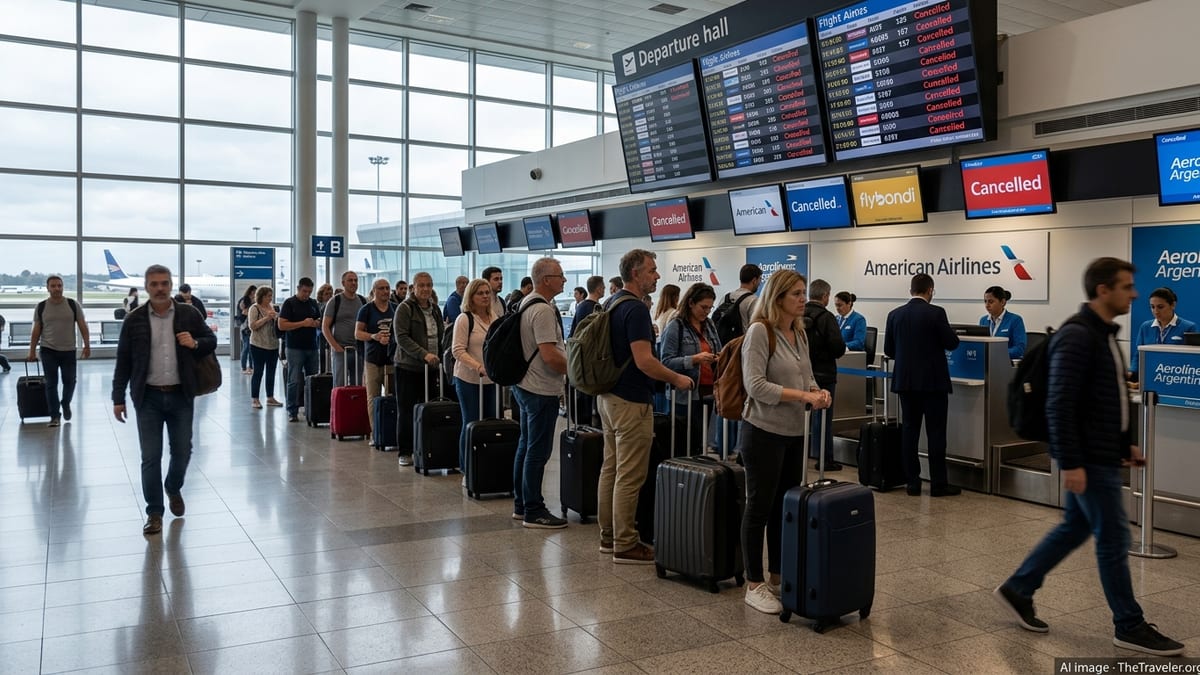
Air travel to and within Argentina faced fresh disruption this week as more than a dozen flights operated by American Airlines, Flybondi and Aerolineas Argentinas were cancelled, affecting routes linking New York with Buenos Aires as well as busy domestic corridors such as Buenos Aires to Cordoba and other regional destinations.
Get the latest news straight to your inbox!
Wave of Cancellations Affects International and Domestic Routes
According to published coverage and airport operations data, a cluster of cancellations involving American Airlines, low cost carrier Flybondi and flag carrier Aerolineas Argentinas has disrupted travel plans for hundreds of passengers moving through major Argentine hubs. The affected services include long haul links between New York and Buenos Aires, along with short haul flights that connect the capital to Cordoba and other provincial cities.
Publicly available flight tracking information shows that more than a dozen departures and arrivals were scrubbed in a short window, concentrating the impact at Buenos Aires Ezeiza International Airport and Aeroparque Jorge Newbery, as well as at provincial gateways such as Cordoba. The pattern left travelers facing missed connections, extended airport waits and last minute rebookings during what was expected to be a busy late March travel period.
While the precise mix of causes varies by airline and route, reports indicate that the disruption in Argentina is unfolding alongside broader operational strains. Airlines are contending with tight aircraft utilization, congested hubs and staffing imbalances that can quickly ripple across networks when a handful of flights are delayed or grounded.
American Airlines New York – Buenos Aires Services Disrupted
On the international front, American Airlines cancellations have affected departures on the high profile corridor linking New York with Buenos Aires. Recent operational summaries and traveler reports highlight scrubbed services into and out of John F. Kennedy International Airport, compounding an already challenging period for the carrier in terms of delays and schedule changes on some North American and transcontinental routes.
Travel advisories circulated by the airline and third party tracking platforms urge passengers flying between New York and Buenos Aires to monitor their flight status closely and to allow additional time for potential rebooking. In several cases, passengers bound for Argentina have been shifted onto later departures, rerouted through other American hubs, or offered refunds in line with the carrier’s disruption policies.
For travelers planning onward journeys within South America, the uncertainty around the New York connection adds another layer of complexity. Missed long haul segments can translate into missed links to domestic Argentine cities such as Cordoba or Mendoza, or to regional destinations in neighboring countries. As a result, many travelers are reassessing tight same day connections and opting to build in longer layovers where possible.
Flybondi Under Scrutiny After Series of Domestic Cancellations
Flybondi, the country’s pioneering ultra low cost airline, has been at the center of domestic disruption, with multiple cancellations reported on routes connecting Buenos Aires with cities including Cordoba and popular leisure destinations. Recent Argentine aviation coverage notes that Flybondi has faced heightened scrutiny over its reliability after a series of operational hiccups stretching back through previous travel seasons.
Publicly available regulatory documents and local business reports show that Flybondi was already under pressure to reduce cancellations following earlier incidents that left thousands of passengers stranded across Argentina. The latest wave of scrubbed flights reinforces traveler concerns about schedule stability, particularly for those relying on tight connections or planning complex itineraries that combine long haul arrivals with low cost domestic legs.
Despite continued demand for its low fares, the carrier’s operational challenges are prompting some travelers to weigh the tradeoff between price and predictability. Travel forums and social media posts suggest that visitors to Argentina are increasingly mixing carriers, pairing international flights on larger global airlines with domestic segments operated by a mix of Flybondi, Aerolineas Argentinas and other regional operators to hedge against potential disruption.
Aerolineas Argentinas Feels Knock-On Effects at Key Hubs
Aerolineas Argentinas, the national airline and the largest domestic operator, has also recorded cancellations in the current disruption, particularly at its Buenos Aires and Cordoba hubs. Schedule adjustments and selective flight cuts have affected routes that serve as vital connectors for both Argentine residents and international visitors using the capital as a gateway to Patagonia, the northwest, and wine regions such as Mendoza.
According to recent passenger traffic updates from airport operators and company statements cited in local media, Aerolineas Argentinas has been juggling a rapid rebound in demand with the challenges of maintaining older aircraft, integrating newer jets and managing staffing rosters. Even small schedule shifts can cascade through its network, prompting last minute retimings or cancellations on shorter domestic legs.
For travelers, the impact of an Aerolineas Argentinas cancellation can be significant, given the airline’s dominant presence on many domestic routes. Some affected passengers have reported being rebooked onto later same day departures, while others have faced overnight delays when alternative flights were already full. The disruption underscores how concentrated the Argentine domestic market remains, and how dependent many regions are on a single major operator.
What Travelers to and Within Argentina Should Expect
With cancellations touching American Airlines, Flybondi and Aerolineas Argentinas simultaneously, the current situation highlights the importance of contingency planning for anyone flying to or within Argentina in the coming days. Travel industry guidance and recent on the ground experiences suggest that passengers should closely monitor airline apps and airport displays, reconfirm flights 24 hours before departure and consider travel insurance that covers significant delays or cancellations.
International visitors connecting through Buenos Aires are being advised, in publicly available travel advisories, to avoid especially tight connections between long haul arrivals and domestic departures. Building in additional buffer time, or overnighting in the capital before continuing on to destinations such as Cordoba, Bariloche or El Calafate, can reduce the risk that a single cancellation will unravel an entire itinerary.
For their part, airlines operating in Argentina are likely to keep adjusting schedules as they work to balance demand, aircraft availability and labor resources. While the present wave of cancellations involves a relatively limited number of flights, its impact is magnified by the long distances and sparse alternative transport options on many routes. Travelers planning trips in the near term may wish to factor this volatility into their route choices and timing, especially when traveling during peak holiday or weekend periods.