

More news on this day
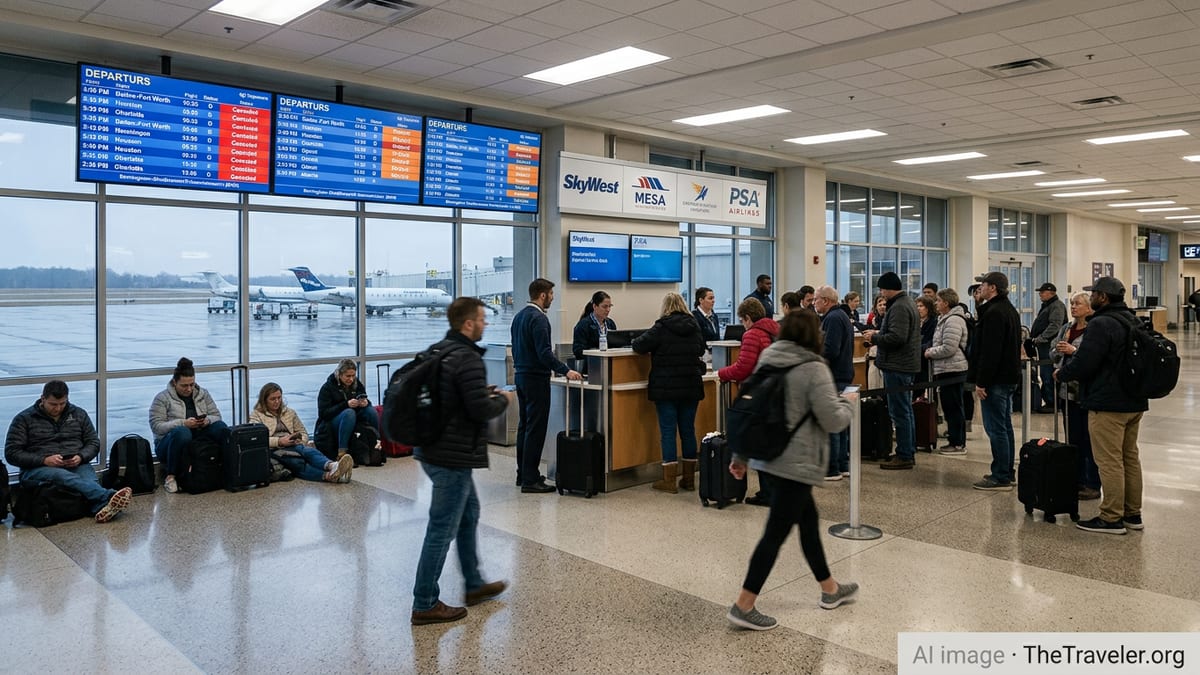
Travelers moving through Birmingham–Shuttlesworth International Airport on Sunday faced mounting disruption as regional carriers SkyWest, Mesa Airlines and PSA Airlines suspended nine flights and logged numerous delays, cutting into vital connections to major hubs including Dallas, Detroit, Houston, Atlanta and Charlotte.
Regional Cancellations Ripple Through Birmingham Schedules
Operational strain across the U.S. airline network converged on Birmingham–Shuttlesworth International Airport on March 8, where SkyWest, Mesa Airlines and PSA Airlines collectively pulled nine flights from the schedule while delaying many more. The cuts affected a mix of arrivals and departures, primarily on routes that feed larger hub airports operated by their mainline partners.
Data from airline status boards showed a concentration of cancellations on regional jet services marketed by major carriers but flown by their contract partners. With SkyWest and Mesa flying under brands such as Delta Connection, American Eagle and United Express, each scrubbed departure at Birmingham translated into missed onward connections for passengers bound for other domestic and international destinations.
PSA Airlines, a key regional operator for American Airlines, added to the disruption as it pared back operations and struggled to keep remaining services on time. While the overall number of canceled PSA flights at Birmingham remained smaller than those at some larger airports, the share of delayed departures was disproportionately high, leaving many travelers stuck in terminals or facing tight connections down the line.
The disruption unfolded against a backdrop of broader nationwide strain on regional operations. In recent months, SkyWest, Mesa and PSA have each grappled with tight crew availability, aircraft rotations and congested airspace around major hubs, leaving smaller airports like Birmingham particularly vulnerable when schedules begin to unravel.
Key Hubs Affected: Dallas, Detroit, Houston, Atlanta and Charlotte
The suspended and delayed flights hit some of Birmingham’s most important nonstop links, amplifying the impact on both local travelers and those connecting through the city. Routes serving Dallas–Fort Worth, Detroit, Houston, Atlanta and Charlotte were among the most affected, according to live tracking data and airport information screens.
A canceled SkyWest-operated connection to Detroit mirrored elevated disruption at Detroit Metropolitan Wayne County Airport, where dozens of cancellations and nearly two hundred delays were logged on Sunday amid wider congestion and lingering weather issues across the Midwest and East Coast. Travelers expecting seamless connections from Birmingham into Delta’s Detroit hub faced unplanned overnight stays or reroutes via other cities.
Services into Dallas and Houston also proved fragile as network pressures mounted at those Texas hubs. American Airlines and United Airlines both rely heavily on regional partners such as Mesa and SkyWest to transport passengers from smaller markets like Birmingham into their larger connecting complexes, meaning that a single scrubbed regional flight can cascade into missed long-haul departures.
Atlanta and Charlotte, two of the most heavily trafficked destinations from Birmingham, saw their own share of knock-on effects as weather and congestion snarled operations at Hartsfield-Jackson Atlanta International Airport and Charlotte Douglas International Airport. Delayed departures from Birmingham often arrived late into those hubs, further compressing already tight connection windows for passengers heading to the Northeast, West Coast and international gateways.
Passengers Face Long Lines, Tight Connections and Limited Options
Inside Birmingham–Shuttlesworth’s compact terminal, the day’s disruptions translated into long check-in queues, crowded gate areas and busy customer service counters as passengers tried to salvage travel plans. With nine flights canceled outright and a high proportion of remaining departures departing late, rebooking options on the same day quickly became limited, particularly for those traveling to smaller cities that are accessible only via one or two daily connections.
Some travelers reported being rebooked through alternate hubs such as Chicago, Miami or Philadelphia as airlines reshuffled passengers around the most reliable remaining routes. Others were offered hotel vouchers or overnight stays when no same-day options were available, reflecting how quickly spare capacity dries up when several regional operators pull flights simultaneously.
Families heading out for the tail end of winter breaks and business travelers trying to reach Monday morning meetings were among the most affected. For many, a short nonstop hop from Birmingham turned into multi-stop itineraries with tight connection times, further exposed to delays at crowded hubs already dealing with their own weather and operational challenges.
Airport staff worked with airline ground teams to keep passengers informed via gate announcements and display boards, but the fluid nature of the disruptions meant departure times often shifted repeatedly before an eventual cancellation or boarding call. Travelers were advised to remain near their gates and monitor airline apps for real-time updates, rather than relying on printed boarding passes issued earlier in the day.
Operational and Weather Pressures Behind the Disruption
The issues in Birmingham did not arise in isolation. Across the United States, a mix of unsettled weather, constrained air traffic control capacity and tight airline scheduling created a fragile operating environment over the weekend. Storm systems over parts of the South and Midwest combined with low clouds and gusty winds at several major hubs, forcing air traffic managers to reduce the flow of arrivals and departures for safety reasons.
When hubs such as Atlanta, Detroit, Dallas and Houston are forced to accept fewer takeoffs and landings per hour, airlines must make rapid decisions about which flights to delay or cancel. Regional services, often operated with smaller jets and serving secondary markets, are frequently among the first to be cut in order to preserve long-haul and high-demand trunk routes.
SkyWest, Mesa and PSA have also faced ongoing structural pressures, including pilot and crew imbalances and the need to reposition aircraft across sprawling networks. When a storm or operational snag at one hub triggers delays, aircraft and crews can end up out of position for subsequent departures at smaller airports like Birmingham, leading to cancellations even after local weather has improved.
Industry analysts note that the increasing reliance on regional affiliates to feed large hubs can magnify the impact of such disruptions on communities with limited alternative air service. With Birmingham heavily dependent on connections to a handful of major hubs, any instability at those larger airports or among their regional partners quickly shows up on departure boards in Alabama.
What Travelers Through Birmingham Should Do Next
For passengers with upcoming itineraries through Birmingham–Shuttlesworth, travel advisers recommend building extra buffer time into connections, especially when itineraries rely on regional flights operated by SkyWest, Mesa or PSA Airlines. Allowing longer layovers at hubs such as Dallas–Fort Worth, Detroit, Houston, Atlanta and Charlotte can reduce the risk that a single delay will cause a missed onward flight.
Experts also suggest monitoring airline apps and text alerts closely in the 24 hours before departure, as many schedule changes and aircraft swaps now occur well before passengers arrive at the airport. Same-day flight status tools can give early warning of delays or cancellations, allowing travelers to request alternative routings while seats are still available.
At the airport, affected passengers are encouraged to contact both gate agents and centralized customer service channels, as additional options might be visible in airline systems beyond those shown in mobile apps. In some cases, airlines may be able to rebook travelers on different carriers or via alternate hubs when their own regional operations are severely constrained.
With the broader U.S. air travel system still under stress from weather and congestion, Birmingham’s latest wave of cancellations and delays underscores how quickly a few suspended regional flights can disrupt travel plans far beyond Alabama, especially when they sever crucial links to the country’s largest hubs.