

More news on this day
Hundreds of travelers heading to and from Mexico and the United States faced fresh disruption on February 20, 2026, as Aeromexico, American Airlines and United Airlines reported 38 delayed services and 1 cancellation on routes connecting Cancun, Guadalajara and New York, adding strain to already busy cross-border air corridors.
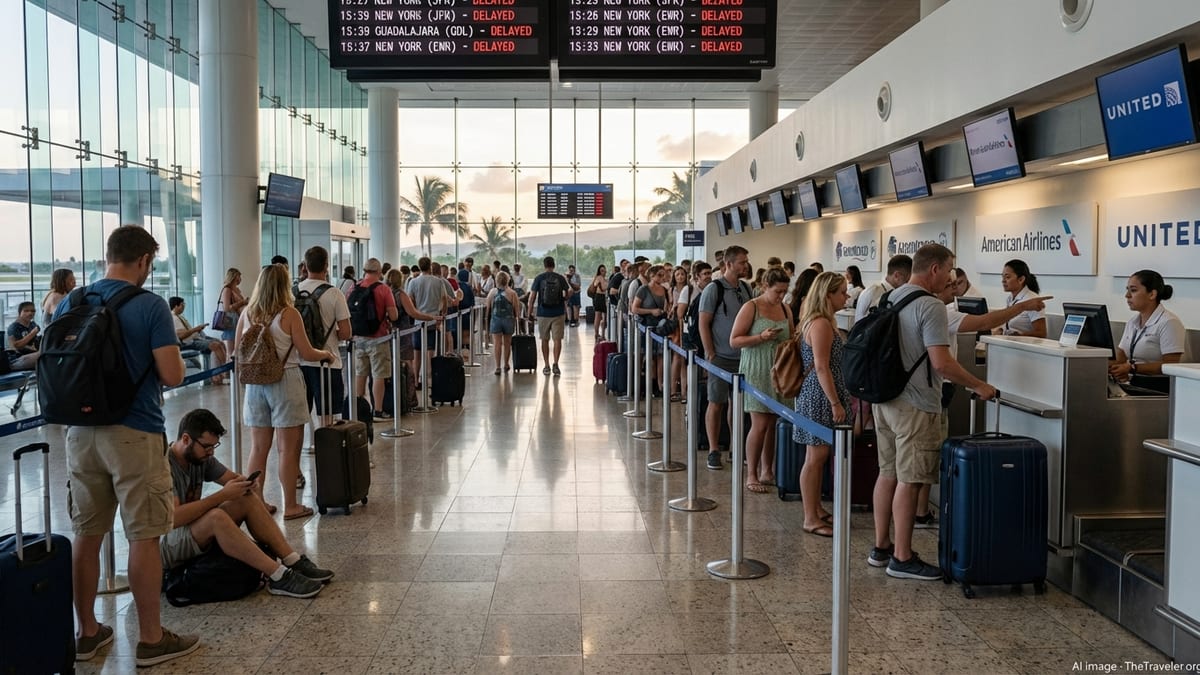
Knock-on Delays Across a Busy North American Corridor
The latest wave of disruption unfolded on one of the most heavily traveled leisure and business corridors in the Americas, with flights linking Cancun, Guadalajara and New York particularly affected. While a single cancellation may sound modest next to the 38 recorded delays, the concentration of problems at high-demand hubs meant that relatively few irregular operations triggered outsized inconvenience for passengers.
At Cancun International Airport, a key gateway for North American holidaymakers and a primary connecting point for Aeromexico, American Airlines and United, delays spread through the Friday schedule as aircraft arrived late from earlier sectors and turned around behind plan. Similar patterns were observed on services feeding New York area airports and key Mexican cities such as Guadalajara, contributing to longer-than-expected queues at check-in, security and boarding gates.
Airline operations teams worked to re-time flights, swap aircraft where possible and consolidate passenger loads to keep most services running, even if behind schedule. The aim, according to industry practice in such situations, is to preserve network connectivity while minimizing the need for further cancellations, which can strand passengers out of position for days.
For many travelers, the operational complexity behind those decisions was invisible; what they experienced instead were delayed boarding calls, changing departure estimates and uncertainty about whether they would still make planned hotel check-ins, tours or business meetings on time.
Cancun: A Tourism Hub Under Strain
Cancun has been operating near or at capacity throughout the peak winter sun season, and Friday’s irregular operations highlighted how vulnerable a high-volume leisure hub can be when even a relatively small number of flights fall out of sync. With scores of departures and arrivals compressed into daytime waves, a handful of late inbound aircraft from the United States and other Mexican cities can quickly cascade through the schedule.
Travelers reported extended waits in departure halls as ground staff repeatedly updated departure boards and public announcements. Families returning home after vacations, wedding groups heading in for weekend celebrations, and business travelers combining meetings with short beach breaks were all among those left waiting for revised departure times.
For Aeromexico, American Airlines and United, Cancun is a strategic airport, not only for point-to-point traffic but also for connecting flows that feed their wider networks. When a Cancun departure runs late, it can jeopardize onward connections in Mexico City, Monterrey or major U.S. hubs, forcing airlines to rebook passengers and, in some cases, to provide overnight accommodation when minimum connecting times cannot be met.
Travel agents and hotel concierges in resort areas around Cancun also saw a spike in last-minute requests as outbound guests sought to keep rooms a little longer, adjust airport transfer times or secure help with rebooking activities and tours affected by shifting flight schedules.
Guadalajara Feels the Ripple Effects
While Cancun draws much of the attention due to its tourism profile, Guadalajara’s role as a commercial and cultural hub means delays there carry a different kind of impact. The city serves a large diaspora community traveling frequently between Mexico and the United States, as well as domestic business travelers who depend on punctual flights to keep tightly packed itineraries on track.
With Aeromexico, American and United all operating on routes touching Guadalajara, Friday’s pattern of 38 delays included several services that either originated or terminated in the city, or passed through it as part of longer itineraries. Any slippage on arrival times can cause crew scheduling pressures and narrow turnaround windows, adding further risk of knock-on delays later in the day.
Passengers connecting in Guadalajara reported concerns over missed links to northern Mexican cities and to U.S. gateways such as Dallas, Houston and Chicago, which serve as springboards toward New York and other East Coast destinations. Even small schedule deviations can be critical for travelers who rely on late-evening departures to make it home before the weekend or to be in place for Monday morning meetings.
Local businesses, particularly those with just-in-time supply chains or time-sensitive contracts, remain sensitive to such disruptions, prompting renewed calls for better contingency planning and clearer passenger communication whenever weather, congestion or operational challenges threaten the schedule.
New York Airports Confront Another Day of Disruption
On the U.S. side of the corridor, New York’s busy airports again found themselves managing irregular operations against an already crowded backdrop. New York area facilities have been grappling with repeated waves of delays and cancellations in recent weeks, influenced by a mix of weather patterns, air traffic control constraints and heavy winter travel demand across the country.
American Airlines and United both operate substantial schedules linking New York with Mexican destinations, including Cancun and Guadalajara, as well as with domestic hubs that serve as onward gateways into Mexico. When delays arise on those southbound routes, the impact is often felt just as sharply by passengers waiting in New York to head home to Mexico or to start their vacations.
Friday’s figures underscored how quickly conditions can deteriorate when airlines and airports are already operating with little slack. A single cancellation involving a cross-border service can leave passengers competing for spare seats on alternative flights that are themselves heavily booked, particularly on peak days heading into the weekend.
In terminal concourses from check-in counters to immigration control, travelers faced the familiar uncertainty of watching departure boards flick between successive estimated departure times. For many, the chief concern was whether they would still reach Cancun or Guadalajara in time for hotel check-in windows, scheduled transfers or important family events.
Airlines Point to Congestion and Operational Challenges
Although detailed causes for every individual delay were not immediately disclosed, industry patterns on days like this point to a combination of airspace congestion, ground handling pressures and the cumulative effects of earlier disruptions across North America. Once the day’s first wave of flights is affected, subsequent rotations often inherit the delay unless there is room in the schedule to absorb it.
Aeromexico, American Airlines and United have each been dealing with sustained operational pressure this winter season, with aircraft and crew deployed intensively to meet strong leisure and visiting-friends-and-relatives demand between Mexico and the United States. Tight schedules mean unexpected maintenance checks, crew rest requirements or weather-related air traffic control restrictions can quickly spill over into measurable delays.
On February 20, 2026, the affected routes between Cancun, Guadalajara and New York appeared to reflect those wider constraints. Each delayed departure required coordination between airline operations centers, airport authorities and, where relevant, air traffic control units on both sides of the border. In practice, that often translated into incremental shifts in departure slots rather than dramatic schedule overhauls, but even modest timing changes can prove disruptive for passengers with tight onward plans.
Airlines typically prioritize maintaining safety and regulatory compliance above schedule performance, which means that if crew duty-time limits or maintenance checks are at stake, flights may depart later than planned or, in rarer cases, be cancelled outright. The lone cancellation reported on the corridor highlighted that reality, as the operator opted to remove the flight from the schedule rather than compromise on safety margins.
Passengers Face Long Lines and Scrambled Itineraries
For travelers caught up in Friday’s disruptions, the most visible effects were long lines at customer service desks, packed boarding areas and the difficult task of rearranging plans on the fly. Families with children sought quieter corners of departure halls to wait out delays, while business travelers traded messages with colleagues to adjust meeting times or confirm remote participation in appointments they could no longer attend in person.
Many passengers attempted to rebook via airline apps or websites rather than stand in physical queues, but digital channels also came under strain as large numbers of people sought new options at once. In some cases, travelers reported that available alternative flights either departed much later in the day or required additional connections through secondary hubs, increasing overall journey times.
Accommodation arrangements were another key concern, particularly for those facing overnight misconnections. While only one flight on the affected corridor was cancelled, substantial delays on earlier segments can still cause travelers to miss last flights of the evening from New York or Mexican hubs. In such situations, passengers often must negotiate with airlines over hotel vouchers, meal allowances and ground transport to and from airports.
For those able to travel the same day despite delays, stress levels remained high as they recalculated arrival times, checked transfer bookings, and contacted hotels or tour operators to confirm that later check-ins would still be honored without penalty.
What Travelers to Cancun, Guadalajara and New York Should Expect Next
Operational experts note that when disruption clusters on a single day, some degree of knock-on effect is almost inevitable in the immediate aftermath, particularly on tightly scheduled cross-border routes. Travelers booked through the weekend on flights linking Cancun, Guadalajara and New York are therefore being advised to monitor their reservations closely and allow extra time at airports.
Check-in and bag-drop queues may be longer than usual if delayed inbound flights cause multiple departures to bunch together in peak windows. Security checkpoints can also become bottlenecks when large numbers of passengers arrive at the same time after rebooking or schedule shifts. At arrival airports, immigration and customs facilities may see surges in passenger volumes when several delayed flights land close together, lengthening processing times.
Airlines are expected to work through the backlog by adjusting aircraft assignments, calling in reserve crews where available and, in some cases, upgauging aircraft on specific rotations to accommodate displaced passengers. However, with winter demand still high and many flights already well booked, spare capacity for rebooking remains limited on popular routes between Mexico and the United States.
Passengers planning to fly in the coming days are being urged by travel advisers to reconfirm flight status before leaving for the airport, to download airline mobile apps where possible, and to build in contingency time for connections, particularly when traveling through New York area airports or using Cancun and Guadalajara as transfer points.
Growing Calls for Greater Resilience in Cross-Border Air Travel
The latest disruptions have intensified ongoing discussions about how to make cross-border air travel between Mexico and the United States more resilient in the face of rising demand and frequent weather and congestion challenges. Industry analysts point out that key routes such as Cancun to New York or Guadalajara to major U.S. hubs are often scheduled very tightly to maximize aircraft utilization, leaving little room to absorb shocks when something goes wrong.
Some aviation specialists argue that incremental schedule padding, additional standby crews and more robust ground handling resources at peak airports could help smooth out irregular operations, even if such measures carry short-term cost implications for airlines. Others emphasize the role of air traffic management modernization and better coordination between Mexican and U.S. aviation authorities to manage busy airspace more efficiently.
For passengers, the immediate priority is clear communication. Travelers interviewed in recent weeks during wider North American disruptions repeatedly cited timely, accurate information as the deciding factor between an unpleasant but manageable delay and a deeply frustrating experience. Transparent updates on revised departure times, connection risks and rebooking options can go a long way toward preserving confidence in air travel, even when things do not run on schedule.
As Aeromexico, American Airlines and United work to restore normal operations on the routes linking Cancun, Guadalajara and New York after Friday’s 38 delays and 1 cancellation, the episode serves as another reminder that the region’s air travel system remains under pressure, and that both airlines and authorities face difficult decisions about how best to balance efficiency with resilience in the months ahead.