

More news on this day
A fresh wave of operational disruption across Asia is hitting passengers on China Eastern and Lao Airlines, with publicly available data indicating 33 cancellations and 416 delays affecting the carriers’ routes in the region.
Get the latest news straight to your inbox!
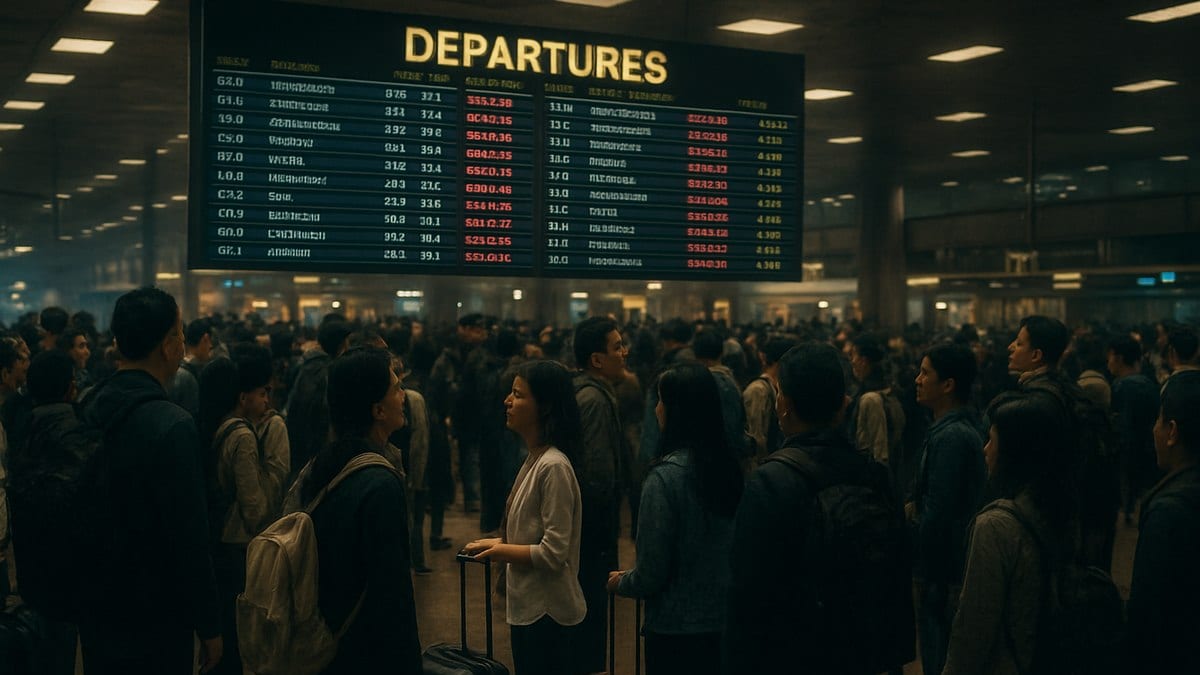
Regional turbulence compounds airline strain
The latest disruption comes as Asia Pacific airlines continue to grapple with a complex mix of operational challenges, from adverse weather to airspace restrictions and congested hubs. Recent regional tracking of flight movements in early April shows hundreds of services across key Asian airports running late or being scrubbed, with China Eastern and Lao Airlines among the operators most exposed on certain trunk and secondary routes.
Published coverage of Asia Pacific operations indicates that, as of April 7 and 8, a broader wave of disruption produced several hundred cancellations and thousands of delays across major hubs, including Shanghai, Beijing and a number of Southeast Asian gateways. Within those figures, 33 cancellations and 416 delays have been linked to routes operated by China Eastern and Lao Airlines, affecting domestic Chinese services, cross-border trips within Southeast Asia and longer itineraries that rely on these carriers for feeder legs.
The pattern adds pressure to airlines that are still rebuilding networks and staffing after the pandemic period while also serving resurgent demand. China Eastern, one of China’s largest state-backed carriers, operates a dense network across mainland hubs and onward into Southeast Asia, while Lao Airlines functions as a critical connector for Laos, where infrastructure and alternative travel options remain limited.
Industry data platforms suggest that many of the impacted services experienced prolonged ground holds and extended turnaround times rather than immediate cancellations, as operators sought to preserve connectivity for as many passengers as possible. This strategy, while limiting outright flight cuts, has translated into long delays for travelers who remain in queue for scarce departure slots or late-arriving aircraft and crews.
Shanghai and mainland hubs at the center of delays
China Eastern’s primary hubs in Shanghai have been central to this disruption phase. On-time performance trackers monitoring China Eastern’s daily operations show elevated same-day cancellation and delay ratios compared with earlier in the season, pointing to mounting strain on key domestic and regional banks of flights.
Publicly accessible operational snapshots for China Eastern indicate that, on the worst-affected days, mid single-digit percentages of the carrier’s schedule were cancelled while more than one in ten flights departed or arrived behind schedule. Aggregated into absolute numbers, that has translated into dozens of cancellations and several hundred delays for the airline alone as weather systems, air traffic congestion and knock-on effects from previous disruption cycles cascade through its network.
Reports on Chinese aviation conditions describe particularly heavy pressure at major gateways, where storm cells and seasonal thunderstorms have periodically slowed takeoffs and landings. In some cases, these weather disruptions have combined with pre-existing airspace constraints in other regions to complicate routing options, further narrowing the margin for on-time operations.
As aircraft and crews arrive late into Shanghai, Beijing and other large airports, departures for subsequent legs are forced into increasingly tight turnaround windows. Aviation analysts note that this dynamic can quickly create a domino effect in high-density networks such as China Eastern’s, where a single delay in the morning can propagate through multiple rotations by evening.
Knock-on effects for Lao Airlines and landlocked Laos
Lao Airlines, though far smaller than China Eastern, has felt an outsized impact from the disruption because of its role as a national carrier in a landlocked country with fewer alternative transport links. The airline operates routes that connect Laos to key regional hubs, including cities in Thailand, Vietnam, China and beyond, many of which rely on timely connections with larger partners such as China Eastern.
Operational information available from Lao Airlines’ published schedules, together with regional delay statistics, indicates that several of the 33 cancellations and a portion of the 416 delays have affected flights serving or connecting through Laos. Fog and low visibility at certain Lao airports, particularly those in mountainous areas, have historically made operations vulnerable to disruption, and recent conditions have again contributed to ground holds and last-minute schedule changes.
When upstream flights operated by larger partners arrive late into regional hubs, onward departures for Laos can be forced into extended waits or, in tight curfew environments, outright cancellation. Given the limited daily frequencies on some Lao Airlines routes, travelers disrupted by a single cancellation can sometimes face waits of a full day or longer for the next available seat.
Travel forums and passenger reports highlight the challenges this poses for those relying on Lao Airlines to begin or complete complex itineraries, especially when tickets are issued through multiple carriers or online travel agencies. Rebooking options may be constrained by aircraft availability and bilateral traffic rights, further complicating recovery from a concentrated burst of cancellations and delays.
Passengers navigate a patchwork of compensation rules
The turbulence across China Eastern and Lao Airlines routes is also drawing attention to the patchwork of passenger rights and compensation policies that govern delays and cancellations in Asia. Publicly available policy documents for Chinese carriers show that compensation thresholds can differ significantly from the European Union’s EU261 framework and from regulations in markets such as the United States.
China Eastern’s published conditions of carriage and related notices outline compensation or assistance in cases of severe delay or cancellation, but often with timing thresholds that are longer than those familiar to many European travelers. In some instances, compensation only applies when delays exceed several hours, and the amounts may be fixed rather than scaled to distance or ticket price. There can also be distinctions between disruptions caused by the airline’s own operations and those attributed to weather, air traffic control or other external factors.
For Lao Airlines passengers, the situation can be more complex when journeys span multiple jurisdictions. A single itinerary might fall partly under Lao regulations, partly under the rules of a foreign departure or arrival country, and partly under the contractual terms of codeshare or interline partners. As a result, travelers experiencing one of the 33 cancellations or any of the 416 delays may find that their entitlements differ markedly depending on route structure and ticketing arrangements.
Consumer advocates often recommend that passengers study airline conditions of carriage for each carrier on their itinerary and retain detailed records of boarding passes, delay notifications and receipts for accommodation or meals. In Asia’s fragmented regulatory landscape, these documents can prove important when seeking reimbursement or goodwill gestures once travel is complete.
What travelers can do amid ongoing volatility
With schedules for China Eastern and Lao Airlines still under pressure from network-wide challenges, travel specialists suggest that passengers build additional buffer time into itineraries that rely on regional connections, particularly when transiting through congested hubs. Recent disruption patterns show that even modest initial delays can compound rapidly when connections are tight and aircraft rotations are finely tuned.
Published guidance from aviation and consumer platforms emphasizes the importance of monitoring flights through official airline channels and reputable tracking tools. Real-time status checks can alert passengers early to creeping delays or gate changes, allowing them to adjust plans, request rebooking or arrange overnight accommodation when connections become untenable.
Travel planners also note that, during periods of elevated disruption, non-stop routings or itineraries with longer layovers may offer a more reliable path than aggressively short connections across multiple carriers. For some journeys within Asia, alternative regional airlines or different hub choices can reduce exposure to the most congested nodes currently affecting China Eastern and Lao Airlines operations.
As Asia Pacific air travel continues to ramp up in 2026, observers expect periodic clusters of cancellations and delays to remain a feature of the market, particularly during severe weather events or when international tensions trigger airspace restrictions. For now, the latest count of 33 cancellations and 416 delays linked to China Eastern and Lao Airlines stands as a reminder of how quickly operational stress in one part of the network can ripple throughout the region.