

More news on this day
Southwest Airlines customers flying through Dallas Love Field on April 3 faced a fresh round of disruptions, with three cancellations and multiple delays rippling across the carrier’s network and affecting travelers bound for major airports in Chicago, Austin, Birmingham, Nashville and other cities.
Get the latest news straight to your inbox!
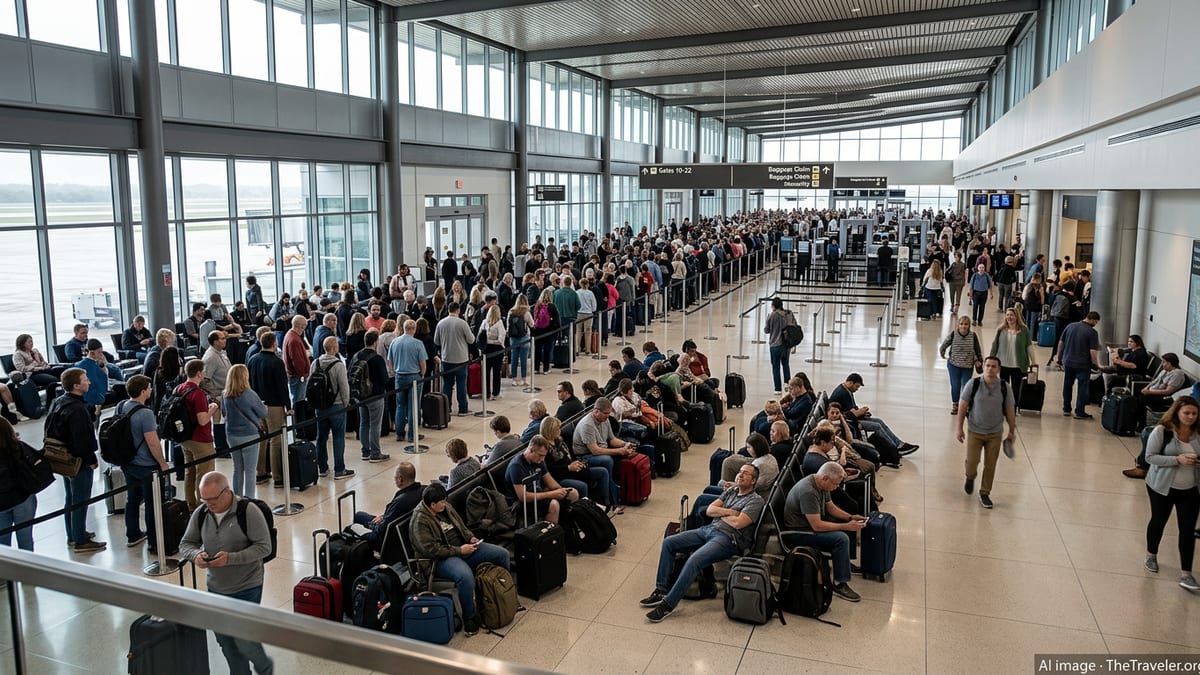
Stormy Spring Adds Pressure to Dallas Operations
Publicly available delay trackers for early April show that Dallas Love Field, the primary base for Southwest Airlines, has been under sustained pressure as spring storms and operational bottlenecks combine to slow the flow of flights. The latest disruption on April 3 included three Southwest cancellations at Love Field, alongside a cluster of late departures and arrivals.
Reports indicate that the problems in Dallas did not occur in isolation. Recent storm systems over Texas and the central United States have already triggered hundreds of delays across major state airports this week, including Dallas Fort Worth International, Houston’s George Bush Intercontinental and San Antonio International, creating a fragile operating environment in which any new disruption can quickly cascade through airline schedules.
For Southwest, which relies heavily on Dallas Love Field for point to point connectivity across its domestic network, even a small number of cancellations can have an outsized effect. Aircraft rotations and crew schedules are tightly sequenced, meaning that a delay or cancellation in Dallas at the start of the day can lead to late departures or missed connections several legs later.
While the three cancellations at Love Field represent a relatively modest share of the airline’s total daily schedule, flight tracking data show that they occurred alongside dozens of delays across Texas and beyond, contributing to a wider pattern of strain on the U.S. aviation system at the start of the busy spring travel period.
Ripple Effects Reach Chicago, Austin, Birmingham and Nashville
Network data compiled from recent coverage of U.S. flight performance show that Southwest operations at Chicago Midway, Austin Bergstrom, Birmingham Shuttlesworth and Nashville International were all affected by delay waves tied to weather and congestion across the central United States. Travelers on routes linking these airports with Dallas Love Field faced extended waits on the ground and in the air as aircraft and crews arrived late from earlier segments.
Chicago Midway, a major Southwest stronghold, has been highlighted in recent analyses as one of the country’s most delay sensitive airports when storm systems move through the Midwest. Increased traffic volumes, combined with air traffic control spacing requirements in poor weather, have recently produced longer ground queues for departures and periodic arrival holds, conditions that were again in evidence around the April 3 disruption window.
Austin, Birmingham and Nashville are also important spokes in Southwest’s point to point network. Publicly available schedule data show daily Love Field services to each of these airports, meaning that operational issues in Dallas can quickly affect flight banks in Central Texas and the Southeast. When inbound aircraft depart Dallas behind schedule, subsequent turnarounds at these outstations can be compressed, increasing the likelihood of further delays later in the day.
In some cases, passengers reported missed connections at intermediate airports when Dallas originating flights arrived substantially behind schedule. Travel industry coverage notes that this pattern of rolling disruption has been common during recent weather events, particularly for carriers with dense short haul networks.
Broader Pattern of Disruptions for Southwest in Early 2026
The issues at Dallas Love Field fit into a wider pattern of disruption for Southwest Airlines in early 2026. Recent aviation reports describe the carrier among the U.S. airlines most affected by spring storms and airspace constraints, with hundreds of delays and several dozen cancellations logged across multiple peak travel days.
Aggregated data from flight status platforms cited in recent travel coverage indicate that Southwest has experienced particularly heavy disruption at airports where it maintains a high share of departures, including Chicago Midway, New York LaGuardia, Denver, Austin and Las Vegas. In such markets, a localized weather or air traffic event can touch a large portion of the airline’s daily schedule, increasing the risk of widespread knock on effects.
Industry analysts have also pointed to broader cost and capacity pressures for the airline in 2026. Recent financial commentary notes that rising jet fuel prices are squeezing margins across the sector, while airlines also continue to grapple with staffing constraints in some ground handling and regional operations. These factors can limit an airline’s ability to recover quickly from an operational shock, making each cancellation and delay more disruptive for customers.
Despite these headwinds, historic performance metrics show that Southwest has generally maintained a comparatively low cancellation rate in recent years, even when system wide delays have increased. Observers note, however, that travelers tend to feel the impact most acutely on days like April 3, when performance at a central base such as Dallas Love Field weakens and the ripple effects extend across several regions at once.
What Travelers through Love Field and Beyond Can Expect
Travel advisories published by consumer and air passenger rights organizations in recent days highlight several practical implications for those flying on Southwest through Dallas and the affected airports in Chicago, Austin, Birmingham and Nashville. With weather driven disruption in the forecast and the network already stretched, there is an elevated risk that even minor schedule tweaks could compound into longer waits at the gate or on the tarmac.
Passengers are being encouraged by travel industry guidance to monitor flight status closely on the day of departure, as same day schedule changes have become more common when airlines adjust to evolving weather and traffic flow programs. Many airlines, including Southwest, allow customers to rebook onto alternative same city airports or different departure times when a significant delay or cancellation occurs, though options may be limited during peak periods.
Publicly available information about U.S. consumer protection rules explains that when a flight is canceled by the airline, customers are generally entitled to a refund if they choose not to travel, even if the ticket was sold as nonrefundable. For delays, airlines set their own policies regarding meal vouchers, hotel coverage and rebooking options, meaning terms can differ significantly between carriers.
For travelers connecting through Dallas Love Field to or from Chicago, Austin, Birmingham or Nashville in the coming days, aviation experts featured in recent coverage suggest building extra time into itineraries, considering earlier departures where possible and remaining flexible about routing. With the spring travel season gaining momentum and severe weather still in the forecast for parts of the central and eastern United States, the conditions that triggered the April 3 disruption may persist, keeping pressure on Southwest’s Dallas centric network.