

More news on this day
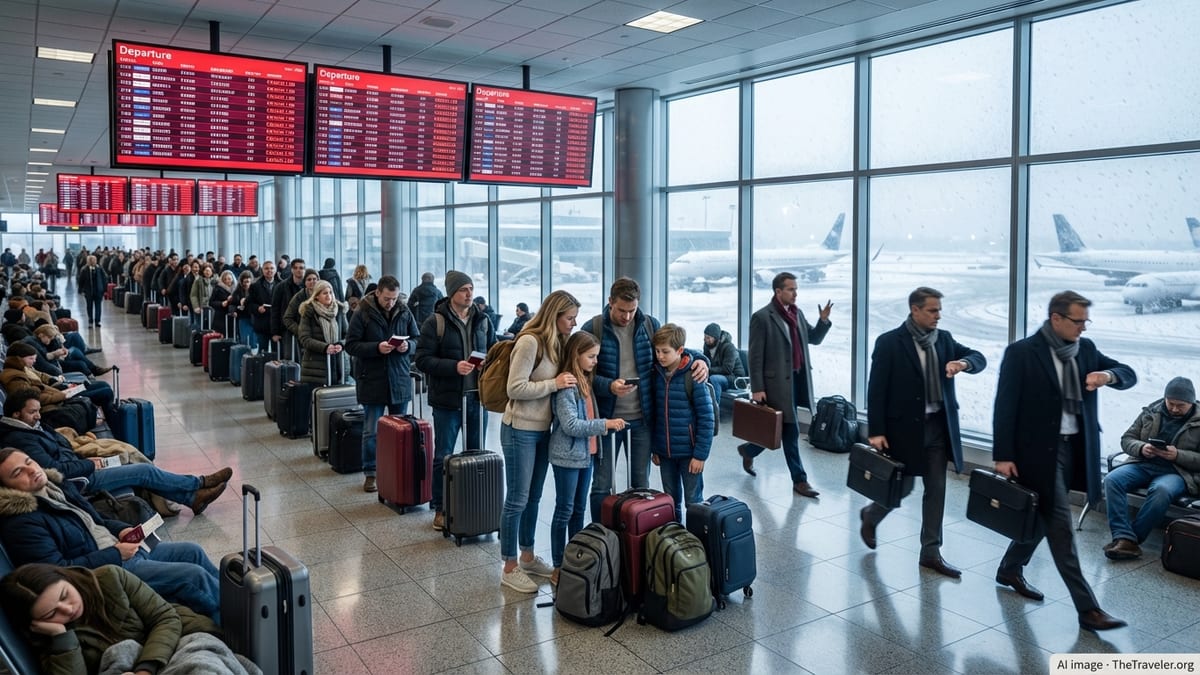
Travel through Denver International Airport has been disrupted after 216 flights were reported delayed and 7 canceled in a single day, affecting travelers on United Airlines, American Airlines, Southwest Airlines, and other carriers across major domestic and international routes.
Get the latest news straight to your inbox!
Wide-Ranging Impact Across Major U.S. Carriers
Publicly available flight-tracking data and industry reports indicate that Denver International Airport, one of the nation’s busiest hubs, is experiencing a fresh wave of operational disruption, with more than 220 total flights delayed or canceled. The latest figures show 216 delays and 7 cancellations, touching a broad mix of domestic and international services.
Major U.S. carriers are among the most affected. United Airlines, which maintains a significant hub operation in Denver, has seen multiple services pushed back from their scheduled departure and arrival times. American Airlines and Southwest Airlines, both with extensive domestic networks through Denver, are also experiencing schedule disruptions on key trunk routes to other large hubs.
The disruption is contributing to knock-on effects in the national aviation system, as late departures from Denver ripple across onward connections. Travelers heading to and from the Rocky Mountain region are encountering longer-than-normal travel days, missed connections, and the need to rebook on alternative flights as capacity tightens on remaining services.
Reports from aviation news outlets describe Denver’s latest bout of disruption as part of a broader pattern of irregular operations at major U.S. airports in recent weeks, linking the situation at Denver to a wider environment of strained schedules and high passenger volumes.
Key Routes to Los Angeles, Chicago, New York, San Francisco, and Dallas Affected
The current wave of delays and cancellations is hitting some of the most heavily traveled routes in the United States. Flight schedules show that connections between Denver and coastal hubs such as Los Angeles, San Francisco, and New York are among those affected, alongside heavily used links to Chicago and Dallas.
These routes are critical corridors for both business and leisure travelers, serving as gateways to international long-haul flights as well as key domestic connections. Disruption on Denver to Los Angeles services, for example, can interfere with onward connectivity to transpacific departures, while delays on Denver to New York and Denver to Chicago flights can cascade into missed connections for transatlantic and East Coast itineraries.
Denver’s role as a central connecting point in the national network amplifies the effect of any operational issues. When flights between Denver and major hubs such as Chicago and Dallas experience delays, passengers across multiple time zones can find themselves impacted, even if their journeys began far from Colorado.
Industry analysis regularly highlights Denver’s connections to these major cities as among the busiest in the country, meaning even a relatively small number of delayed or canceled flights can translate into thousands of affected passengers over the course of a single day.
Possible Drivers: Weather, Congestion, and Operational Strain
While specific causes can vary by individual flight, publicly available information on U.S. aviation performance points to a combination of factors that typically drive disruptions of this scale. These can include fast-changing weather conditions in the Rockies, air traffic management restrictions along key corridors, and congestion at origin or destination hubs.
Weather-sensitive operations are a recurrent challenge for Denver, where sudden shifts in wind, low cloud, or storms can temporarily reduce the airport’s capacity, leading to flow-control measures and ground holds. When arrival and departure rates are reduced, airlines often respond by delaying departures or consolidating services, which may result in cancellations on lower-demand flights.
National data on flight delays and cancellations also shows that strain on airline operations, such as crew scheduling limitations and tight aircraft rotations, can magnify the effect of relatively minor disruptions. When one leg of an aircraft’s daily pattern is delayed, subsequent flights may depart late, and the margin to recover lost time diminishes as the day progresses.
Recent coverage of nationwide aviation performance has underscored how major hubs including Chicago, Los Angeles, New York, and Dallas have all faced high levels of delays and cancellations on certain days, suggesting that Denver’s current disruption is unfolding within a broader context of operational pressure across the U.S. aviation system.
What Passengers Passing Through Denver Are Experiencing
Travelers scheduled to pass through Denver are encountering longer waits at gates, frequent schedule adjustments, and in some cases same-day cancellations that force changes to travel plans. Many passengers on affected airlines are being rebooked onto later services out of Denver or re-routed through other hubs, depending on seat availability and network options.
Those connecting through Denver to major hubs such as Los Angeles, San Francisco, New York, Chicago, and Dallas are especially vulnerable to missed onward flights. When an inbound service arrives late into Denver, travelers may find their connecting departure already boarding or closed, leading to additional time in the terminal while they await the next available option.
Published guidance from airlines and aviation agencies generally encourages travelers to monitor their flight status frequently on days with elevated disruption, as departure and arrival times can change multiple times. Flexible travel arrangements, such as allowing longer connection windows and avoiding the last flight of the day on critical segments, are often recommended strategies during periods of irregular operations.
For some passengers, the disruption also means dealing with secondary complications such as rebooked hotel stays, rearranged ground transport at destination cities, and changes to work or event schedules that depended on timely arrivals.
How the Disruption Fits Into a Wider Pattern of U.S. Flight Delays
The situation at Denver comes against a backdrop of heightened flight disruption across the United States in recent weeks. Industry trackers and travel news outlets have identified repeated spikes in delays and cancellations at major hubs including Chicago, Los Angeles, New York, and Atlanta, attributing them to a mix of weather events, demand surges, and operational challenges.
Analysts studying Bureau of Transportation Statistics data and real-time tracking platforms note that large hub airports, particularly those used as connecting centers by multiple carriers, are especially prone to ripple effects. When one node in the network experiences constraints, the impact can propagate quickly across geographically distant airports, as aircraft and crews fail to arrive in position for their next scheduled legs.
Denver’s current tally of 216 delayed and 7 canceled flights is significant in that context, illustrating how a single day of irregular operations at a major hub can contribute to national totals that run into the thousands. Even when the Federal Aviation Administration lists no formal ground stops for Denver, route-specific congestion and carrier-level constraints can still produce substantial disruption for passengers.
As airlines continue to operate close to capacity on popular routes linking Denver with Los Angeles, Chicago, New York, San Francisco, and Dallas, any further weather or operational challenges could prolong the impact on travelers, reinforcing the need for passengers to plan with potential delays in mind when routing itineraries through Denver International Airport.