

More news on this day
Travel across the United States faced fresh disruption as Dallas/Fort Worth International Airport (DFW) logged 149 delayed flights and seven cancellations, unsettling passenger itineraries and affecting regional carriers such as SkyWest, Envoy Air and PSA Airlines on busy routes to New York, Chicago, Phoenix and other major destinations.
Get the latest news straight to your inbox!
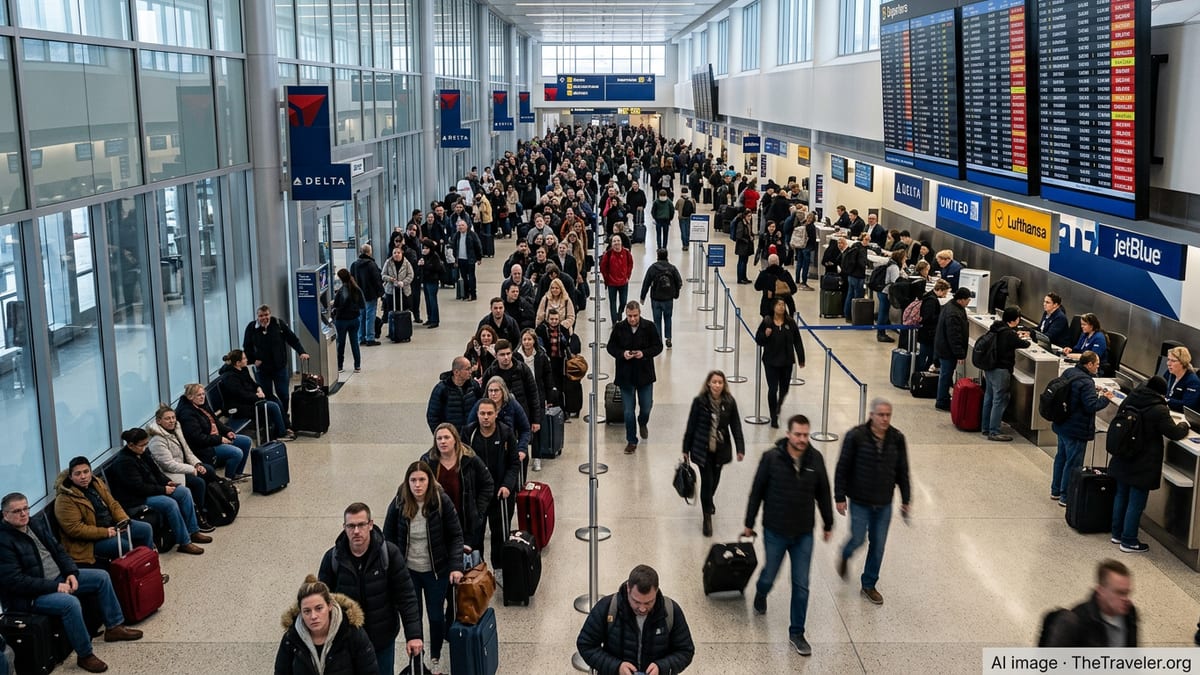
Operational Strain at a Major National Hub
The disruption at DFW underscores how quickly conditions at one of the nation’s busiest hubs can cascade through the wider air travel network. Publicly available tracking data and industry coverage indicate that delays at DFW have periodically intensified in recent weeks, with bottlenecks forming during periods of heavy traffic and challenging weather over North Texas.
Recent reporting on broader disruption patterns shows that regional carriers like SkyWest, Envoy Air and PSA Airlines have been prominently represented in delay and cancellation tallies, particularly at large connecting hubs such as Dallas/Fort Worth and Chicago O’Hare. These operators, which fly many of the feeder routes for major network airlines, are highly exposed when schedules compress or thunderstorms pass over key hub airports.
The latest figures of 149 delays and seven cancellations at DFW fit into a wider context of elevated operational stress. Separate coverage of storms affecting major hubs has highlighted days when Chicago, Dallas and other large airports recorded more than a thousand combined delays, signaling how quickly conditions can shift from manageable to highly disruptive.
Regional Airlines Bearing the Brunt
SkyWest, Envoy Air and PSA Airlines, which operate a significant share of regional connections under major airline brands, appear among the most affected in the latest disruption around DFW. Industry data and recent analyses of irregular operations show that these carriers often experience a higher proportion of delayed or cancelled flights on busy days, reflecting their role in serving smaller markets and high-frequency shuttle routes.
SkyWest has recently been associated with waves of cancellations and delays across multiple U.S. airports, including Dallas/Fort Worth, Chicago O’Hare and San Francisco. Coverage of recent events has described how a series of schedule disruptions at SkyWest affected travel not only within the continental United States but also on cross-border routes to Canada, Mexico and Puerto Rico, illustrating the interlinked nature of regional and international operations.
Envoy Air and PSA Airlines, both key providers of regional feed to larger network carriers, have likewise featured in recent roundups of irregular operations. Past reports on weather-driven disruptions at Texas airports, including Houston, Austin and Dallas/Fort Worth, have pointed to Envoy and PSA among the airlines recording notable numbers of delayed flights and select cancellations, particularly on shorter-haul services.
Routes to New York, Chicago, Phoenix and Beyond Affected
The impact of DFW delays extends far beyond North Texas. As a central hub in many itineraries, disruptions there can reverberate through routes linking major cities such as New York, Chicago and Phoenix, as well as secondary markets that depend heavily on connecting traffic. When regional operations slow at DFW, passengers bound for the East Coast, Midwest or Southwest often encounter missed connections and rebookings.
Recent coverage of storm-related disruptions at Chicago O’Hare highlights a similar pattern, with hundreds of delays and scores of cancellations affecting carriers like Envoy Air, SkyWest and PSA Airlines. The combined effect of concurrent or back-to-back disruptions at both Chicago and Dallas can particularly complicate travel for passengers moving between major business centers, including New York and Toronto, as well as for those connecting to smaller regional airports.
Travel through Phoenix has also seen knock-on effects when DFW-based flights run late or are cancelled, according to publicly available tracking and user reports. With Phoenix serving as another important connecting point in the Southwest, delays on Dallas legs can ripple onward to western U.S. destinations and select cross-border routes, especially when regional carriers operate multiple short sectors with tightly timed turnarounds.
Weather, Congestion and Network Complexity
The latest disruption statistics at DFW are unfolding against a backdrop of seasonal weather variability and already complex airline networks. Thunderstorms, low clouds and strong winds can quickly reduce runway capacity or prompt ground stops at large hubs, while busy banks of arriving and departing flights leave little margin for recovery when one operational element falters.
Publicly available federal performance data continues to show that air carrier issues, national airspace constraints and extreme weather all play recurring roles in delay and cancellation patterns across U.S. airlines. For regional carriers, the effect is often amplified, because a single aircraft is scheduled to operate several short segments in a day and one lengthy hold or diversion can cascade across multiple downstream flights.
At DFW specifically, recent accounts from industry observers and travelers have described days of intensive congestion, with aircraft waiting extended periods for gates and taxi routes during weather events. These conditions can contribute to an accumulation of late departures and arrivals, eventually showing up in daily tallies as high delay counts even when the number of outright cancellations remains relatively limited.
What Travelers Can Expect in the Coming Days
With 149 delays and seven cancellations already recorded at DFW in the latest disruption cycle, travelers connecting through Dallas can expect continued schedule adjustments, particularly on regional routes operated by SkyWest, Envoy Air and PSA Airlines. Published advice from airlines and travel industry outlets commonly recommends that passengers monitor their flight status closely and build extra time into itineraries that rely on tight connections at major hubs.
Given recent patterns of storms affecting large parts of the central United States, additional short-notice changes remain possible for routes linking Dallas with New York, Chicago, Phoenix and other high-traffic cities. Even when conditions appear normal at a passenger’s origin or final destination, disruption at a hub like DFW can still lead to aircraft and crew imbalances, extending the impact beyond the immediate weather-affected region.
For now, publicly available information suggests that airlines are working within a constrained system that remains vulnerable to spikes in demand and localized weather events. Travelers relying on regional connections through DFW, especially on peak travel days, are likely to see some level of knock-on effect until schedules realign and delay numbers at the airport move back toward typical levels.