

More news on this day
Passengers traveling through Fort Lauderdale-Hollywood International Airport on March 22, 2026, faced significant disruption as publicly available data showed hundreds of flight delays and dozens of cancellations across major U.S. carriers including Spirit, Delta, Frontier, JetBlue, Southwest and American Airlines.
Get the latest news straight to your inbox!
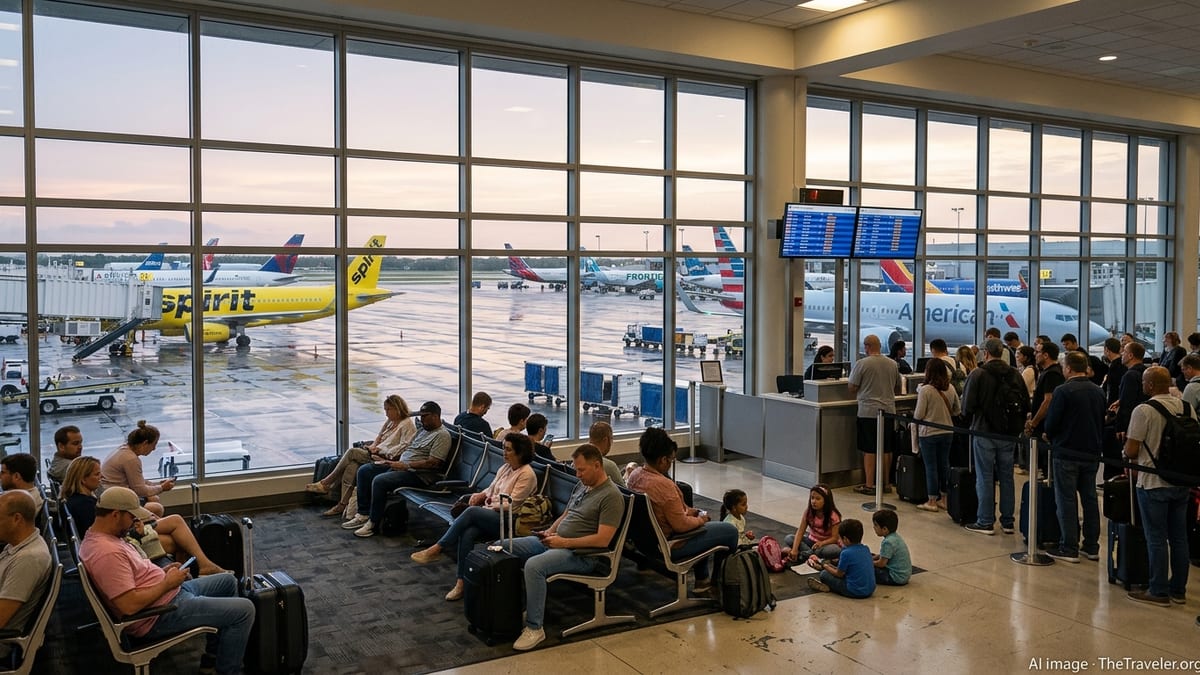
Major Carriers Report Elevated Delays and Cancellations
Flight-tracking and airport status boards on Sunday indicated that Fort Lauderdale-Hollywood International Airport was contending with an unusually high number of schedule disruptions, with a concentration of delays and cancellations among large domestic carriers serving the South Florida hub. Spirit, Delta, Frontier, JetBlue, Southwest and American Airlines all appeared prominently on delay and cancellation tallies, reflecting broader operational strain across the U.S. network.
Published coverage and real-time aviation dashboards showed that by midafternoon, the cumulative impact at Fort Lauderdale included hundreds of delayed departures and arrivals, alongside several dozen flights that were canceled outright. The pattern placed Fort Lauderdale among the more heavily affected airports in the country, despite relatively normal ground conditions at the airfield itself.
The situation followed a period in which federal transportation statistics have documented ongoing challenges for U.S. airlines managing tight schedules, limited spare aircraft and crew availability. Historic data from the U.S. Department of Transportation highlights that carriers such as Spirit, Frontier and JetBlue have, at various points, posted above-average disruption rates, leaving them particularly exposed when wider system pressures emerge.
Industry metrics also suggest that low-cost and leisure-focused airlines, which have a substantial presence at Fort Lauderdale, can be more vulnerable to cascading delays because they tend to operate aircraft with fewer schedule buffers. When one flight encounters an extended delay, subsequent rotations throughout the day are more likely to be affected, amplifying the impact on passengers.
Weather and System Pressures Ripple Into South Florida
While local conditions in Broward County remained largely favorable for flying on Sunday, the airport’s disruption levels appeared to be tied to a broader pattern of operational stress across the national airspace system. Recent severe winter storms across the northeastern United States earlier in 2026 disrupted airline networks for days, and recovery efforts have continued to reverberate through hub-and-spoke systems that connect to Fort Lauderdale.
Publicly available meteorological and aviation reports indicate that earlier-season storms and traffic management initiatives at major hubs in the Northeast and Midwest have generated recurring ground stops, reroutes and crew re-positioning challenges. Even after storm systems clear, airlines often require several days to restore normal equipment and crew rotations, especially on longer domestic routes serving Florida’s high-demand leisure markets.
Airline performance analyses show that national aviation system delays, which include air traffic control flow programs and congestion at busy corridors, now account for a sizable portion of disruption alongside traditional causes such as weather and maintenance. Fort Lauderdale’s role as a key gateway for both domestic and Caribbean traffic means that schedule disturbances elsewhere can quickly translate into local bottlenecks at its four terminals.
As the spring break and shoulder travel seasons bring elevated passenger volumes to South Florida, any national-scale disruption can be magnified. Fort Lauderdale’s traffic has grown steadily in recent years, according to airport statistics, leaving limited slack in gate and runway capacity when carriers are managing off-schedule operations.
Passenger Experience Marked by Long Waits and Rebooking Challenges
For travelers caught in Sunday’s disruptions, the practical impact was measured in hours on airport concourses and at gate areas. Social media posts and traveler reports described long lines at check-in counters, crowded seating near departure gates and uncertainty about revised departure times as rolling updates appeared on information screens.
Publicly shared accounts from recent days across Florida show that some passengers attempting to depart on low-cost carriers have already undergone multiple cancellation and rebooking cycles, sometimes over several attempts to leave the state. Those broader experiences framed Sunday’s issues at Fort Lauderdale, where travelers faced the prospect of missed connections, shortened vacations and last-minute changes to hotel and ground transport plans.
Airline customer service channels, including airport desks and call centers, appeared to be under significant strain as disrupted passengers sought refunds, vouchers or alternative routings. With many flights during peak periods operating at or near full capacity, finding same-day or even next-day seats for displaced travelers can be difficult once widespread delays take hold across several carriers simultaneously.
Travel analysts note that the concentration of ultra-low-cost carriers at Fort Lauderdale, while offering attractive fares, can leave passengers with fewer backup options when operations falter. Schedules often rely on point-to-point flying with limited interline agreements, which reduces the ability to shift customers to other airlines when a route is severely affected.
Operational and Infrastructure Context at Fort Lauderdale
Fort Lauderdale-Hollywood International Airport has grown into one of the busiest airports in Florida, with four terminals and dozens of gates serving a mix of domestic, Caribbean and Latin American destinations. According to airport planning documents and recent traffic summaries, the facility has been managing sustained growth in passenger numbers alongside major infrastructure projects designed to expand capacity over the coming years.
The airport’s reliance on a dense bank of short- and medium-haul flights by carriers such as Spirit, Southwest, JetBlue and Frontier creates both strengths and vulnerabilities. Under normal conditions, fast aircraft turnarounds and frequent departures provide robust connectivity for South Florida residents and visitors. On days with significant regional or national stress, however, that same density can quickly translate into congestion when aircraft and crews cannot arrive as scheduled.
Regulatory filings and airport performance studies emphasize that even relatively small increases in average delay per operation can cause exponential growth in total system disruption at busy airports. Fort Lauderdale’s integration into the broader South Florida aviation network, which includes Miami and West Palm Beach, means that traffic management initiatives affecting one airport can ripple into the others as air traffic controllers balance flows in constrained airspace.
Ongoing modernization, including terminal upgrades and improved ground access projects near key highway interchanges, is intended to help accommodate demand and reduce choke points. However, such works can also introduce temporary operational complexities, and they do not eliminate exposure to national-level issues such as weather events and staffing constraints in air traffic control sectors far from South Florida.
Guidance for Travelers Using Fort Lauderdale in the Coming Days
In light of Sunday’s disruptions, travel industry guidance strongly encourages passengers flying into or out of Fort Lauderdale-Hollywood International Airport over the next several days to closely monitor flight status through airline channels before leaving for the airport. Same-day schedule changes and rolling delays are more likely when carriers are working through a backlog of repositioning aircraft and crews following a period of heavy disruption.
Passengers are also advised, based on recommendations from consumer advocates and airline performance data, to allow additional time at the airport during busy morning and evening departure banks. Early arrival provides a buffer for longer-than-normal lines at security checkpoints and customer service counters if flights are retimed or rebooked.
For those with flexible plans, travel planners often suggest considering early-morning departures, which can be less affected by knock-on delays from earlier flights, or routing through alternative Florida airports when practical. Travelers with tight connections at other hubs may wish to build in longer layovers to reduce the risk of missed onward flights.
As airlines adjust their schedules and the national airspace system stabilizes, disruption levels at Fort Lauderdale are expected to gradually ease. For now, however, the airport remains a focal point of delay-related frustration for U.S. travelers as carriers work to restore on-time performance across their networks.