

More news on this day
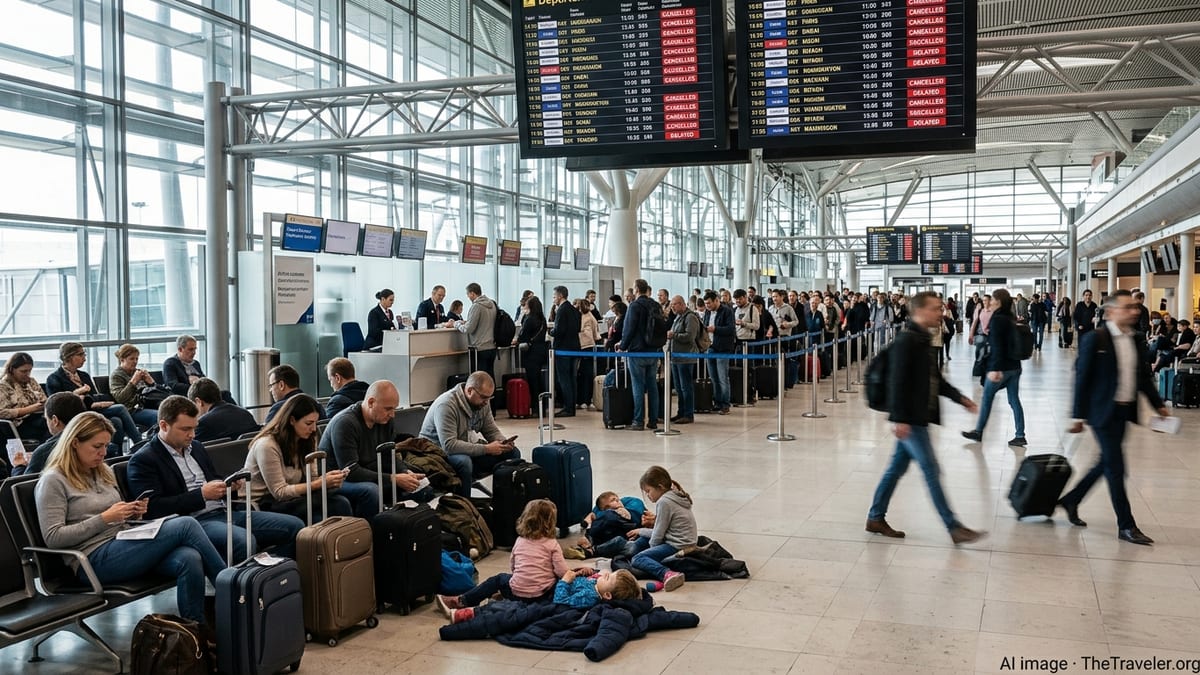
Travelers moving through France’s busiest air corridors faced a fresh wave of disruption on April 11, as data from flight-tracking and travel-industry reports indicated four cancellations and more than 100 delays affecting services operated by Air France and Scandinavian carrier SAS on key routes linked to Paris and Nice.
Get the latest news straight to your inbox!
Operational Strains Converge on Key French Hubs
The latest disruption comes at a time when airlines across Europe are already grappling with tight schedules, high demand and infrastructure constraints. Recent operational overviews for early April 2026 show elevated levels of delays and cancellations across the continent, with France now seeing a concentrated impact on its two flagship gateways, Paris and Nice.
Publicly available flight-monitoring data and sector coverage suggest that the four cancellations tied to Air France and SAS are a small fraction of overall activity but are highly visible because they affect trunk routes into and out of Paris Charles de Gaulle, Paris Orly and Nice Côte d’Azur. These airports handle a mix of domestic shuttles, intra-European links and long-haul connections, so even limited schedule cuts can ripple through onward itineraries.
Reports focused on France indicate that the current round of disruption sits alongside a broader pattern of irregular operations seen since the start of 2026, when adverse weather and capacity constraints at major European hubs triggered widespread delays. In recent days, attention has shifted from storms and winter conditions to operational bottlenecks higher up the network, including traffic-management challenges and staffing pressures affecting airlines and ground services.
For passengers, the practical effect is similar regardless of the underlying cause: longer-than-planned waits in terminals, missed connections and rebooked journeys that can stretch into the following day. With Paris and Nice acting as essential transfer points for both business and leisure traffic, even modest punctuality issues quickly become a nationwide travel story.
Paris and Nice Routes Shoulder the Brunt
Paris remains the focal point of Air France’s global operation and a major node for SAS’s European partnerships, which means that any strain on schedules is often most visible there. On April 11, the majority of delayed services linked to the two carriers were associated with departures or arrivals at Charles de Gaulle and Nice, with additional knock-on effects reported at Orly.
Travel-industry reporting on France the same day highlighted that dozens of services to and from Paris and Nice across multiple airlines had already been under pressure, with at least one publication noting more than 250 combined cancellations and delays nationally when all carriers were taken into account. Within that broader picture, the four Air France and SAS cancellations stand out for affecting heavily trafficked domestic and regional routes that funnel passengers into long-haul banks.
Nice, France’s primary gateway to the Riviera, has experienced particular strain during peak travel periods in 2026, and operational statistics from recent weeks have pointed to elevated average delay times on the Nice–Paris corridor. When services are cancelled on this route, passengers risk missing onward flights to North America, the Middle East or other parts of Europe, forcing complex rebookings and overnight stays.
In Paris, congestion at key departure waves can magnify even minor disruption. A late-arriving aircraft from Scandinavia, for instance, can push back SAS flights to Nordic capitals and at the same time reduce schedule flexibility for Air France services that share the same terminal and runway slots, contributing to the rising tally of delayed operations recorded in monitoring data.
Air France and SAS in a Wider European Context
The setbacks for Air France and SAS in France form part of a wider pattern of instability across European aviation this spring. Recent analyses of regional operations this month describe hundreds of delays and scores of cancellations on single days across hubs in Germany, the United Kingdom, the Netherlands, Denmark and Spain, underscoring the fragility of airline schedules when multiple systems come under pressure at once.
Published disruption trackers have cited factors ranging from residual winter weather and strong winds to staffing shortages at air traffic control centers and ongoing industrial tensions in parts of the sector. In France, separate coverage has drawn attention to recurring air traffic management issues and localized strike actions earlier in the year, which together have contributed to an environment where on-time performance remains difficult to sustain.
Within this context, Air France and SAS are far from outliers. Other major European carriers have also recorded notable shares of delayed or cancelled operations on recent peak days. However, the combination of Air France’s dominant domestic presence and SAS’s role in linking Nordic markets to French hubs means that their disruptions in Paris and Nice resonate particularly strongly with travelers from Northern Europe heading to Mediterranean destinations or onward long-haul flights.
Industry observers note that airlines have significantly ramped up capacity compared with the previous two years to meet strong demand, particularly on leisure-heavy routes to southern Europe. Infrastructure, staffing and airspace capacity, however, have not always expanded at the same pace, increasing the likelihood that relatively small operational issues can cascade into measurable nationwide disruption, such as the four cancellations and more than 100 delays now recorded for Air France and SAS in France.
Passenger Rights and Options Under European Rules
For affected travelers, one of the most pressing questions is what compensation or assistance may be available when flights are cancelled or significantly delayed. Under the European Union’s air passenger rights framework, travelers departing from EU airports or flying with EU-based carriers such as Air France and SAS can, in many circumstances, claim rebooking, refunds or financial compensation when disruptions meet specific thresholds and are considered within the airline’s control.
Guidance published by consumer advocates and passenger-rights organizations emphasizes that eligibility depends on several factors, including the length of the delay at final arrival, the distance of the flight and the reason for the disruption. Severe weather and certain air traffic control restrictions are typically treated as extraordinary circumstances, while technical issues or crew-rostering problems tend to fall on the airline’s side of responsibility.
Even where cash compensation does not apply, publicly available information from regulators and travel-advice services highlights that carriers still have obligations to offer care and assistance during extended waits. This can include meals, refreshments, hotel accommodation for overnight delays and transportation between the airport and the place of lodging, particularly when passengers are stranded far from home.
With reports showing that more than 100 delays affected Air France and SAS operations in France in a single day, specialists recommend that travelers keep detailed records of boarding passes, booking confirmations and any written explanations of delay causes. These documents can prove critical in later claims for reimbursement of out-of-pocket costs or statutory compensation once the immediate disruption has passed.
Practical Advice for Travelers Moving Through France
As disruption continues to flare intermittently across France’s air network, travel advisories from industry and consumer outlets increasingly stress the importance of preparation and flexibility. Passengers scheduled to travel through Paris or Nice are encouraged by published guidance to monitor flight status closely on the day of departure and to allow longer connection windows when building itineraries that rely on tight transfers.
Analysts suggest that, where feasible, travelers may wish to book earlier departures in the day, when schedules are less affected by knock-on impacts from earlier delays. During periods of heightened operational stress, choosing flights with multiple daily frequencies on the same route can also offer more rebooking options if a particular service is cancelled or heavily delayed.
For journeys within France or neighboring countries, some travel commentaries point to rail as a useful backup, particularly on corridors such as Paris to Lyon or Marseille, where high-speed trains can provide an alternative to short-haul flights when aviation schedules become unreliable. On routes involving Nice, trains can sometimes bridge part of the journey, reducing reliance on disrupted domestic connectors.
Ultimately, the four cancellations and extensive delays affecting Air France and SAS on April 11 underline that even as European aviation continues its post-pandemic recovery, reliability remains a key vulnerability. For travelers planning to pass through Paris and Nice in the coming weeks, building extra resilience into itineraries and understanding available passenger rights may make the difference between a manageable setback and a major travel derailment.