

More news on this day
Travelers moving through Daniel K Inouye International Airport in Honolulu faced a turbulent weekend as seven flights operated by Hawaiian and Alaska Airlines were suspended and more than 100 services delayed, disrupting connections across Hawaii and major mainland hubs.
Get the latest news straight to your inbox!
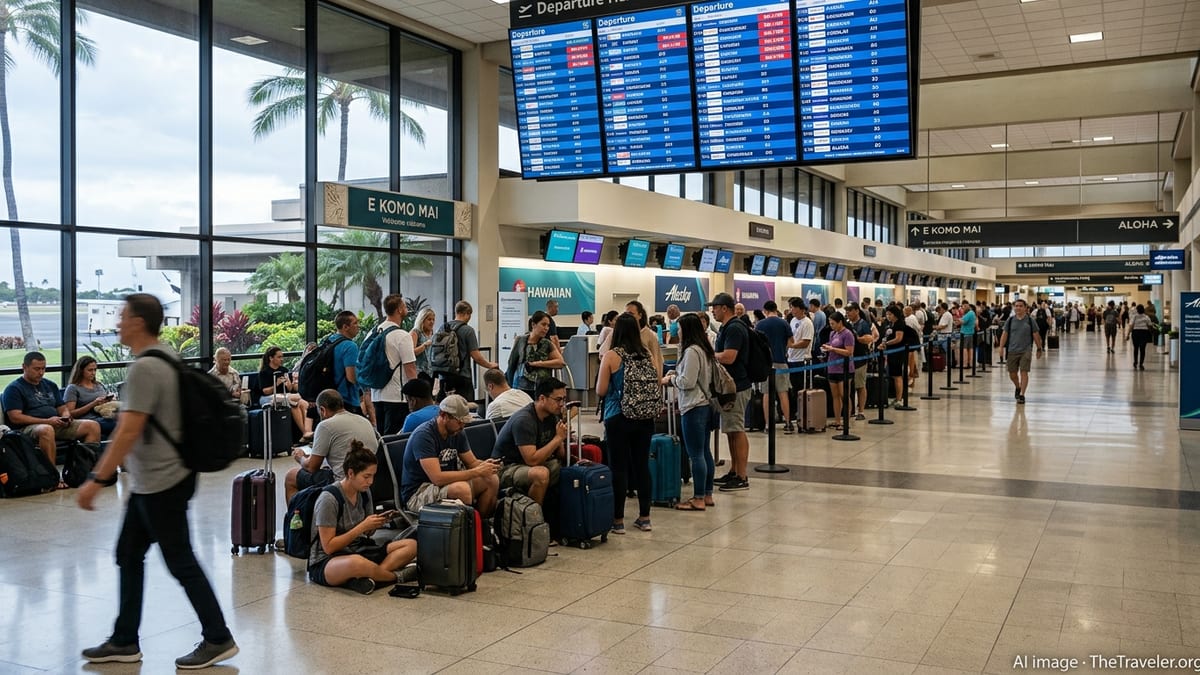
Disruptions Ripple Across Hawaii and Mainland Hubs
Publicly available tracking data for March 22, 2026, indicates a concentrated wave of disruptions involving flights touching Daniel K Inouye International Airport, with knock-on effects at airports in Kailua-Kona, Hilo, New York and Dallas Fort Worth. A combined seven suspensions and at least 101 delays tied to Hawaiian- and Alaska-branded services left passengers rebooking journeys and missing onward connections throughout the day.
The irregular operations were most visible on routes linking Honolulu with other Hawaiian islands, including Kailua-Kona and Hilo, where short interisland hops play a critical role for residents, business travelers and visitors. Delays on these high-frequency sectors quickly cascaded across the network, affecting departures to and from longer-haul destinations.
On the U.S. mainland, services involving New York and Dallas Fort Worth experienced schedule disruptions that added hours to travel times between Hawaii and key East Coast and central U.S. markets. According to published coverage and flight-status boards, some passengers reported extended layovers and missed connections as delays in Honolulu pushed aircraft and crews out of rotation.
While total U.S. system delays routinely rise during peak travel periods, the concentration of issues around Honolulu and associated Hawaiian and Alaska operations stood out, coinciding with a busy spring travel window and strong demand for flights into and out of the islands.
Honolulu at the Center of a Strained Island Network
Honolulu’s Daniel K Inouye International Airport functions as the primary hub for air travel in Hawaii, handling most long-haul arrivals and serving as the main connection point for interisland services. When disruptions hit the hub, the impact can be magnified across the state because many travelers must pass through Honolulu to reach outlying islands such as Hawaii Island and its airports at Kailua-Kona and Hilo.
Operational data and traveler reports suggest that several of the suspended flights were part of this interlocking network, reducing options for same-day rebooking between islands. Delays on remaining services compounded crowding at gates, with passengers vying for limited open seats as airlines worked within available aircraft and crew resources.
For visitors, the timing could not be worse. March typically brings high demand from North American and international markets seeking early spring getaways, and many itineraries rely on tight connections through Honolulu. Even a modest schedule disruption at the hub can result in missed hotel check-ins, rescheduled tours and lost vacation time once travelers finally reach island destinations.
For island residents, the interruptions go beyond inconvenience. Interisland flights are frequently used for medical appointments, family obligations and work-related trips. When frequencies are reduced or delays stretch for hours, options to reroute can be limited, particularly on routes that already operate with lean schedules.
Hawaiian and Alaska Operations Under Close Scrutiny
The disruptions arrive at a sensitive moment for Hawaiian- and Alaska-branded services in the islands. Hawaiian’s network has drawn heightened attention over the past year as travelers have documented a series of delays and cancellations on social platforms and travel forums, often tied to maintenance or staffing issues. At the same time, Alaska’s planned integration with Hawaiian has placed their combined Hawaii network under the spotlight.
Recent industry commentary points to several structural pressures, including tight aircraft utilization, capacity adjustments on routes linking Honolulu with U.S. mainland hubs, and a challenging maintenance environment for widebody aircraft used on longer-haul sectors. When a single aircraft is removed from service unexpectedly, it can take multiple rotations to absorb the disruption, particularly for carriers that operate smaller fleets on specialized routes.
According to timetable updates and airline planning documents, both Hawaiian and Alaska have been adjusting frequencies on select mainland–Hawaii routes, including services touching Dallas Fort Worth and New York. While such changes are typically scheduled months in advance, unplanned suspensions layered on top of those adjustments can exacerbate seat shortages on peak travel days, limiting rebooking options.
As the two brands move toward deeper integration, any period of elevated disruption is likely to be closely watched by regulators, consumer advocates and the traveling public, all of whom are focused on whether the combined operation will ultimately deliver more resilient service or struggle with growing pains.
Knock-on Effects for New York, Dallas Fort Worth and Beyond
The suspension of seven flights and more than one hundred delays connected to Honolulu did not stay contained within Hawaii’s borders. Routes linking the islands with major hubs such as New York and Dallas Fort Worth experienced downstream schedule irregularities, as aircraft and crews arrived late or were reassigned to cover gaps elsewhere in the network.
For East Coast travelers, even modest delays departing Honolulu can translate into missed morning arrivals or onward connections in New York. Published tracking information for the affected period shows several services arriving hours behind schedule, forcing some passengers to overnight unexpectedly or reroute through alternative West Coast gateways.
Dallas Fort Worth, a key connecting point for traffic between the central United States and Hawaii, also felt the strain. Delays on routes touching Honolulu reduced connection windows and put added pressure on airport operations teams as they worked to manage arriving and departing passengers whose itineraries no longer aligned with the printed timetable.
The ripple effects extended further, affecting flights beyond the immediately impacted airports. As aircraft and crew schedules were redrawn in response to the suspended services, travelers on unrelated routes in the broader networks of Hawaiian- and Alaska-branded flights experienced secondary delays, underscoring how a localized disruption at a hub airport can quickly become a systemwide challenge.
What Travelers Can Expect in the Short Term
Looking ahead to the coming days, publicly available schedules indicate that Hawaiian- and Alaska-branded services are expected to continue operating a full slate of flights into and out of Honolulu, though some residual delays are possible as aircraft and crews return to normal rotations. Travel industry analysts note that when a disruption of this scale occurs, it can take several days for networks with tight utilization to fully stabilize.
Passengers with upcoming itineraries touching Daniel K Inouye International Airport, Kailua-Kona, Hilo, New York or Dallas Fort Worth are being urged by consumer advocates to monitor their flight status closely and build additional time into connections. In particular, travelers connecting between interisland services and long-haul mainland flights are encouraged to consider slightly longer layovers to reduce the risk of missed onward departures.
Public guidance from aviation consumer groups also emphasizes knowing passenger rights in cases of significant delay or cancellation, including potential eligibility for refunds when schedule changes substantially alter arrival times. With spring travel volumes expected to remain high, observers say informed, proactive planning can help mitigate some of the uncertainty created by short-notice suspensions and extended delays.
For now, Daniel K Inouye International Airport remains fully open and operational, but the events surrounding the suspended flights and 101 recorded delays serve as a reminder of how quickly conditions can change at one of the Pacific’s most important air gateways, and how those changes can reverberate across both the islands and the mainland United States.