

More news on this day
India’s aviation network faced fresh disruption this week, as more than 30 flights operated by IndiGo, Air India, SpiceJet, Gulf Air and other carriers were cancelled across Delhi, Mumbai, Bengaluru, Hyderabad, Chennai and Kolkata, disrupting long-haul routes to Vancouver, London, Bahrain and other key international hubs.
Get the latest news straight to your inbox!
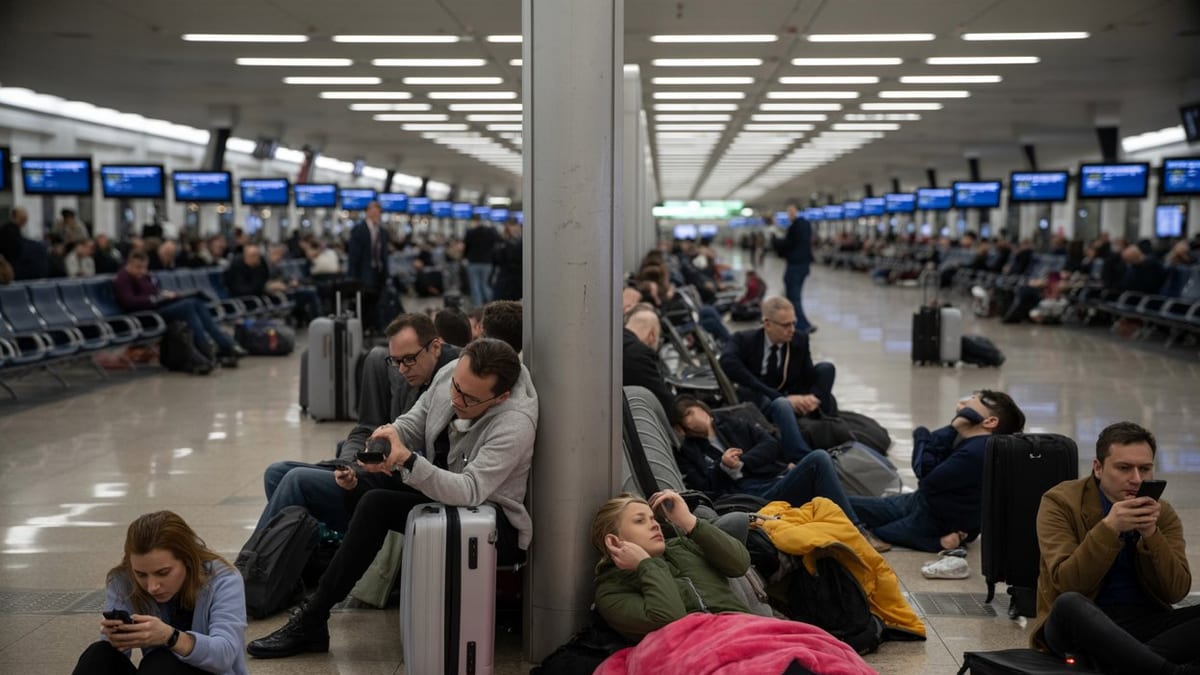
Image by Travel And Tour World
Wave of Cancellations Across Major Indian Hubs
Published reports and live flight tracking data indicate that cancellations and severe delays swept through India’s six busiest airports, with a cluster of more than 30 flights scrubbed in a single operational window. The impact was most visible on international departures and arrivals, particularly those routed through Middle Eastern hubs or flying further to Europe and North America.
In Delhi and Mumbai, long haul departures to London and Vancouver were among the services affected, as airlines reworked flight plans or pulled rotations entirely in response to shifting airspace constraints and operational bottlenecks. Passengers reported last minute notices, overnight waits in terminal areas, and rebookings spread over several days.
Bengaluru, Hyderabad, Chennai and Kolkata experienced a mix of outright cancellations and rolling delays on both domestic and international sectors. While some domestic links were cut to free up aircraft and crew for higher yield routes, several overseas services simply could not operate on their planned routings, leaving aircraft out of position and schedules in disarray.
Airlines have been periodically trimming schedules since late February in response to overlapping regional crises, but the latest wave of cancellations underscores how fragile connectivity remains between India and key global markets, particularly when multiple carriers are hit at the same time.
IndiGo, Air India, SpiceJet and Gulf Air Under Pressure
IndiGo, India’s largest carrier by market share, continues to grapple with the aftershocks of its 2025 scheduling crisis and the ongoing challenges of operating long haul routes around restricted corridors. Publicly available data shows that IndiGo has repeatedly cancelled or retimed flights linking Indian metros with Europe and the Middle East, with knock on effects for connecting itineraries to North America.
Air India and its low cost arm have also been adjusting networks serving London, Vancouver and other long haul destinations as routings become longer and more expensive due to diversions around conflict zones and regional closures. Industry analyses suggest that extended flight times, elevated fuel burn and crew duty limitations are putting sustained pressure on widebody operations out of Delhi and Mumbai.
SpiceJet, which has a smaller international footprint but relies heavily on key Gulf and regional markets, has faced its own share of cancellations on Middle East routes. When aircraft are forced to take longer paths or sit on the ground awaiting safe corridors, even a few lost rotations can translate quickly into missed connections and reduced frequencies for passengers traveling beyond India.
Gulf Air’s India services have been particularly exposed, as Bahrain’s role as a transit hub is constrained by its own airspace and operational restrictions. Advisory notices and corporate updates show the airline repeatedly reworking ticketing, rebooking and refund procedures for India originating passengers whose journeys via Bahrain can no longer operate as planned.
Conflict, Airspace Closures and a Tight Global Network
The latest disruptions sit atop a wider backdrop of geopolitical tension across the Middle East and South Asia. Regional conflicts have prompted temporary closures or strict controls in several key airspaces, forcing airlines to abandon traditional great circle routes and adopt longer, more complex paths between India and destinations in Europe and North America.
Analysts point out that Indian carriers were already contending with the prolonged closure of Pakistani airspace to Indian airlines, which has pushed northbound and westbound flights onto more circuitous tracks. The more recent escalation in the Gulf region has further reduced routing options, compressing a large volume of traffic into fewer viable corridors and increasing exposure to bottlenecks.
Operational updates from aviation consultancies and risk advisories describe the situation as a multi layered constraint on Indian aviation, where each new closure or restriction compounds existing challenges. This makes it difficult for carriers to offer stable schedules, especially for long haul services that depend on tight rotations and finely balanced crew rosters.
For passengers, the net effect is fewer seats, longer flying times and greater uncertainty around departure and arrival times. Even when a given route nominally remains open, last minute tactical changes to avoid emerging risk areas can trigger rolling delays that ripple through airline networks for days.
Impact on Travellers Bound for Vancouver, London, Bahrain and Beyond
Travellers heading from India to Canada, the United Kingdom and the Gulf have found themselves among the most affected in this phase of disruption. Vancouver and London, both key long haul gateways for Indian traffic, have been hit when flights were either cancelled entirely or forced into substantial reroutes that pushed aircraft and crews beyond planned duty limits.
In some cases, passengers connecting through European or Gulf hubs to reach North America have reported missed onward connections after departing India on delayed services. Reprotection options have been limited, as available seats on alternative flights are constrained by the same airspace and scheduling pressures facing the original carriers.
Those connecting via Bahrain have faced particular uncertainty. While some short haul links between India and Bahrain remain scheduled, the onward network has been heavily curtailed, leading to concerns that passengers might reach the hub only to find their connecting flights unavailable. Travel advisories now routinely recommend that travellers verify not just their first leg, but each segment of their itinerary before departure.
Travel industry specialists note that travellers flying from tier two Indian cities via major hubs are especially vulnerable. When flights from Delhi, Mumbai, Bengaluru, Hyderabad, Chennai or Kolkata are trimmed, feeder connections can disappear entirely, forcing passengers to undertake long surface journeys just to reach an airport where international options are still operating.
What Passengers Can Expect in the Coming Weeks
Industry commentary suggests that Indian and Gulf based airlines are still in the process of recalibrating their schedules for the weeks ahead. Some carriers are expected to temporarily consolidate flights on trunk routes, sacrificing marginal services to maintain reliability on core connections between India and major hubs in Europe and the Middle East.
Travellers may see further short notice cancellations or aircraft swaps, particularly on services that rely on overflying regions where the security picture can change quickly. Even when formal airspace closures are not in place, heightened risk assessments can prompt overnight rerouting decisions that leave schedules misaligned with crew and fleet availability.
Publicly available guidance from regulators and consumer advocates consistently stresses the importance of monitoring booking status closely, checking for airline notifications and being prepared for itinerary changes. Passengers are being encouraged to allow wider connection windows, carry essential items in hand luggage and retain documentation of any additional costs incurred as a result of disruptions.
While there is cautious optimism that airlines will gradually restore a more predictable pattern of service once regional tensions ease and alternative routings are bedded in, observers note that India’s position at the crossroads of several contested air corridors leaves its carriers and passengers especially exposed whenever new shocks hit the global aviation system.