

More news on this day
Hundreds of travellers across Australia and New Zealand are facing cancellations, missed connections and long waits at key airports including Melbourne, Sydney, Perth, Wellington and Christchurch, as a mix of fuel-related schedule cuts, regional strike action and tight aircraft availability triggers more than a dozen flight cancellations and widespread delays on services operated by Virgin Australia, Network Aviation, Air New Zealand and other carriers.
Get the latest news straight to your inbox!
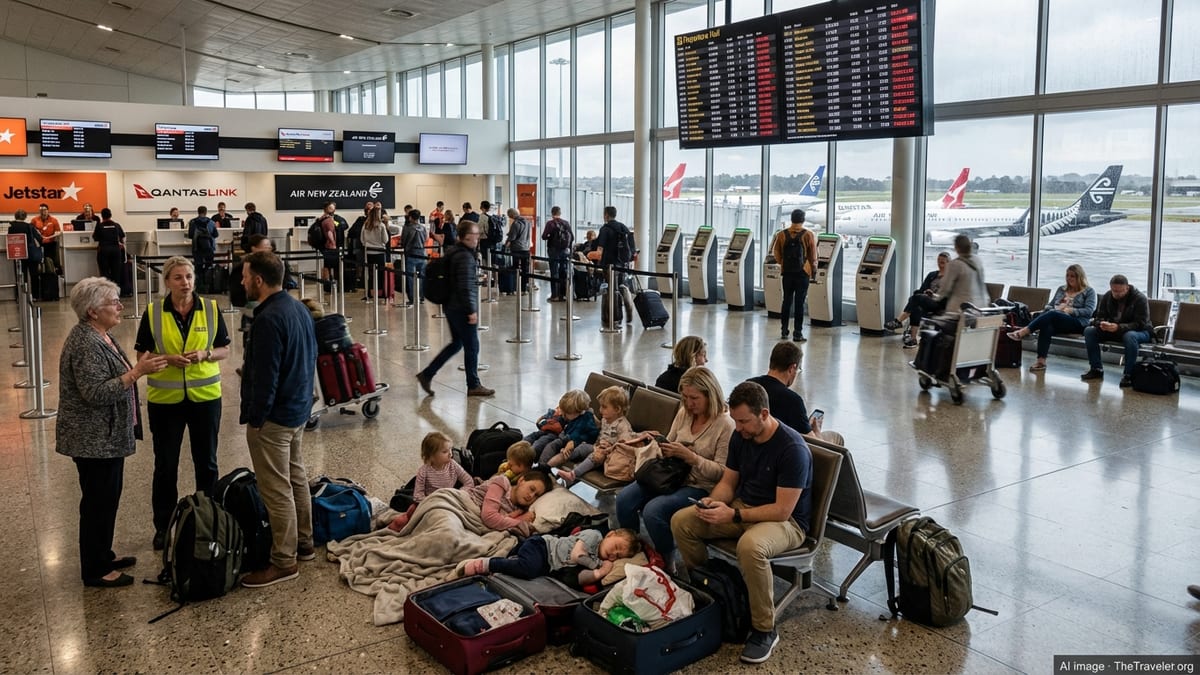
Wave of Cancellations Ripples Across Trans-Tasman Gateways
Reports from airline disruption trackers and local media describe a patchwork of cancellations and rolling delays on busy domestic and trans-Tasman routes linking major hubs such as Sydney, Melbourne and Perth with Wellington, Christchurch and other New Zealand cities. Publicly available flight boards on Thursday showed clusters of grounded services in both countries, with knock-on delays spreading through the afternoon as airlines struggled to re-time aircraft and crews.
In Australia, travellers at Melbourne and Sydney reported early-morning services to Perth, Brisbane and regional Western Australia being cancelled or consolidated, forcing rebookings later in the day or onto alternative routings via other capitals. Similar patterns were visible in New Zealand, where domestic sectors feeding into Wellington and Christchurch were scrapped in blocks, leaving some passengers facing unplanned overnight stops or lengthy coach transfers to reach onward long-haul departures.
While the overall share of cancelled services remains a small fraction of total daily flights, the clustering of cancellations at peak times is intensifying crowding at check in, security and customer service desks. Passengers with complex itineraries, including separate tickets for domestic and long-haul legs, appear particularly vulnerable to missed connections as schedules compress.
Virgin Australia and Network Aviation Feel Strain in Western Australia
In Western Australia, the latest disruptions are colliding with an already tense industrial backdrop. Network Aviation, a Virgin Australia subsidiary that operates many fly in fly out services for the resources sector, has been the focus of protracted pay and conditions negotiations with pilots. According to coverage in regional business outlets, strike days added to the calendar in March have disrupted operations out of Perth and a number of remote mining airstrips, forcing Virgin Australia to reshuffle its broader domestic network to maintain critical routes.
Public data on on time performance from Australia’s Bureau of Infrastructure and Transport Research Economics highlights that Virgin Australia and its regional arm have been operating in a tightly stretched environment, with cancellation rates in recent months hovering around a few percentage points systemwide but spiking higher on some routes during periods of operational stress. Those periodic spikes are now being felt more acutely by leisure and business travellers alike as planes operating the country’s long domestic sectors have less slack to absorb unexpected maintenance or crew shortages.
Travellers departing Perth on Thursday described departure boards showing cancelled or heavily delayed services operated by Virgin Australia and Network Aviation, with replacement flights often scheduled several hours later or routed via alternative cities. Advisories from travel insurers and consumer advocates continue to urge travellers using these carriers to factor in longer connection times and to keep digital boarding passes and contact details updated so they can be moved more easily if schedules change at short notice.
Air New Zealand Cuts Capacity as Fuel Constraints Bite
In New Zealand, disruption has been compounded by Air New Zealand’s decision to trim its schedule over the coming weeks due to fuel supply constraints. According to widely reported comments from the airline’s leadership, more than one thousand flights are being removed from the timetable through early May, affecting an estimated tens of thousands of passengers on domestic and short-haul routes.
The cuts are designed to conserve jet fuel while maintaining key long-haul links, but they are landing hardest on high-frequency domestic corridors feeding Wellington, Christchurch and regional centres. Travellers arriving at these airports on Thursday encountered cancellations layered on top of routine weather and congestion-related delays, with some flights pulled from the schedule just days or hours ahead of departure as capacity reductions were finalised.
Consumer-rights commentators in New Zealand note that while affected passengers are generally being offered rebooking or refunds, the sudden nature of some cancellations is making it difficult for travellers to protect separate bookings such as accommodation, tours and onward international flights. Travel advisers are recommending that passengers build in generous buffers between domestic and long-haul sectors and avoid tight same-day connections where possible while the reduced schedule is in place.
Passenger Experience: Long Queues, Uncertain Timelines
Across both countries, social media posts and first-hand accounts describe a familiar pattern inside terminals: long queues at check in and airline help desks, screens refreshing repeatedly as departure times slip, and gate areas filling with travellers trying to replan complex journeys from their phones. While many cancellations are notified in advance via apps and email, a noticeable share are still being confirmed at the airport, particularly for services reliant on aircraft arriving late from elsewhere in the network.
For some travellers, especially those with reward or promotional fares, rebooking options appear more limited. Online discussions among frequent flyers highlight frustration when seats are available for sale on alternative services but not released to disrupted passengers booked on certain fare classes. This gap between theoretical passenger rights and the practical reality of automated rebooking systems is fuelling calls for clearer, more consistent disruption policies across carriers operating in the region.
Families travelling at the tail end of the southern summer holiday period are among those hardest hit, with missed cruise departures, sporting events and family gatherings appearing frequently in online accounts of the current wave of disruption. Travel planners warn that as airlines continue to operate near capacity, any burst of bad weather or additional industrial action risks amplifying the impact of even a handful of aircraft being out of position.
What Travellers Can Do as Disruptions Continue
With domestic and regional aviation in Australia and New Zealand still recalibrating after several seasons of high demand and labour pressure, analysts expect intermittent disruption to remain part of the travel landscape through the southern autumn. Industry commentary points to a combination of lean staffing, ongoing negotiations in parts of the sector, and external factors such as fuel supply and geopolitical tensions as reasons airlines have less margin for error than before the pandemic.
Travel experts advise passengers booked on Virgin Australia, Network Aviation, Air New Zealand and other regional carriers to monitor their bookings closely in the days leading up to departure and again on the morning of travel. Using airline apps, enabling notifications and double-checking departure and arrival airports can provide early warning of schedule shifts, while flexible tickets and comprehensive travel insurance can offer additional protection if plans unravel.
At the airport, travellers are being encouraged to arrive earlier than usual, particularly at Melbourne, Sydney, Perth, Wellington and Christchurch where check in and security queues can build quickly during disruption. Keeping essential items, medication and a change of clothes in carry on bags is also being suggested as a practical safeguard in case an unexpected overnight stay becomes necessary.
For now, publicly available information indicates that the disruption is concentrated among a limited number of daily departures rather than a full-scale shutdown of any one hub. Even so, the experiences of passengers caught in this week’s cancellations underline how fragile tightly timed itineraries have become, and how rapidly routine schedule adjustments can cascade into a stressful travel day for hundreds of people on both sides of the Tasman.