

More news on this day
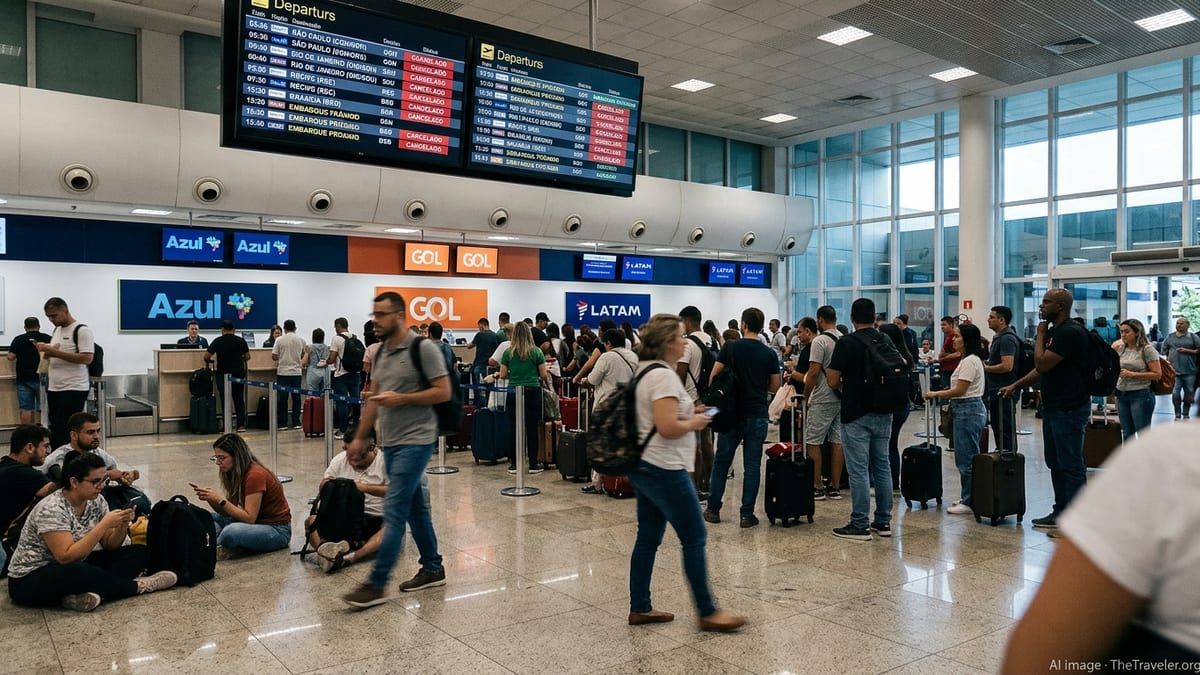
Hundreds of air travelers across Brazil encountered severe disruption on Thursday, April 2, as more than a dozen flight cancellations and numerous delays hit services operated by Azul Brazilian Airlines, GOL Linhas Aéreas Inteligentes, LATAM Brasil and other carriers on busy routes linking Belo Horizonte, Rio de Janeiro and São Paulo.
Get the latest news straight to your inbox!
Wave of Disruptions Across Key Domestic Corridors
Publicly available flight tracking boards and aviation data for April 2 show an unusual concentration of cancellations and extended delays on domestic services touching the main airports of Belo Horizonte, Rio de Janeiro and São Paulo. The interruptions affected early morning and daytime operations, with knock-on delays persisting into the afternoon on several routes.
Schedules on the heavily traveled Belo Horizonte to São Paulo corridor, which typically sees well over 150 weekly departures operated by Azul, GOL and LATAM, were notably thinned as carriers scrubbed multiple rotations and pushed back departure times. Similar patterns were visible on links between Belo Horizonte and Rio de Janeiro and on shuttle-style flights between Rio and São Paulo, where short sectors usually operate with high frequency.
While individual flights continued to operate, the reduction in available seats combined with rolling delays created bottlenecks at check in, boarding gates and customer service desks, leaving many passengers searching for alternative itineraries or facing extended waits in terminal areas.
The impact was felt across both primary and secondary airports serving Brazil’s largest metropolitan areas, including Confins in Belo Horizonte, Santos Dumont and Galeão in Rio de Janeiro, and Congonhas and Guarulhos in São Paulo, underscoring the scale of disruption across the country’s core domestic network.
Azul, GOL and LATAM at the Center of Operational Strain
Azul, GOL and LATAM, which together handle the majority of domestic traffic across Brazil, were at the center of the disruption as their dense schedules on trunk routes left little margin to absorb cascading delays. Public data from flight tracking platforms for April 2 showed Azul and GOL services from Rio de Janeiro into Belo Horizonte and São Paulo experiencing significant schedule changes, alongside selected LATAM flights touching the three hubs.
In Belo Horizonte, Azul’s operations are particularly prominent, with the carrier using Tancredo Neves International Airport as a connecting point for travelers heading to São Paulo and Rio. Any irregular operations at Confins can therefore ripple outward, affecting connecting passengers and reducing options for rebooking when flights are canceled or miss their planned departure slots.
GOL and LATAM, which run high-frequency shuttles between Rio and São Paulo and maintain extensive networks from São Paulo’s Guarulhos hub, also faced pressure as aircraft arriving late into one city subsequently departed late for the next sector. When combined with cancellations on select rotations, these delays contributed to crowding at airports as travelers attempted to secure seats on remaining flights.
Smaller regional and partner airlines operating codeshare services on these routes were also indirectly affected, as passengers attempting to reroute away from disrupted mainline flights increased demand on already busy alternative services.
Passengers Confront Long Queues, Missed Connections and Rerouting
The immediate consequence for passengers was a sharp increase in waiting times at check in counters, security lines and airline service points as crowds built up through the morning and into the afternoon. Reports from airport departure boards and social media monitoring indicated clusters of travelers queueing for rebooking help, particularly at São Paulo’s main terminals and at Belo Horizonte Confins.
With multiple flights canceled or heavily delayed on short-haul routes, many travelers with onward domestic or international connections through São Paulo and Rio faced the prospect of missed links and overnight stays. Given the tightly timed nature of regional and long haul connections from Guarulhos, even modest delays on feeder flights from Belo Horizonte or Rio Santos Dumont were enough to disrupt entire itineraries.
Some travelers turned to bus and car services between São Paulo and Rio de Janeiro when later flights appeared full or risked further delay. These ground options, while frequent, typically require several hours of travel, extending journey times for passengers who had planned on short intercity hops by air.
For those able to secure rebooked flights, revised itineraries commonly involved detours or longer layovers, adding complexity and stress to travel plans set around business meetings, family events or tourism schedules.
Operational and Weather Factors Under Scrutiny
As of Thursday evening local time, a single clear cause for the widespread disruption had not been identified in publicly available information. Aviation monitoring platforms and local media pointed instead to a combination of factors that can strain Brazil’s air traffic system, including localized weather issues, airspace congestion around São Paulo and Rio, and tighter aircraft and crew availability at the start of the busy southern autumn travel period.
Brazil’s major hubs are known for operating close to capacity at peak times, particularly São Paulo’s Congonhas and Guarulhos airports, where any sequence of delays can quickly cascade through tightly scheduled banks of departures and arrivals. When several carriers simultaneously adjust flight times or cancel rotations, spare capacity to absorb disrupted passengers diminishes rapidly.
Regulatory frameworks in Brazil require airlines to provide assistance such as meals, accommodation and rebooking in many cases of cancellation or lengthy delay, depending on the circumstances. However, high passenger volumes and limited same day alternatives can make it challenging in practice for carriers to promptly accommodate everyone affected when disruptions occur across multiple routes at once.
Observers note that Thursday’s events follow other recent instances of concentration of delays and cancellations across major South American hubs, highlighting the sensitivity of regional air travel to localized issues that can quickly have cross country repercussions.
What Impacted Travelers Can Do Next
Consumer organizations in Brazil generally advise passengers facing cancellations or significant delays to document all communications with airlines, retain boarding passes and receipts, and regularly check official airline apps and airport information screens for the latest schedule updates. Given the fast moving nature of operational decisions, flight status can change repeatedly throughout the day.
Travel and passenger rights groups also stress the importance of reviewing fare rules and Brazilian civil aviation regulations to understand eligibility for rebooking options, vouchers or refunds. Many tickets on domestic routes between Belo Horizonte, Rio and São Paulo are sold on competitive, restricted fares, which can complicate changes, although extraordinary operational disruptions may trigger additional support obligations from carriers.
For travelers with imminent journeys involving these cities over the coming days, travel planners recommend allowing extra time for connections, considering earlier departures where possible, and monitoring flights closely in the 24 hours leading up to travel. In some cases, shifting to nearby airports or alternative times of day may help reduce exposure to rolling disruption.
With Azul, GOL, LATAM and other operators working to normalize schedules after Thursday’s disruption, the full extent of the impact on Brazil’s domestic network will become clearer as airlines update timetables and reposition aircraft and crews across Belo Horizonte, Rio de Janeiro and São Paulo.