

More news on this day
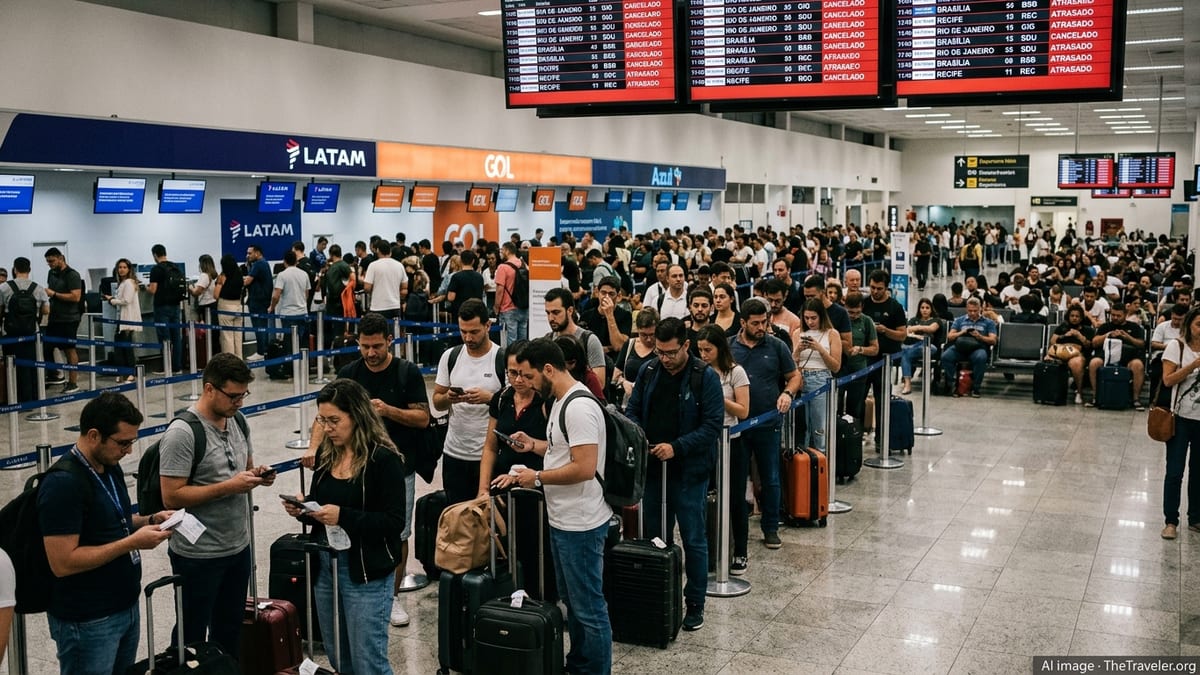
Major Brazilian airports in São Paulo, Recife, Rio de Janeiro and Brasília experienced a fresh bout of travel disruption this week, with publicly available data indicating at least 48 delayed departures and 12 cancellations across key services operated by LATAM Airlines, Gol Linhas Aéreas and Azul, unsettling passenger flows on some of the country’s busiest domestic and regional routes.
Get the latest news straight to your inbox!
Delays and Cancellations Ripple Across Brazil’s Busiest Hubs
The latest wave of disruption hit four of Brazil’s most important aviation gateways almost simultaneously, compounding the usual congestion at São Paulo’s Guarulhos and Congonhas airports, Rio de Janeiro’s Galeão and Santos Dumont, Brasília International and Recife’s Guararapes terminals. Monitoring platforms that track real time operations for Brazilian airports showed a spike in delayed and cancelled flights concentrated on core trunk routes linking these cities, particularly during the morning and late afternoon peaks.
Data compiled from airport operations dashboards and airline timetables indicates that 48 flights operated by LATAM, Gol and Azul were delayed beyond scheduled departure windows, with some departures slipping by more than two hours. A further 12 flights were cancelled or removed from departure boards, forcing hundreds of travelers to seek rebooking options or overnight accommodation. While individual delays are common in Brazil’s dense domestic network, the concentration of disruptions at several hubs on the same day created a perception of widespread travel chaos for passengers trying to connect across the country.
The affected flights included high frequency shuttle style links between São Paulo and Rio de Janeiro, as well as Brasília and Recife services that feed onward connections to the North and Northeast. These city pairs rank among Brazil’s busiest domestic markets, meaning even relatively small schedule adjustments can cascade into missed connections and congested customer service counters. Passengers reported extended queues at check in and rebooking desks for all three major carriers as ground teams attempted to consolidate loads and reassign seats across overlapping schedules.
LATAM, Gol and Azul Under Pressure on Core Domestic Routes
The operational strain was most visible on the three airlines that dominate Brazil’s domestic skies: LATAM Airlines, Gol Linhas Aéreas and Azul. Together they operate dense shuttle networks linking São Paulo, Rio de Janeiro, Brasília and Recife, and published schedule information shows multiple departures per hour on some key routes. When a cluster of flights falls out of sync due to delays, spare capacity for rebooking quickly disappears, particularly at peak times.
Publicly available punctuality and performance reports in recent months have already highlighted tight margins for on time operations on corridors such as Congonhas to Santos Dumont and Guarulhos to Brasília, where high demand, slot constraints and short turnaround times leave airlines with little room to recover from disruptions. Industry data summarizing early 2025 operations shows that Gol and LATAM in particular have recorded greater variance between planned and actual gate to gate times on São Paulo to Brasília and other trunk routes, while Azul has generally posted slightly smaller average gaps.
In the latest incident, tracking services indicated that teams at LATAM, Gol and Azul attempted to mitigate the impact by swapping aircraft, combining lightly booked flights and prioritizing services with large numbers of connecting passengers. However, limited spare aircraft and crews across their networks constrained how quickly schedules could be normalized. Travelers on multi segment itineraries, especially those combining domestic legs with international departures from São Paulo and Rio de Janeiro, faced the highest risk of missed onward flights.
Operational and Infrastructure Strains Behind the Disruptions
While no single universal cause has been identified for the full pattern of delays and cancellations, the episode underscores several structural challenges for Brazil’s aviation system. Congested airspace in the São Paulo and Rio de Janeiro regions, tight slot controls at inner city airports like Congonhas and Santos Dumont, and limited runway capacity during maintenance or adverse weather can all trigger holding patterns and ground delays that ripple through airline networks.
Recent technical reports from Brazil’s air navigation authorities on flight time predictability have drawn attention to accumulating small variances between scheduled and actual flight durations across busy domestic city pairs. These documents note that LATAM and Gol are more likely to register larger average differences on certain São Paulo based routes, reflecting how a few minutes of delay at pushback, taxi or arrival can accumulate when gates and taxiways are saturated. When such variances occur on multiple flights in quick succession, the result can be a block of late departures like the one seen this week.
Operational complexity has also increased as Brazilian carriers rebalance their networks after several years of fluctuating demand. New long haul operations from Rio de Janeiro and expanded international links from São Paulo and Recife are stretching fleet utilization for LATAM, Gol and Azul. At the same time, recent industry analyses and consumer discussions have pointed to a perceived deterioration in punctuality, particularly for Azul on some routes and for LATAM on highly congested São Paulo operations, adding to passenger sensitivity when visible disruption occurs.
Passenger Impact: Missed Connections, Overflowing Queues and Limited Options
The immediate impact of the latest disruptions was felt by passengers navigating tight domestic or international connections. Online travel forums and social media posts from Brazil based travelers frequently warn that even under normal conditions, connections at São Paulo’s Guarulhos and Congonhas or Rio de Janeiro’s two airports can be tight because of distances between terminals, shuttle transfers and security queues. When delays strike, these margins evaporate, and travelers can find themselves rebooked on flights many hours later or even the following day.
In this most recent episode, travelers on LATAM, Gol and Azul itineraries reported extended waits at customer service counters as agents sought alternative routing solutions through secondary hubs such as Belo Horizonte or Curitiba. For some passengers, especially those starting or ending journeys in Brasília and Recife, the combination of cancellations and full alternative flights meant overnight stays or long overland journeys. Consumer advocates in Brazil routinely recommend that travelers request written confirmation of delays or cancellations at the airport to support later claims for reimbursement or compensation, a practice that becomes particularly relevant when disruptions are as widespread as those observed this week.
The knock on effects also reached baggage handling and ground transportation. Late evening arrivals compressed into shorter windows led to longer waits at car hire desks and taxi queues at São Paulo and Rio de Janeiro airports. Hotels near major hubs reportedly experienced a rise in last minute walk in demand from travelers unable to secure same day rebooking, while airport lounges and public seating areas filled with passengers waiting out multi hour delays on their LATAM, Gol or Azul flights.
What Travelers Should Expect in the Coming Days
Published schedules suggest that LATAM, Gol and Azul intend to operate their usual flight programs on trunk routes connecting São Paulo, Rio de Janeiro, Brasília and Recife in the days ahead, but aviation analysts caution that residual effects from the current disruption may persist. Aircraft and crews out of their normal rotation can lead to knock on delays even after the initial trigger has passed, particularly at slot restricted airports where recovery windows are limited.
Travel planning advice circulating among frequent flyers in Brazil emphasizes building in longer connection times at Guarulhos, Congonhas, Galeão and Brasília whenever possible, especially when connecting from domestic LATAM, Gol or Azul services to long haul international flights. Some seasoned travelers recommend favoring itineraries that keep both legs on a single carrier or alliance, which can make rebooking simpler when major delays or cancellations arise across multiple airports at once.
For now, passengers with imminent travel through São Paulo, Recife, Rio de Janeiro or Brasília are being encouraged by consumer groups and travel advisers to monitor airline apps and airport departure boards closely on the day of travel, arrive earlier than usual at the airport and be prepared for longer lines at check in and security. While the scale of this week’s disruption is not unprecedented in Brazil’s busy domestic market, the simultaneous impact across four major hubs and all three principal carriers serves as a reminder of how quickly travel plans can be upended when the system comes under strain.