

More news on this day
Travel across parts of China has been severely disrupted as a wave of flight cancellations and delays at Shanghai Hongqiao, Nanjing Lukou International Airport, and Chengdu Tianfu International Airport leaves passengers facing long queues, missed connections, and overnight waits in terminal buildings.
Get the latest news straight to your inbox!
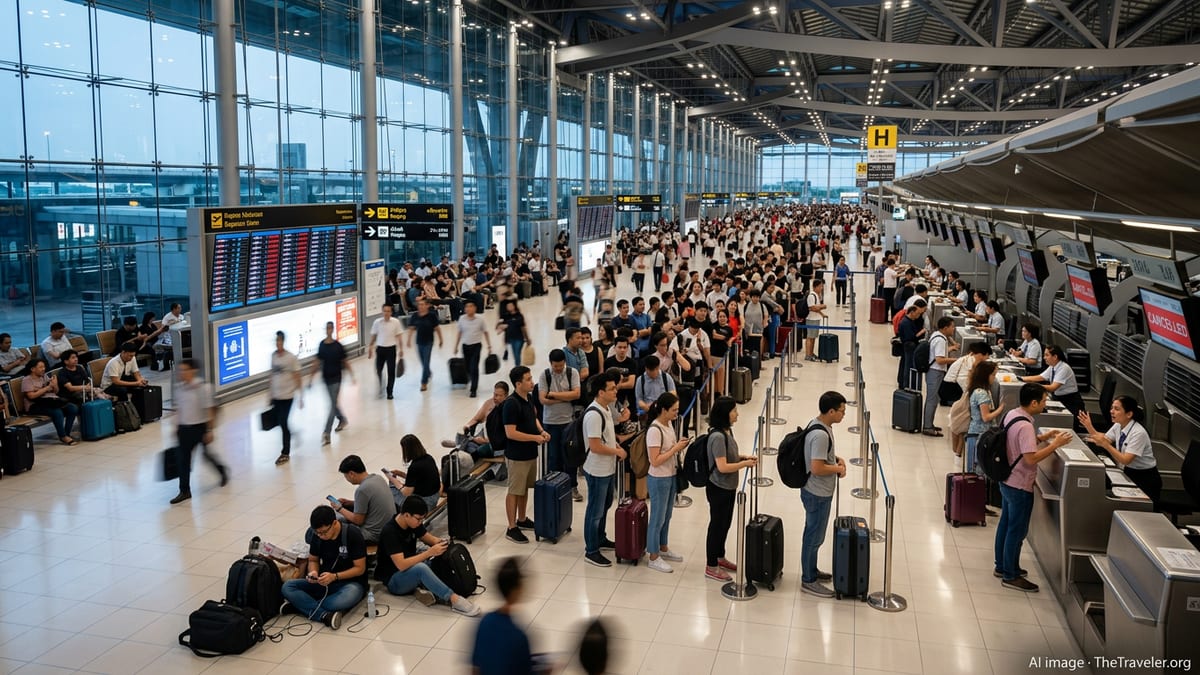
Wave of Cancellations and Delays Across Key Airports
Operational data and publicly available monitoring platforms indicate that at least 30 flights have been cancelled and more than 700 services delayed across several major Chinese hubs, with disruptions heavily concentrated at Shanghai Hongqiao, Nanjing Lukou International Airport, and Chengdu Tianfu International Airport. The combined impact has created a cascade of schedule changes on some of the country’s busiest domestic corridors.
The three airports form a critical triangle in China’s air transport network. Shanghai Hongqiao serves the country’s financial capital and is a primary hub for domestic routes in the Yangtze River Delta. Nanjing Lukou functions as a regional gateway for Jiangsu province and a secondary node feeding traffic into Shanghai. Chengdu Tianfu, one of China’s newest large-scale airports, handles a growing volume of western China traffic and long-haul connections.
Reports from flight-tracking dashboards show that delays have affected departures and arrivals across a broad range of carriers and routes, including high-frequency services linking Shanghai with inland cities and cross-region flights connecting Chengdu and Nanjing. The pattern suggests a network-wide bottleneck rather than isolated technical issues on specific aircraft.
The spike in disruptions has come at a time when domestic travel demand remains strong, amplifying the effect of each delayed or cancelled service. Even relatively small schedule changes have quickly rippled through tightly timed rotations, extending knock-on delays into the evening peak.
Passengers Face Long Queues, Missed Connections, and Uncertain Timelines
The operational problems have translated into difficult conditions for travelers, with passengers reporting crowded check-in halls, lengthy security queues, and departure boards dominated by delayed and rescheduled flights. Images and descriptions shared through social channels depict passengers resting on luggage, sitting on terminal floors, and clustering around gate desks seeking updated information.
At Shanghai Hongqiao, where turnover of short-haul flights is typically rapid, even modest delays have caused congestion around boarding gates and baggage claim areas. Travelers on multi-leg itineraries have been particularly exposed, as missed connections often require rebooking onto later services that are already near capacity.
Nanjing Lukou and Chengdu Tianfu, both important transfer points for secondary cities, have seen similar scenes. Families returning from holidays, business travelers on tight timetables, and students transiting between campuses and home cities have all faced hours-long waits. Some passengers have reported being offered hotel vouchers or meal coupons, while others have described staying overnight in terminal seating due to limited nearby accommodation during peak periods.
Travelers without flexible tickets or with separate bookings for onward journeys have expressed concern about additional out-of-pocket costs, including reissued tickets, extra nights in hotels, and ground transport changes when late-night arrivals disrupt pre-arranged pickups.
Potential Drivers: Weather, Capacity Strain, and Tight Turnarounds
Publicly available information has not identified a single, clear trigger for the disruption, but several contributing factors appear likely. Seasonal weather patterns, including thunderstorms and low visibility, frequently affect eastern and central China, forcing air traffic control to slow departure and arrival rates and to reroute aircraft around storm systems.
Shanghai Hongqiao’s role as a dense domestic hub means that even brief weather-related restrictions can quickly create a queue of aircraft on the ground and in the air. When departure slots are reduced, airlines must decide which flights to prioritize, leading to cancellations on lower-demand or more easily rebooked routes.
Industry analyses have also highlighted the pressures of rapid growth in demand compared with available runway, airspace, and staffing capacity. Chengdu Tianfu, despite being purpose-built for high throughput, remains part of a larger western China network that must coordinate flows with Chengdu’s older Shuangliu airport and with congested eastern corridors leading to Shanghai and Nanjing. Any mismatch between schedule planning and real-time capacity can translate into repeated short delays that accumulate across the day.
The tight turnarounds typical of Chinese domestic operations further magnify the impact. Aircraft that arrive even 30 to 45 minutes behind schedule may not be able to depart on time on their next leg, particularly when ground handling, refueling, and crew rest requirements are taken into account. As these delays propagate from one rotation to the next, the number of affected passengers grows exponentially.
Airlines and Airports Adjust Schedules as Disruption Spreads
In response to the operational strain, airlines serving Shanghai Hongqiao, Nanjing Lukou, and Chengdu Tianfu have been adjusting schedules, consolidating lightly booked flights, and reallocating aircraft where possible. Published data for recent operating days shows a pattern of same-day cancellations paired with added capacity on later flights or alternative routes, a common strategy when carriers seek to stabilize rotations.
Some flights have been rerouted through other large hubs, with passengers reprotected onto services via Shanghai Pudong or Chengdu Shuangliu when direct options from Hongqiao or Tianfu are not available. Publicly accessible timetables show temporary frequency reductions on select domestic routes, particularly in off-peak time bands, helping airlines build more buffer into the schedule.
At airport level, operational measures have focused on managing passenger flows, including dynamic reassignment of gates, the opening of additional check-in counters during peak disruption windows, and the use of real-time information screens to direct travelers to less crowded security lanes. While such steps help to ease congestion, they do not eliminate the core capacity and weather-related constraints that lie behind the delays.
Industry observers note that the pattern of disruption mirrors previous episodes at major Chinese hubs in which several hours of weather or airspace restriction have taken much of a day to unwind, particularly when demand is strong and spare aircraft and crew are limited.
What Travelers Can Expect in the Coming Days
With delays and cancellations already affecting hundreds of flights, travel planners expect residual disruption to linger even after the immediate bottlenecks ease. Aircraft and crews displaced from their normal bases can take multiple rotations to return to standard patterns, especially in a network as geographically broad as China’s.
Passengers scheduled to fly through Shanghai Hongqiao, Nanjing Lukou, or Chengdu Tianfu in the short term are likely to encounter longer-than-usual processing times and an elevated risk of schedule changes. Travel advisers commonly recommend arriving early at the airport, monitoring flight status frequently through official channels, and, where possible, booking longer connection windows between domestic and international segments.
The disruption also underscores a broader vulnerability in China’s domestic aviation system: the limited margin for error when demand is high and schedules are tightly packed. As airlines continue to rebuild and expand networks, pressure on key hubs is expected to remain intense, raising the importance of resilient scheduling, improved real-time communication, and contingency planning for passengers.
For now, travelers moving through the affected airports face a challenging experience, balancing the desire to reach their destinations with the practical reality of packed departure halls, shifting gate assignments, and a day-to-day environment in which even routine journeys can become a test of patience.