

More news on this day
Hundreds of travelers faced major disruption in Colombia as 92 flights were delayed and 28 canceled at Bogotá’s El Dorado International Airport and Medellín’s José María Córdova International Airport, affecting services operated by Avianca, LATAM and other carriers on key routes across the Americas and Europe.
Get the latest news straight to your inbox!
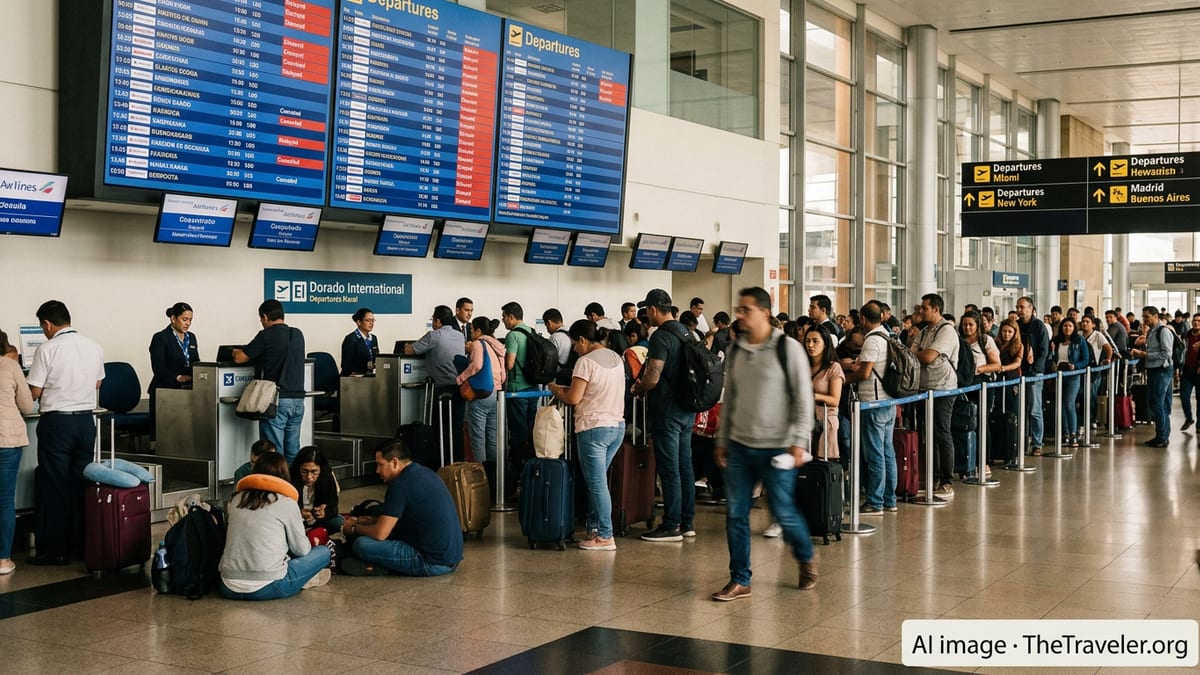
Widespread Operational Disruptions at El Dorado and José María Córdova
Publicly available flight-tracking data and local media coverage indicate that operations at El Dorado in Bogotá and José María Córdova, which serves Medellín, were significantly affected, with a combined total of 92 delays and 28 cancellations. The disruption rippled through domestic and international networks, impacting routes to major cities including Bogotá, Medellín, Miami, New York, Madrid, Buenos Aires, Panama City and São Paulo.
The delays ranged from modest schedule slips of under an hour to extended hold times that forced passengers to spend much of the day in terminal waiting areas. Cancellations concentrated around peak travel windows, increasing pressure on rebooking options and leading to crowded check-in zones and customer service desks as travelers sought alternative itineraries.
Avianca and LATAM, which maintain dense networks from both Bogotá and Medellín, saw multiple services affected alongside other regional and international carriers. The pattern of disruption suggests knock-on effects across interconnected hubs, with aircraft and crew rotations thrown off schedule and subsequent departures and arrivals pushed back or removed from the boards entirely.
While the precise mix of contributing factors remains under review, recent patterns at Colombian airports show how quickly localized issues can cascade into broader network instability, especially on heavily trafficked trunk routes that connect Colombia to North America, Europe and the Southern Cone.
Passengers Face Long Lines, Missed Connections and Overnight Stays
Travelers passing through El Dorado and José María Córdova reported long security and check-in lines as delayed departures stacked up and gate changes became frequent. Published accounts describe passengers waiting at crowded boarding areas while estimated departure times were repeatedly revised on airport information screens.
Missed connections emerged as a major concern, particularly for passengers transiting in Bogotá on long-haul routes to Miami, New York and Madrid. With many onward flights operating near capacity, rebooking options were limited, resulting in extended layovers or involuntary overnight stays for those who could not be re-accommodated the same day.
Families traveling with children, business travelers on tight schedules and international tourists at the end of their trips were among those most affected. Public information from airlines indicated that some travelers received hotel and meal vouchers or were rerouted through alternative hubs in Panama City and São Paulo, while others opted to purchase last-minute tickets on competing carriers in order to reach their destinations.
Social media posts and local coverage highlighted the emotional toll of the disruption, with frustration growing as delays extended and information changed. However, reports also note that many passengers ultimately reached their destinations on later flights once operations began to stabilize.
Key Routes to North America, Europe and the Region Disrupted
The disruption struck at the heart of Colombia’s international connectivity. Flights between Bogotá and major gateways such as Miami and New York are heavily used by both business travelers and members of the Colombian diaspora, while Madrid serves as a critical bridge to Europe. Delays and cancellations on these routes created ripple effects far beyond Colombia’s borders as inbound and outbound passengers scrambled to adjust plans.
Services linking Colombia to Buenos Aires, Panama City and São Paulo were also affected, complicating travel for those connecting between South American capitals or using these cities as transit points to other continents. Given that many of these routes operate only a limited number of daily frequencies, a canceled flight can effectively eliminate an entire day’s travel option for certain city pairs.
Domestic connectivity between Bogotá and Medellín was not immune. With El Dorado functioning as the primary hub for internal flights, disruptions there can quickly impact regional links, including connections onward to smaller Colombian cities. When flights into or out of Bogotá run late or are canceled, travelers often lose their onward domestic legs and face the prospect of overnight stays or road travel instead.
Travel industry observers note that this type of event underscores the centrality of Bogotá and Medellín in Latin American air travel. Both airports serve as crucial transfer points that tie together regional, hemispheric and transatlantic routes, meaning that even a localized disruption has disproportionate impact across multiple markets.
Airlines and Airports Work to Recover Schedules
Publicly accessible operational updates show that airlines began working early to recover their schedules, prioritizing the restoration of core routes and reallocating aircraft where possible. Recovery efforts typically focus on reducing further knock-on delays by ensuring that early-wave departures operate as close to schedule as possible once the immediate disruption passes.
At the airport level, visible measures included the reassignment of gates, the consolidation of some services and an emphasis on keeping passengers updated through public address announcements and departure boards. Staff also worked to manage crowding at check-in and rebooking counters, a common pressure point whenever large numbers of travelers need itinerary changes at the same time.
Analysts point out that in a tightly scheduled airline environment, complete recovery from a shock of this scale can take more than a single operational day. Aircraft and crew remain out of position until rotations are fully realigned, so some degree of residual delay can persist even after the most acute phase of disruption has eased.
For international passengers, especially those on long-haul journeys involving multiple connections, the effects can extend further, with changes to seat availability and cabin classes on subsequent legs as carriers juggle inventory to accommodate displaced travelers.
What Travelers Should Know for Upcoming Flights in Colombia
For travelers with upcoming itineraries through El Dorado or José María Córdova, publicly available guidance from airlines and travel advisories emphasizes the importance of closely monitoring flight status in the hours leading up to departure. Same-day checks via airline apps and airport information channels can provide more accurate departure times than booking confirmations issued days or weeks in advance.
Industry best practices recommend arriving at the airport earlier than usual during periods of irregular operations, since longer lines at check-in and security are common when multiple flights are delayed simultaneously. Travelers with tight international connections may wish to consult options for earlier departures or more generous layover times, particularly on routes passing through Bogotá.
Travelers are also encouraged to keep digital and printed copies of their itineraries, boarding passes and receipts for any additional expenses incurred due to disruption. Such documentation can be important when requesting refunds, schedule changes or goodwill gestures from airlines once operations normalize.
Despite the immediate disruption, Colombia remains one of the region’s busiest and best-connected aviation markets, and historical performance data for both El Dorado and José María Córdova shows generally strong on-time records outside of exceptional events. As airlines and airport operators adjust and reinforce their contingency planning, passengers can expect ongoing efforts to minimize the impact of future operational shocks on both domestic and international journeys.