

More news on this day
Air travelers moving through Colombia’s busiest air corridors experienced significant disruption as a cluster of delays and cancellations involving Avianca, LATAM Colombia, and SATENA affected operations at Bogotá’s El Dorado International Airport and key domestic destinations Medellín and Cartagena.
Get the latest news straight to your inbox!
Wave of Delays Across Main Domestic Corridors
Operational data compiled from flight-tracking platforms and airport information boards on April 9 indicate that a total of 36 delays and 9 cancellations were recorded across services operated by Avianca, LATAM Colombia, and SATENA on routes linking Bogotá with Medellín and Cartagena, as well as select regional connectors. The disruptions were concentrated in the morning and late evening banks, when aircraft and crews cycle through multiple short sectors.
El Dorado International, Colombia’s primary hub, handled the bulk of the affected flights, reflecting its role as the country’s central transfer point. Reports show departures from Bogotá to Medellín’s José María Córdova Airport and Cartagena’s Rafael Núñez Airport among those delayed, with knock-on effects on return legs and onward connections.
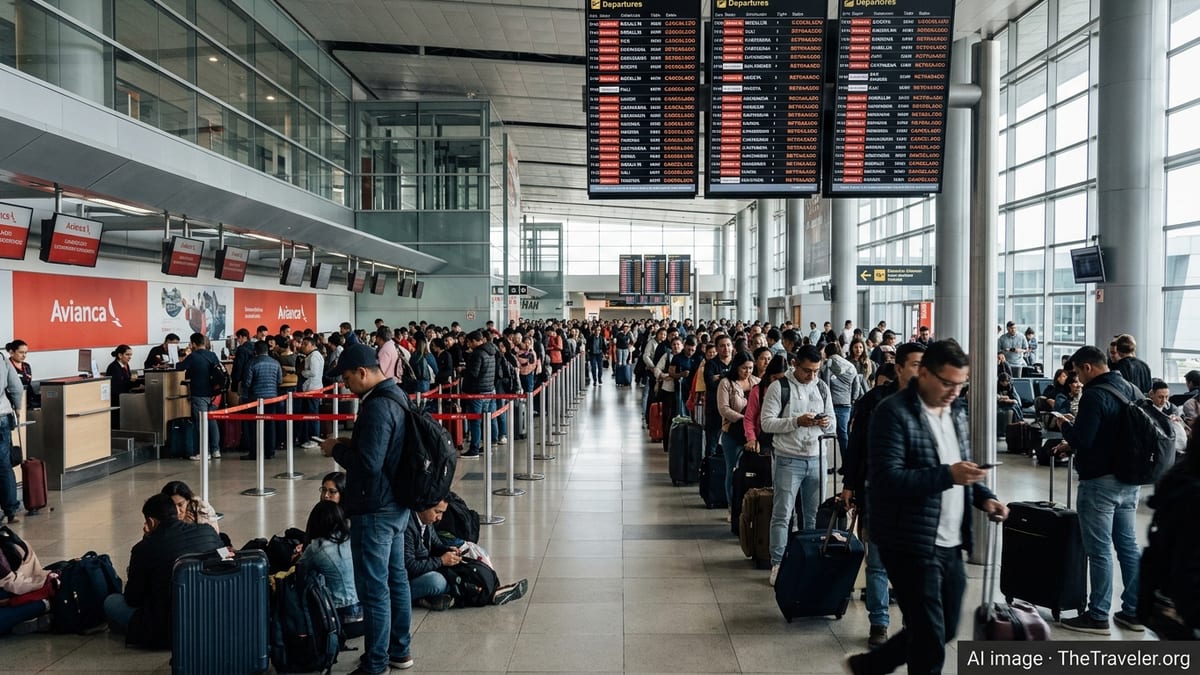
Although the overall number of flights operating in and out of these airports remained high, the concentration of irregularities in a short time window created visible congestion in departure halls and at check-in counters. Passengers reported extended waits at boarding gates and frequent schedule revisions posted on electronic displays.
The pattern of delays suggests a combination of tight aircraft rotations and minor operational constraints rather than a single, extreme-weather or infrastructure event. However, once schedules became misaligned, recovery across the three carriers proved slow, amplifying the impact for travelers with same-day connections.
Avianca, LATAM Colombia, and SATENA Under Pressure
The disruptions placed particular scrutiny on Avianca, the country’s largest carrier by market share, which has been rebuilding its domestic operation while reallocating capacity toward international routes. Recent corporate updates highlight a near-full restoration of its overall network, but passenger experiences on heavily used domestic sectors show that margins for error remain narrow when several flights encounter issues on the same day.
LATAM Colombia, a key competitor on trunk routes such as Bogotá to Medellín and Bogotá to Cartagena, also reported delayed departures in the same period. Publicly available statistics for the group underscore a broader strategic shift that has gradually reduced some domestic capacity in favor of international growth, a balancing act that can leave certain peak travel windows especially sensitive to aircraft or crew imbalances.
SATENA, which operates a much smaller fleet and focuses on connecting remote regions with major hubs like Bogotá, faced a tougher recovery curve from even a handful of irregular operations. When a regional carrier with limited spare aircraft experiences delays or cancellations on Bogotá rotations, options for rapid re-accommodation are constrained, often forcing passengers onto later departures or different airlines altogether.
Across all three operators, the cluster of disruptions underlined how interconnected Colombia’s domestic network has become. A late inbound aircraft from a secondary city can cascade into delays on flagship routes between the country’s major economic and tourism centers.
Stranded Passengers in Bogotá, Medellín, and Cartagena
In practice, the irregular operations translated into missed connections, overnight stays, and improvised re-routing for passengers passing through Bogotá and the country’s two leading tourist gateways. Medellín, with its international airport located in Rionegro, and Cartagena, a flagship Caribbean destination, both saw passengers facing extended waits for available seats on later flights.
Accounts shared on social platforms and travel forums described travelers scrambling to adjust hotel reservations and tour plans after delayed departures from Bogotá caused them to miss evening arrivals on the coast or in Antioquia. Others reported long queues at airline service desks, particularly during the morning peak when multiple flights were re-timed within a short period.
In Cartagena, some inbound passengers arriving late from Bogotá missed evening connections onward to smaller coastal or island destinations, forcing them to stay overnight. In Medellín, delays on Bogotá services complicated onward travel to regional airports in the coffee region and beyond, where daily frequencies are limited and same-day alternatives are scarce.
The situation highlighted the vulnerability of tightly planned itineraries that rely on minimum connection times at El Dorado. Even modest primary delays of under an hour on Bogotá departures can become trip-altering when follow-on flights from Medellín or Cartagena operate just once or twice per day.
Operational and Structural Factors Behind the Disruption
While no single cause explains all 36 delays and 9 cancellations, aviation analysts point to a series of operational and structural pressures affecting Colombian carriers. High aircraft utilization rates, lean spare-fleet buffers, and complex crew scheduling across a geographically varied country all increase the risk that relatively minor issues can expand into wider disruption.
Weather remains an ever-present variable, especially around Bogotá, where altitude and changing conditions can slow arrivals and departures even on days without severe storms. Any sequence of holding patterns, runway congestion, or ground-handling delays at El Dorado tends to reverberate quickly along domestic spokes to Medellín and Cartagena.
In parallel, the continued reconfiguration of fleets and route maps by Avianca and LATAM Colombia has created a network that is more focused on profitability and international connectivity. Industry commentary suggests that while this makes the system more efficient under normal conditions, it can also reduce redundancy during irregular operations when extra aircraft or crew are needed on short notice.
For SATENA, serving remote airfields presents added complexity, as technical or logistical challenges on those legs may delay aircraft that are scheduled to operate later peak-time services into Bogotá. Without multiple backup planes, recovering the timetable often requires cancellations or consolidations.
What Travelers Should Watch in the Coming Days
Travel industry observers note that while the current wave of disruptions has been concentrated in a short period, it arrives at a time of growing passenger volumes through Colombia’s main gateways. With airlines preparing for busy holiday and events-driven peaks later in the year, operational resilience on routes linking Bogotá, Medellín, and Cartagena is likely to remain under close public scrutiny.
Consumer advocates recommend that travelers allow additional buffer time for domestic connections through El Dorado, especially when connecting off late-evening arrivals or during early morning departure waves. Flexible tickets, travel insurance with disruption coverage, and contingency plans for overnight stays in Bogotá, Medellín, or Cartagena can help reduce the practical impact of similar events.
Publicly available information on compensation and rebooking policies from Colombian and international carriers also remains important for passengers to review before travel. Understanding entitlements when flights are delayed or canceled can make it easier to navigate crowded service counters and negotiate re-accommodation options when irregular operations strike.
As airlines and airport operators analyze the latest disturbances, travelers moving through Colombia’s core air corridors will be watching closely for signs of smoother operations and more robust contingency planning at El Dorado and its key domestic links.