

More news on this day
Travelers flying with Air Canada, WestJet and Delta Airlines faced fresh disruption today as a cluster of 28 delayed and 15 canceled flights rippled across Montreal, Toronto, New York, Los Angeles and other major U.S. cities, compounding an already difficult winter for North American air travel.
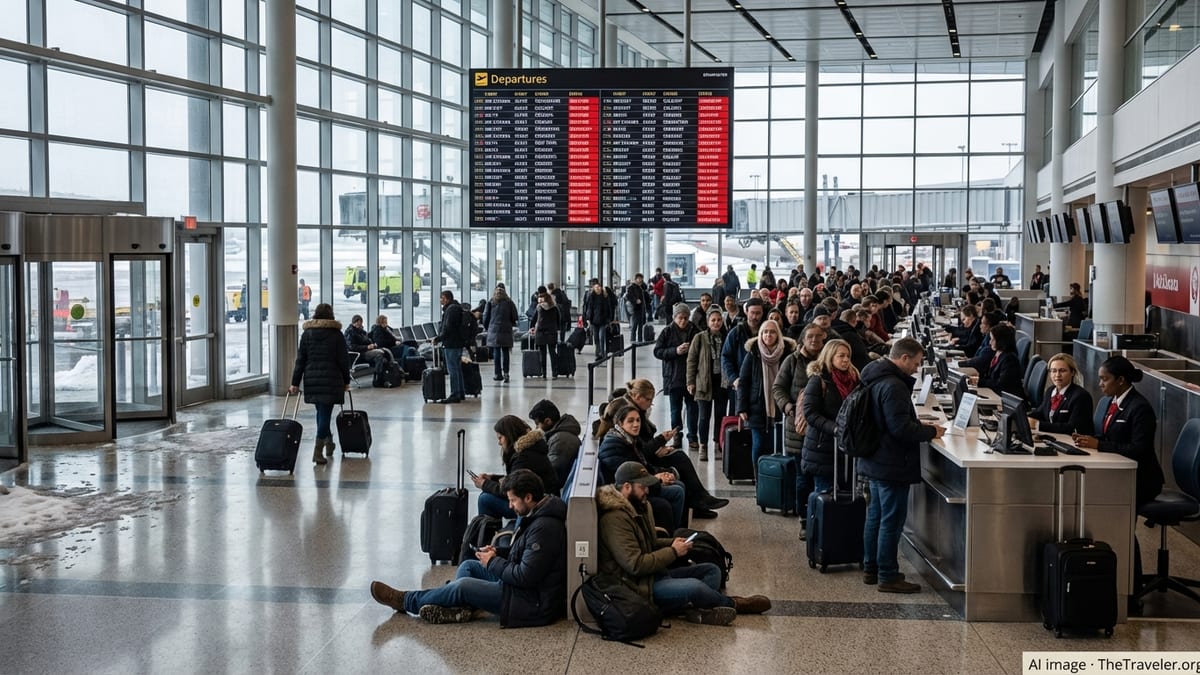
Stormy Winter and System Strain Behind a New Wave of Disruptions
The latest round of delays and cancellations comes amid a broader pattern of winter weather and operational strain that has tested airline reliability across Canada and the United States. In recent days, snow, freezing rain and low cloud ceilings have slowed operations at major hubs in Eastern Canada, while knock-on effects have cascaded through transborder and domestic networks.
Industry data and airport status boards on February 17 point to a concentrated pocket of disruption affecting flights operated by Air Canada, WestJet and Delta on key corridors linking Montreal and Toronto with New York, Los Angeles and several secondary U.S. markets. While the headline numbers of 28 delayed and 15 canceled flights may seem modest compared with large-scale meltdowns, the impact on individual passengers is magnified by full winter loads and tight connection windows at major hubs.
The timing could hardly be worse for travelers. Many of the affected services were scheduled at peak morning and late-afternoon departure banks, when airlines rely on smooth turnarounds to feed transcontinental and international services. Even a short ground hold or de-icing delay in Montreal or Toronto can push an aircraft and its crew out of position for the next leg to New York or Los Angeles, forcing schedule changes hours later and hundreds of miles away.
For airlines, the disruptions highlight the delicate balance between safety, staffing and schedule complexity during the busiest weeks of the winter travel season. While carriers have invested heavily in de-icing capacity, crew planning and IT resilience since the pandemic, a convergence of adverse conditions can still expose weak points and trigger a chain reaction of delays.
Montreal and Toronto: Canadian Hubs Under Pressure
Montreal and Toronto once again found themselves at the center of Canada’s travel turbulence. Montreal–Trudeau, a key hub for Air Canada and an important base for WestJet’s domestic and transborder services, saw a cluster of delayed departures early in the day as snow and gusty winds slowed runway operations and lengthened de-icing queues. Several Air Canada and WestJet flights bound for New York and other northeastern U.S. cities departed well behind schedule, leaving passengers scrambling to rebook missed connections.
Toronto Pearson, Canada’s busiest airport, has been particularly vulnerable this winter, with recurring storms and low-visibility conditions forcing capacity reductions and runway configuration changes. Today’s disruption added to that pressure, with a handful of Air Canada and WestJet flights between Toronto and U.S. gateways, including New York and other East Coast cities, among the 28 services delayed. A smaller number of departures were proactively canceled as airlines sought to rebuild buffers into their schedules and keep crews within duty limits.
While the scale of today’s problems at Montreal and Toronto is far smaller than last year’s severe operational crunch, the memory of that episode still looms large for travelers. In February 2025, Air Canada alone canceled more than a thousand flights over a six-day stretch as a combination of winter storms and a serious incident involving a Delta aircraft at Toronto Pearson forced widespread schedule reductions and lengthy recovery efforts. Those events prompted airlines and airport authorities to review contingency plans and invest in better communication tools, but they also left passengers acutely sensitive to signs of renewed instability.
Airport officials in both Montreal and Toronto reiterated that safety protocols, especially around runway clearance and aircraft de-icing, remain non-negotiable, even when they contribute to delays. They also urged passengers to monitor flight status closely and allow additional time for check-in and security screening as winter conditions persist across much of Canada.
New York, Los Angeles and Major U.S. Cities Feel the Ripple Effect
On the U.S. side of the border, airports serving New York and Los Angeles bore the brunt of the transborder ripple effects. Delta, which operates an extensive network from New York’s LaGuardia and John F. Kennedy airports, reported several delayed arrivals and departures on routes connecting to Montreal and Toronto, as late inbound aircraft from Canada disrupted carefully timed schedules at already congested terminals.
Los Angeles International, a key long-haul gateway for both Delta and Air Canada, also saw delays on select services arriving from and departing to Canadian hubs. Afternoon departures to Toronto and Montreal pushed back behind schedule as crews and aircraft arrived late from earlier segments, creating tightening connection windows for passengers bound for Asia-Pacific and Latin American destinations. In a few cases, airlines chose to consolidate lightly booked flights or cancel specific rotations outright, contributing to the tally of 15 cancellations.
Beyond New York and Los Angeles, a handful of secondary U.S. cities with strong Canadian links, including major business and leisure markets in the Northeast and Midwest, were also affected. Late-morning and evening departures operated by Air Canada, WestJet and Delta experienced schedule slippage, with some flights departing well past their planned times after awaiting connecting passengers or clearing aircraft through de-icing and safety checks.
U.S. airport authorities noted that, while local weather at some affected airports was relatively benign, disruptions originating in Canada and at other upstream hubs translated into gate holds and last-minute gate changes. The result for travelers was familiar: crowded concourses, long lines at customer service desks and a rush to secure scarce seats on alternative flights.
Why 28 Delays and 15 Cancellations Matter This Winter
In isolation, 28 delayed flights and 15 cancellations across three major airlines may sound like a routine bad weather day. Yet this seemingly modest disruption is landing at a time when North American aviation systems are already operating close to the edge, and small disturbances can have outsized consequences. With aircraft schedules tightly packed and planes flying near capacity, there is limited slack to absorb irregular operations when conditions deteriorate.
Airlines have tried to build more resilience into their timetables by adding connection buffers and increasing turnaround times during peak winter periods. But they also continue to grapple with staffing constraints in critical roles ranging from pilots and flight attendants to maintenance technicians and ground handlers. When crews are delayed by earlier disruptions, it becomes harder to keep later flights on time without triggering duty-time violations, forcing airlines to cancel or combine services even when aircraft and demand are available.
This winter has also underscored how intertwined Canadian and U.S. operations have become. Delays and cancellations at Vancouver, Montreal, Toronto and other Canadian hubs in recent days have produced a domino effect across North American networks, affecting not only domestic Canadian routes but also flights to New York, Los Angeles, Atlanta, Chicago and other major U.S. cities. For carriers like Delta, which rely on a mix of domestic and international feed, a late inbound from Canada can quickly snarl departure banks for destinations far beyond the border.
For travelers, the practical impact of today’s disruptions is measured less in numbers and more in missed family events, lost business meetings and extra nights in hotels. With many flights fully booked, particularly on high-demand city pairs, rebooking options are limited, and passengers stranded by cancellations may be forced to accept indirect routings or travel on later dates.
How Air Canada, WestJet and Delta Are Managing Affected Passengers
In response to the latest wave of irregular operations, Air Canada, WestJet and Delta have been leaning on digital tools and flexible policies developed in recent years. All three carriers emphasize that their mobile apps and websites should be the first stop for travelers seeking rebooking options, flight status updates and information about eligibility for travel credits or refunds.
Air Canada has focused on offering same-day rebooking on available seats and, where possible, waiving change fees for passengers affected by weather-linked cancellations and significant delays. The carrier continues to encourage customers to accept text and app notifications, which can deliver real-time updates on gate changes and alternative routings without the need to queue at a desk.
WestJet, which has also faced operational headwinds this winter, has boosted staffing in its contact centers and airport customer-care teams during disruption peaks. The airline has been working to streamline its handling of rebookings and vouchers, with an emphasis on moving impacted passengers onto the next available flights and arranging overnight accommodations when required under local regulations and internal policies.
Delta, known for its investment in technology, is drawing on automated rebooking tools that can often assign affected passengers to new itineraries before they reach the airport. The airline’s operations and customer service teams have been coordinating closely with Canadian partners and airport authorities to manage gate utilization and minimize boarding delays once aircraft and crews are ready to depart.
Traveler Experiences: Long Lines, Tight Connections and Frayed Nerves
For travelers caught in the middle, today’s disruptions have followed a familiar pattern of uncertainty and improvisation. At Montreal and Toronto, long lines formed at check-in counters and customer service desks as early-morning delays cascaded into the midday schedule. Passengers on Air Canada and WestJet flights to New York and other U.S. destinations described watching departure boards fill with delayed notices while they weighed whether to wait out the disruption or try to rebook onto later flights.
At New York-area airports, some Delta customers arriving from Canada reported tight or missed connections to onward domestic services after holding on the ground in Montreal or Toronto for de-icing or runway clearance. In Los Angeles, passengers connecting from delayed flights out of Canada faced hurried dashes between terminals in an effort to catch onward services, sometimes arriving at the gate only to find final boarding already underway.
Families traveling with young children and older passengers appeared particularly affected, with longer-than-expected airport waits and late-night arrivals taking a toll. Airline staff and airport volunteers stepped in to distribute water, snacks and basic amenities in crowded departure lounges, while information agents tried to keep travelers updated on rapidly changing gate assignments and departure times.
Social media posts from stranded passengers highlighted both frustrations and moments of empathy: tales of hours-long holds on customer service lines, but also of gate agents staying past their shifts and flight attendants assisting with last-minute seat changes to keep families together on rebooked flights.
What Passengers Can Do if Their Flight Is Affected
With winter far from over and flight networks under continued pressure, passengers booked on Air Canada, WestJet or Delta in the coming days are being urged to take a proactive approach. Checking flight status frequently, opting in to text and app notifications, and arriving early at the airport can help reduce stress when conditions deteriorate unexpectedly.
Travel experts recommend that passengers traveling through weather-prone hubs such as Montreal, Toronto and New York build additional flexibility into their plans, particularly when connecting onward to long-haul flights. Choosing slightly longer connection windows, traveling with carry-on luggage only when possible and having a backup plan for overnight accommodation can make it easier to cope with last-minute schedule changes.
It is also wise to familiarize oneself with each airline’s policies on compensation, meal vouchers, hotel stays and refunds in cases of weather-related or controllable disruptions. While regulations differ between Canada and the United States, and not all delays qualify for financial remedies, understanding the rules in advance can speed up claims and reduce confusion at already busy airport service counters.
For now, airlines and airports are watching forecasts closely and adjusting schedules in an effort to stay ahead of the next round of storms. Travelers, meanwhile, are facing the reality that even a relatively small wave of delays and cancellations can significantly reshape their day when it hits multiple carriers and major hubs at once.