

More news on this day
Travelers across the United States faced a fresh wave of air travel disruption on April 9, as major hubs including Las Vegas, Atlanta, Denver, Houston, Phoenix and Washington reported 3,281 delayed flights and 145 cancellations, snarling schedules for American, SkyWest, Spirit, Frontier, Delta and several other carriers.
Get the latest news straight to your inbox!
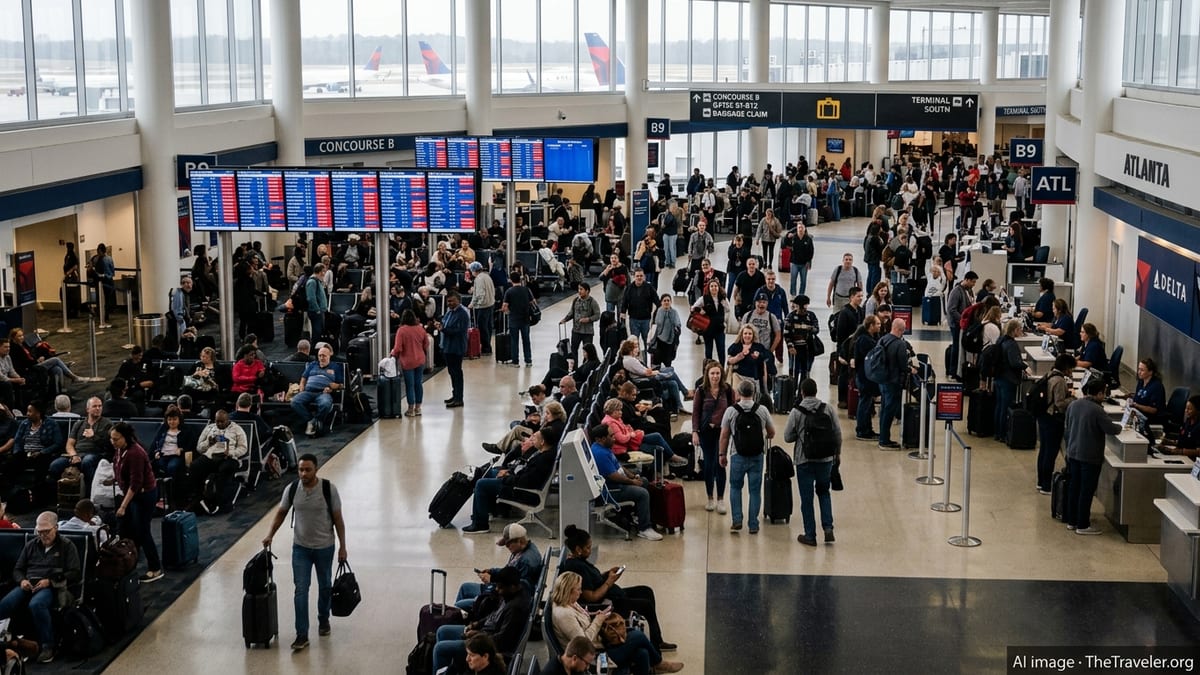
Major Hubs Struggle With Heavy Disruption
Publicly available flight tracking data for Thursday shows widespread operational strain at key airports serving the western, southern and mid-Atlantic regions. Las Vegas, Atlanta, Denver, Houston, Phoenix and the Washington area all reported elevated levels of delays, with knock-on effects spreading throughout their domestic networks.
The imbalance between delayed and canceled services highlights how airlines and airports are attempting to keep aircraft and crews moving, even as congestion builds. With 3,281 departures and arrivals running late against 145 outright cancellations, many passengers spent hours in terminals or on tarmacs waiting for aircraft to arrive from already delayed previous legs.
Reports indicate that major hub airports have become particular pressure points as the day progressed. When delays accumulate early, tightly timed connection banks in cities such as Atlanta, Denver and Houston begin to unravel, forcing schedule reshuffles that can quickly ripple into secondary markets.
In Las Vegas and Phoenix, both key leisure and connecting gateways, delays affected flights in multiple directions, complicating evening departures for travelers returning from spring vacations or heading to business meetings the following day.
Airlines Face Cascading Network Effects
American Airlines, Delta Air Lines, SkyWest Airlines, Spirit Airlines and Frontier Airlines were among the most visible carriers affected by Thursday’s disruption, according to operational dashboards and media monitoring. While some airlines experienced relatively modest cancellation numbers, heavy delays across their networks created a domino effect that extended far beyond the worst-hit hubs.
Network carriers such as American and Delta rely on complex connecting banks through large hubs, including Atlanta, Phoenix, Houston and Washington-area airports. When flights into these hubs arrive late, outbound services depart behind schedule, crews time out on duty limits and spare aircraft become harder to position. Even when cancellations remain comparatively low, the resulting pattern of rolling delays leaves passengers facing missed connections and unexpected overnight stays.
Regional operator SkyWest, which flies on behalf of several major brands, was also caught in the disruption. Because SkyWest links smaller cities to large hubs, delays at airports such as Denver and Houston can quickly translate into service gaps for travelers in secondary markets who have few alternative options.
Ultra-low-cost carriers Spirit and Frontier, which operate lean schedules with limited spare capacity, face particular challenges when irregular operations hit. A single delayed aircraft can impact several subsequent rotations, leaving little room to re-accommodate passengers on later same-day departures.
Weather, Congestion and System Strain Combine
Although the precise mix of causes varies by airport, aviation data and recent coverage point to a combination of seasonal weather, congested airspace and a tightly stretched aviation system. Spring patterns across the United States often bring fast-changing conditions, including thunderstorms in the Southeast and turbulence-inducing systems over the Rockies, leading to ground stops, route changes and airborne holding.
When storms brush through major hubs such as Atlanta or Houston, air traffic managers frequently reduce arrival and departure rates for safety reasons. This can leave aircraft waiting on the ground at origin airports or circling in congested airspace, absorbing buffers that airlines normally use to recover from minor delays.
At high-altitude hubs such as Denver, shifting winds and localized weather can further complicate operations. Delays in Denver often cascade into services across the Mountain West and onward to the coasts. Similarly, in Las Vegas and Phoenix, where evening departures are critical for cross-country connections, even short-lived disruptions can ripple into late-night and early-morning schedules.
Industry analysts note that the national aviation system is still contending with staffing pressures in air traffic control and maintenance, leaving less resilience when weather or operational issues arise. On days with heavy passenger demand, small disruptions can quickly compound into nationwide problems.
Passengers Confront Long Lines and Limited Options
The impact for travelers on Thursday was immediate and highly visible. At affected airports, passengers reported long lines at check-in counters and crowded gate areas as departure boards filled with “delayed” notices. With relatively few outright cancellations compared with delays, many travelers waited for hours as airlines repeatedly pushed back departure times while crews and aircraft repositioned.
Connections through hubs such as Atlanta and Washington proved particularly vulnerable. Late-arriving inbound flights forced many passengers to miss onward services, with rebooking options constrained by already full later departures. Families returning from vacations in Las Vegas or Phoenix and business travelers passing through Denver and Houston alike faced disrupted plans and unexpected overnight stays.
Budget-conscious travelers on Spirit and Frontier often had even fewer alternatives, as these carriers typically operate less frequent schedules on many routes. When a flight is heavily delayed or canceled, passengers may have to wait until the next day for the next available service, or purchase last-minute tickets on other airlines at higher prices.
Consumer advocates continue to urge travelers to build more buffer time into itineraries involving connections at major hubs, especially during periods when weather-related disruptions are common. Travelers are also encouraged to monitor flight status frequently on the day of departure and to consider early-day flights, which historically face fewer cumulative delays than evening services.
Ongoing Volatility Underscores Fragility of US Air Travel
The disruptions recorded on April 9 follow a series of difficult travel days across the United States in recent weeks, as documented by aviation analytics firms and travel industry outlets. Recent data has highlighted multiple days with several thousand delays and more than one hundred cancellations nationwide, suggesting that volatility has become a recurring feature rather than an occasional exception.
Observers point out that while airlines have improved operational metrics compared with some of the most severe disruption periods in past years, the margin for error remains narrow. Heavy reliance on tightly timed connection banks, coupled with strong demand and limited spare capacity, means that any combination of weather, equipment issues or airspace constraints can quickly trigger widespread knock-on effects.
For travelers planning upcoming trips, Thursday’s figures serve as a reminder that flexibility and preparation are increasingly important. Building in extra time for connections, considering nonstop options where possible, and maintaining contingency plans for overnight stays can help mitigate the impact of sudden schedule changes.
Industry watchers expect airlines and airports to continue adjusting schedules, staffing and contingency planning as the spring and summer travel seasons progress. For now, however, the experience of passengers stranded in Las Vegas, Atlanta, Denver, Houston, Phoenix, Washington and beyond underscores how quickly routine travel days can be upended when the system comes under strain.