

More news on this day
Thousands of travelers across the United States faced another bruising day at the airports today as data from flight-tracking services showed 415 flight cancellations and 3,963 delays nationwide, disrupting operations at major hubs in Atlanta, Dallas, Chicago, Houston, Los Angeles, San Francisco and other cities.
Get the latest news straight to your inbox!
Major Hubs Struggle Under Heavy Disruption
Publicly available flight-tracking information indicates that the largest impacts were concentrated at some of the nation’s busiest airports, including Hartsfield-Jackson Atlanta International, Dallas-Fort Worth, Chicago O’Hare, Houston’s George Bush Intercontinental, Los Angeles International and San Francisco International. These airports, which serve as critical domestic and international transfer points, reported clusters of cancellations and rolling delays that rippled through the national network.
The scale of today’s disruption mirrors several recent high-impact days in the U.S. system, when a combination of weather and operational constraints pushed delays into the thousands at major hubs such as Chicago, Los Angeles and Houston. Reports from aviation-focused outlets show that similar patterns of concentrated disruption at a handful of large airports can quickly cascade, affecting flights and passengers far beyond the original trouble spots.
As aircraft arriving late into these hubs struggled to turn around on schedule, subsequent departures were pushed back, contributing to the nearly 4,000 delays logged across the country. With airlines relying heavily on tight rotations and high aircraft utilization, even modest schedule shocks at major hubs can result in widespread knock-on effects for the entire day.
The challenges were not confined to one region. While large hubs in the South and West reported heavy disruption, secondary airports feeding those hubs also experienced delays as they waited for inbound aircraft and flight crews to be repositioned, further complicating travel plans for passengers on connecting itineraries.
Airlines From Legacy Giants To Regionals Affected
According to aggregated flight-status data, the disruption cut across multiple carriers, with American Airlines, Delta Air Lines and low-cost operators such as Spirit Airlines among the airlines reporting significant numbers of delayed departures. Regional operators including PSA Airlines and SkyWest Airlines, which fly under big-brand names and connect smaller cities into major hubs, also featured prominently in today’s cancellation and delay tallies.
Industry reporting in recent months has highlighted how regional carriers are often highly exposed during periods of stress in the system. When major hubs experience ground stops or flow-control measures, regional flights are frequently trimmed or delayed first, as airlines seek to protect long-haul and higher-capacity routes while working within air traffic and crew constraints.
The mixture of mainline and regional disruption is consistent with earlier episodes this year, when travel-news outlets documented days with several hundred cancellations and thousands of delays nationwide, spread across networks operated by legacy carriers, low-cost competitors and contract regional airlines. Today’s figures, while lower than the most extreme shutdown or severe-weather events of recent years, still represent a substantial interruption to normal operations.
For travelers booked on connection-heavy itineraries through Atlanta, Dallas, Chicago, Houston, Los Angeles or San Francisco, the broad distribution of delays increased the risk of missed connections and forced rebookings, even in cases where their first flight of the day departed close to schedule.
Weather, Congestion And Network Fragility
Although exact causes of individual disruptions vary from flight to flight, recent analysis by aviation data providers and government statistics has pointed to a recurring mix of contributing factors in the U.S. system. These include episodes of severe or fast-changing weather, congestion in key airspace corridors, airport ground-capacity limits and aircraft or crew scheduling challenges.
Recent coverage of winter storms and springtime convective weather systems has shown how quickly conditions can deteriorate, leading airlines to preemptively cancel flights or slow operations to maintain safety margins. When similar patterns emerge over multiple hubs on the same day, the result can be the kind of broad, multi-airport disruption reflected in today’s nationwide numbers.
Historical reports from transportation agencies also indicate that a substantial share of delays is regularly attributed to issues within airline control, such as maintenance or crew imbalance, along with national aviation system constraints like runway congestion and air traffic management initiatives. Today’s mix of cancellations and delays, spread across numerous carriers and hubs, appears consistent with a complex interplay of these factors rather than a single triggering incident.
Experts cited in earlier analyses of major disruption days have noted that the tightly coupled nature of airline schedules leaves little slack when irregular operations occur. Once early flights are delayed or cancelled, aircraft and crews fall out of sequence, and recovery can take many hours, particularly for carriers with large hub-and-spoke networks concentrated at already busy airports.
Passengers Face Long Lines And Difficult Choices
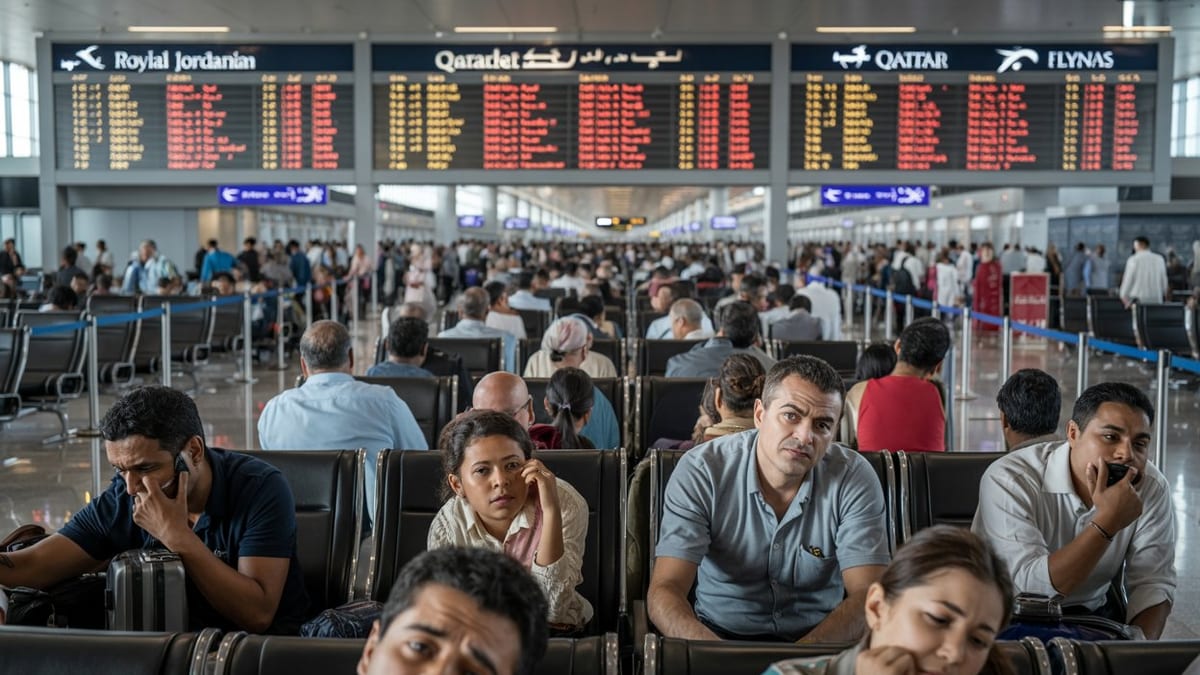
For passengers, the statistics translated into crowded terminals, long customer-service queues and uncertain arrival times. News and travel-industry reports from similar high-disruption days emphasize that same-day rebooking options can quickly dry up when cancellations number in the hundreds, especially on peak travel dates or at already busy hubs such as Atlanta, Dallas-Fort Worth and Los Angeles.
Travel publications frequently recommend that passengers monitor airline apps and flight-tracking platforms closely on days when national delays climb into the thousands, as rebooking opportunities are often awarded on a first-come basis once a flight is cancelled. Many carriers now enable self-service changes in their apps, which can be faster than waiting in line at the airport during heavy disruption.
Passengers connecting through multiple hubs today likely faced a series of cascading decisions as delay estimates shifted throughout the day. Some travelers may have opted to reroute through alternative airports or accept overnight stays when available connections no longer aligned with minimum connection times, a familiar scenario described in recent coverage of large-scale U.S. delay events.
For travelers with time-sensitive plans at their destinations, the combination of elevated delay risk and limited spare capacity in airline schedules underscored the importance of contingency planning, including travel insurance options, flexible hotel bookings and alternative ground transportation where feasible.
What Today’s Numbers Signal For The Spring Travel Season
Today’s 415 cancellations and 3,963 delays come as the U.S. aviation system moves deeper into the spring travel period, a time that often blends lingering winter weather patterns with the first sustained uptick in leisure demand. Recent weeks have already seen several days with high volumes of delays and cancellations as storms and operational strains converged at major hubs across the country.
Industry commentary suggests that airlines are working to fine-tune schedules, adjust staffing and improve recovery planning after several years of headline-making disruption episodes, from severe weather clusters to high-profile technology outages. Nevertheless, today’s figures highlight that significant day-of-travel volatility remains a reality for passengers, particularly when multiple large hubs are affected simultaneously.
Travel analysts observing these patterns note that even on days without a singular, headline-grabbing storm or outage, the accumulation of local weather issues, congestion and operational challenges can result in national disruption totals that impact hundreds of thousands of passengers. The data from today’s operations offer another example of how those pressures can manifest across a wide range of airports and airlines.
As airlines, airports and federal agencies continue to invest in technology, staffing and infrastructure, future performance will depend on how effectively those efforts translate into resilience during irregular operations. For now, the experience of travelers passing through Atlanta, Dallas, Chicago, Houston, Los Angeles, San Francisco and other key hubs today illustrates how quickly conditions can deteriorate when multiple stress points align in the U.S. air travel system.