

More news on this day
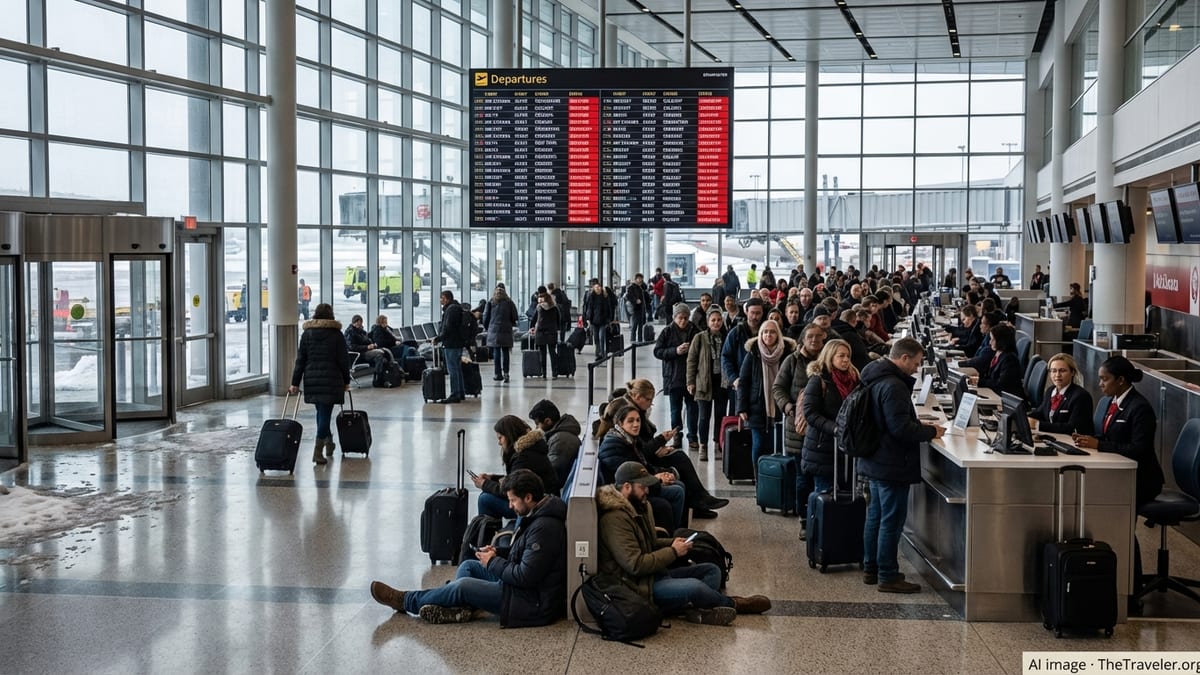
Travellers passing through Montréal–Trudeau International Airport faced a difficult travel day as publicly available flight-tracking data showed 87 delayed departures and arrivals and 11 outright cancellations affecting services operated by Air Canada Rouge, Jazz Aviation, PAL Airlines, WestJet and several other carriers.
Get the latest news straight to your inbox!
Montreal Hub Sees Widespread Schedule Disruptions
The disruption at Montréal–Trudeau unfolded over the course of the day, with delays building steadily across morning and midday departures before rippling into evening schedules. Flight-monitoring platforms tracking operations at the airport recorded a total of 98 affected flights, highlighting the vulnerability of a major hub when several carriers face concurrent operational challenges.
Air Canada Rouge and Jazz Aviation, both closely linked to Air Canada’s domestic and transborder network, were among the airlines with multiple delayed services. Regional operator PAL Airlines and low cost and mainline flights from WestJet were also affected, contributing to a patchwork of late departures and arrivals across key Canadian routes.
The disruption followed a broader pattern of operational strain reported across Canadian airports in recent days, where a mix of congestion, tight aircraft and crew rotations, and earlier weather and technical issues have led to elevated delay and cancellation counts. The concentration of affected services at Montréal–Trudeau underlined the airport’s role as a central node in the national air network.
While the overall number of cancellations remained limited compared with the delays recorded, the combination created significant uncertainty for travellers attempting to make connections or reaching time sensitive events, particularly on domestic links feeding into larger hubs such as Toronto, Calgary and Vancouver.
Impact on Key Carriers and Routes
According to publicly available online boards and flight-status trackers, Air Canada Rouge and Jazz Aviation saw several short haul departures from Montréal–Trudeau depart behind schedule, particularly services linking Montreal with Toronto Pearson, Ottawa and regional centres in Quebec and Atlantic Canada. These delays often ranged from moderate to extended, pushing back departure times by more than an hour in some cases.
PAL Airlines, which operates a network of regional routes in Eastern Canada, also registered delayed operations, notably on services connecting smaller communities into Montreal. For travellers relying on these flights to access onward long haul journeys, even modest schedule changes at the regional level increased the risk of misconnecting and requiring rebooking.
WestJet operations at Montréal–Trudeau were likewise affected, with reports indicating a number of delayed departures and isolated cancellations on domestic routes. The airline, which has been expanding and reshaping its schedule across Canada, has in recent months already faced scrutiny over irregular operations and its obligations under Canadian air passenger protection rules.
The combination of affected carriers meant that few alternatives were immediately available at peak times, as competing services were often already full or themselves running late. This raised the likelihood of passengers being rebooked onto flights departing much later in the day or even into the following morning.
Knock On Effects Across the Canadian Network
Operational data and industry coverage over recent days indicate that Montréal–Trudeau’s problems did not occur in isolation. Other major Canadian hubs, including Toronto Pearson, Calgary, Vancouver and Quebec City, have also reported elevated numbers of delayed and cancelled flights, including services operated by Air Canada, Jazz, WestJet and PAL Airlines.
When disruptions occur simultaneously at multiple hubs, aircraft and crew can quickly fall out of position, reducing schedule resilience. Late arriving aircraft from one airport can cascade into late departures from another, leading to a rolling series of delays that can persist long after the original trigger such as weather, congestion or a technical fault has cleared.
Industry observers note that the structure of Canada’s air network, which relies heavily on a small number of large hubs and regional feeders, can amplify these knock on effects. A cluster of early day delays at Montréal–Trudeau, for instance, can ripple outward across the country as aircraft cycle through subsequent legs, affecting travellers far beyond Quebec.
Publicly accessible travel advisories and airline communication channels in recent months have increasingly emphasized the possibility of downstream disruption following major irregular operations. Passengers departing from smaller or remote airports have been advised to build additional buffer time into itineraries that connect through busy hubs such as Montreal and Toronto.
Travellers Face Long Waits and Changing Itineraries
For travellers caught in the disruption at Montréal–Trudeau, the practical effects included extended waits at departure gates, frequent schedule updates on departure boards and, in some cases, last minute gate changes. Those with tight connections to international services or to final regional legs were particularly vulnerable to missed links and overnight stays.
Consumer information portals and recent media coverage of similar disruption days in Canada highlight that passengers experiencing long delays or cancellations may be eligible for assistance under the federal Air Passenger Protection Regulations. Entitlements can vary depending on the length of delay, the size of the carrier and whether the cause is considered within the airline’s control.
At Montréal–Trudeau, the mix of weather related congestion in recent days, high traffic volumes and ongoing schedule adjustments has made it difficult for passengers to clearly determine the underlying cause of individual delays. Public guidance from regulators and consumer advocates has urged travellers to keep detailed records of boarding passes, receipts and written communications with airlines to support any future claims.
Given the fluid situation, publicly accessible advisories have repeatedly stressed the importance of monitoring flight status frequently on official airline channels rather than relying solely on static booking confirmations or third party information. As seen during the latest disruptions, scheduled times can change multiple times in the hours before departure.
What Travellers Can Do Next
In light of the 87 delays and 11 cancellations recorded at Montréal–Trudeau, travel experts and consumer guidance materials recommend that passengers with upcoming flights through the airport take proactive steps. These include checking in as early as permitted online, confirming terminal and gate information before leaving for the airport and allowing extra time for security and border formalities.
Passengers who experience significant delays are advised by publicly available travel resources to contact their airline through multiple channels, such as mobile apps, websites and customer service phone lines, rather than relying exclusively on airport counters, which can become overwhelmed when multiple flights are affected at once.
For those with complex itineraries that involve separate tickets or tight international connections, industry guidance suggests looking into options such as voluntary rebooking to earlier departures or overnighting at the hub if a misconnection appears likely. While these choices can add cost and inconvenience, they may reduce the risk of more severe disruption later in the journey.
As Canadian carriers and airports continue to work through the latest wave of operational challenges, travellers planning to pass through Montréal–Trudeau in the coming days are being encouraged by public information sources to remain flexible, stay informed and understand their rights if delays or cancellations affect their journey.