

More news on this day
Travelers across the United States faced another day of disruptions as Orlando International Airport reported 10 cancelled flights and 177 delays, with low cost and leisure carriers such as Spirit Airlines, Frontier Airlines and JetBlue Airways among those affected on routes linking Central Florida with major Northeast cities including New York, Philadelphia and Boston.
Get the latest news straight to your inbox!
Operational Strain at a Key U.S. Leisure Gateway
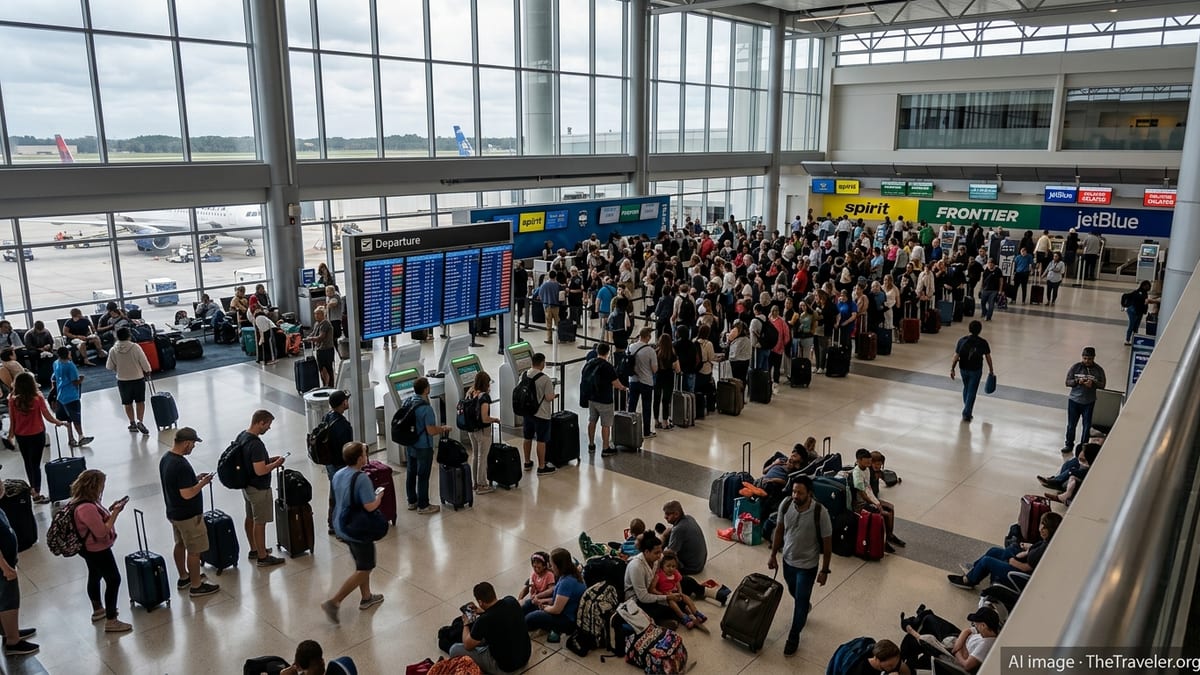
Publicly available tracking data for Saturday, March 28, indicates that Orlando International Airport, one of the country’s busiest leisure hubs, experienced a concentrated wave of schedule disruptions, with 10 flights cancelled outright and 177 reporting delays. While the majority of operations continued, the numbers highlight the fragility of peak-period schedules at a gateway that serves millions of theme park visitors and cruise passengers each year.
Reports indicate that the disruptions were spread across multiple terminals and concourses, affecting departures and arrivals rather than being confined to a single airline or gate area. Passengers encountered extended waits at boarding gates, rolling delay estimates and rebooked itineraries as airlines attempted to reposition aircraft and crews.
Industry data and prior performance reports for Orlando show that the airport typically maintains high levels of on time departures, but is vulnerable to rapid knock on effects when weather or airspace constraints emerge over the Southeast and Mid Atlantic corridors. The latest figures from March 28 fit into a broader pattern of intermittent strain seen during holiday and spring break peaks.
Orlando’s role as both an origin and destination market for family travel means that irregular operations can be particularly disruptive, with travelers often working around fixed resort stays, cruise departures and theme park reservations. Even modest numbers of cancellations can therefore trigger a disproportionate volume of missed connections and last minute itinerary changes.
Impacts on Spirit, Frontier, JetBlue and Other Carriers
According to live flight tracking boards and airline status pages, a significant share of the delays and cancellations at Orlando involved low cost and leisure focused operators. Spirit Airlines, Frontier Airlines and JetBlue Airways, all of which maintain sizable schedules at Orlando, were among the carriers most visibly affected on March 28.
These airlines rely heavily on tight aircraft utilization, turning jets quickly on the ground to keep fares low. When one segment in the network encounters extended ground holds, weather reroutes or congestion related delays, subsequent flights can be pushed back by hours. On March 28, that pattern could be seen in a series of late running northbound departures from Orlando.
Published network information shows that Spirit, Frontier and JetBlue all tie Orlando to a dense web of East Coast destinations, including major Northeast gateways and smaller secondary cities. As a result, disruption in Central Florida can ripple into late evening and next day operations elsewhere, particularly when aircraft and crews do not end their day at their planned overnight bases.
Other large domestic carriers serving Orlando, including legacy airlines that operate hub and spoke systems, also registered delays, although the specific mix of affected flights varied by airline and time of day. Publicly available information shows that schedule recovery efforts continued into the evening as carriers sought to move stranded passengers and reposition aircraft.
Routes to New York, Philadelphia, Boston and Beyond Affected
The wave of delays at Orlando was felt most strongly on heavily used Northeast routes. Flight status boards for March 28 show late departures and arrivals on services linking Orlando with the New York area, including New York John F. Kennedy, LaGuardia and Newark, as well as with Philadelphia and Boston.
These corridors are among the busiest domestic markets in the United States, with high frequencies operated by both low cost and full service airlines. When weather systems, air traffic control restrictions or congestion develop over East Coast airspace, delays can stack quickly. Travelers reported extended taxi times, airborne holding and gate changes as the day progressed.
Published coverage of recent days has pointed to a combination of spring travel demand and unsettled weather across parts of the eastern United States, creating intermittent pressure on already crowded airspace. In this context, the Orlando disruptions formed part of a wider pattern of schedule stress, with knock on effects reported at airports such as New York, Philadelphia and Boston as aircraft arrived late from Florida.
For passengers, the practical impact was missed connections onto onward domestic and international services, shortened vacation time and, in some cases, unplanned overnight stays. Families traveling at the end of school holidays and visitors returning from Florida theme parks were among those most affected by the timing of the delays.
Weather, Airspace Congestion and Spring Demand as Key Drivers
While specific causes for individual delays and cancellations can vary by flight, publicly accessible aviation data and recent coverage of U.S. operations point to a familiar combination of drivers: active weather patterns, airspace congestion and elevated seasonal demand. Storm systems moving through the central and eastern United States in recent days have prompted ground delay programs and route restrictions that impact traffic flows in and out of Florida.
Central Florida lies beneath some of the busiest domestic flight corridors in the country, and constraints in adjacent air traffic control sectors can translate into ground holds at Orlando even when skies above the airport are clear. This dynamic can be seen when northbound departures to cities such as New York, Philadelphia and Boston are held on the ground or slowed in the en route phase because of airspace volume limits farther along the route.
At the same time, late March coincides with spring break and early holiday travel, periods when airlines schedule additional frequencies to popular destinations such as Orlando. Higher seat capacity increases the number of passengers affected when something goes wrong, and also limits flexibility for same day rebooking when flights go out full.
Aviation analysts have frequently noted that low cost carriers focused on point to point flying, including Spirit and Frontier, can be particularly exposed to these conditions because of thinner schedules on individual routes and fewer options to reroute customers over alternative hubs.
Advice for Travelers Using Orlando and Northeast Gateways
Travel experts and consumer advocates consistently recommend that passengers treating Orlando as a starting point or connection hub build extra buffer time into their itineraries during peak periods, particularly when connecting onto last flights of the day to the Northeast. The events of March 28 reinforce the value of early departures, longer layovers and flexible hotel and ground transport arrangements.
Public information from airlines and airports also underscores the importance of monitoring flight status frequently in the 24 hours before departure, using airline apps and airport information screens to track schedule changes in real time. Same day schedule shifts remain common when weather and airspace constraints interact with tight crew duty limits.
For travelers with fixed cruise departures or non refundable theme park reservations, the recent disruptions serve as a reminder to consider arriving in Central Florida at least a day early when possible. Conversely, those returning home from Orlando at the end of a holiday may wish to avoid last flights of the evening on days when widespread weather issues are forecast along the East Coast.
As airlines continue to refine their schedules and staffing plans for the busy months ahead, Orlando’s performance on March 28 highlights the ongoing sensitivity of the U.S. air travel system to external shocks, even on days when the raw number of cancellations appears modest compared with national totals.