

More news on this day
Passengers flying through France on April 6 are facing a new wave of disruption as 16 flights operated by Air France, Icelandair, British Airways, easyJet, Royal Air Maroc and other carriers are suspended, with additional delays affecting major airports in Paris and Nice.
Get the latest news straight to your inbox!
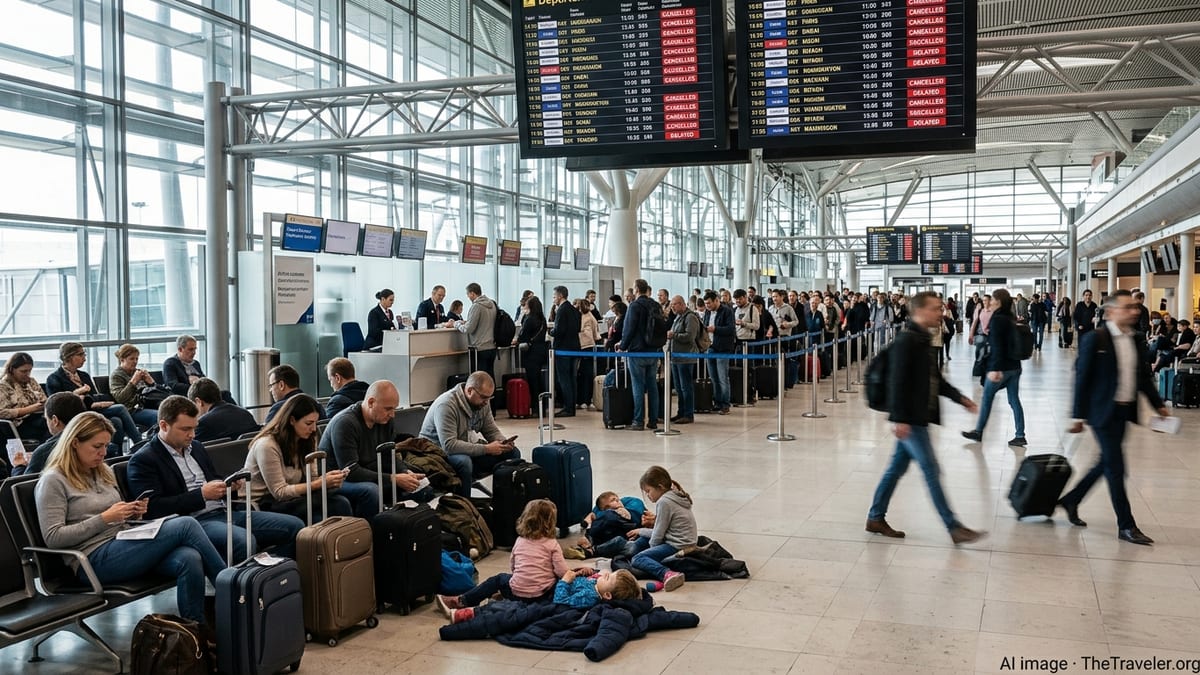
Targeted Cancellations Concentrated at Paris and Nice Hubs
Operational data from flight-tracking platforms and published coverage indicate that the latest round of disruption is concentrated at Paris Charles de Gaulle, Paris Orly and Nice Côte d’Azur Airport. Across these hubs, 16 scheduled flights involving a mix of French and foreign carriers have been removed from timetables, while a wider pool of services is operating with significant delays.
The affected routes include a combination of domestic and international sectors, such as links between Paris and Mediterranean destinations, short haul connections within Europe, and services between France and North Africa. Air France appears among the disrupted operators on core Paris routes, while British Airways and easyJet are impacted primarily on services linking the French capital and Nice with the United Kingdom and other major European markets.
Royal Air Maroc and Icelandair feature in the cancellations list where their networks intersect with Paris and Nice, particularly on connecting itineraries that rely on narrow turnaround windows. Publicly available airport departure boards show gaps in the usual spread of departures to Casablanca, Reykjavik and select European capitals, alongside extended departure times for a range of remaining flights.
While overall traffic through France remains high on what is a busy spring travel day, the selective removal of flights is creating concentrated pressure on specific departure waves at both Paris and Nice, especially in the morning and late afternoon peaks.
Industrial Tensions and Network Adjustments Feed Into Disruption
The latest cancellations come against a backdrop of frequent operational stress across the French aviation system. Reports indicate that repeated industrial actions involving airline staff and air traffic control have periodically forced carriers to trim their schedules, particularly on short haul routes. Recent advisories relating to French cabin crew walkouts, especially at low cost operators, highlight how even limited strikes can cascade into wider timetable changes when aircraft and crews are tightly scheduled.
For Air France, the disruption sits alongside an ongoing effort to recalibrate its network. Publicly available company information describes a multi year shift that includes consolidating Paris operations at Charles de Gaulle and adjusting frequencies on selected long haul and regional routes. Industry analysts note that such network reshaping can temporarily reduce resilience, making individual flight cancellations more likely when weather, staffing or airspace constraints arise.
Across Europe, airlines have also been navigating volatile conditions linked to security concerns and changing airspace availability, particularly on routes touching the Middle East. Some groups have kept extended suspensions in place on specific corridors, which can force rerouting via already congested hubs such as Paris. When added to local disruptions in France, these wider network pressures can contribute to last minute schedule changes, as appears to be the case with several of today’s suspended services.
EasyJet, British Airways and other carriers operating dense short haul programs from the United Kingdom and other European states into France are particularly exposed when even small delays accumulate early in the day. Studies of 2025 performance data show that low cost and traditional airlines alike have faced rising disruption rates on intra European flights, with congestion at major hubs like Paris and Nice frequently cited as a contributing factor.
Knock on Effects for Passengers and Connecting Journeys
The immediate impact for travellers is being felt in longer queues, rebooked itineraries and, in some cases, missed connections. According to information collated from airport displays and independent aviation data services, a number of the suspended flights today were originally timed to feed into onward long haul services or popular leisure routes, particularly through Paris Charles de Gaulle.
When a feeder flight from Nice or another French city is cancelled, passengers who intended to connect in Paris to destinations in North America, Africa or Asia may find their options narrowed. Reaccommodation is often possible on later departures, but heavily booked spring schedules limit the number of spare seats available on the same day, especially in economy cabins.
In Nice, the suspension of selected departures has been compounded by rolling delays to remaining services, leading to congested departure lounges and longer waits at check in and security. Travellers holding separate tickets for domestic and international connections are particularly vulnerable, since missed onward flights in such cases are not automatically protected by a single booking.
The disruption also has knock on effects for inbound tourism and business travel. Hotels and local tourism providers in Paris and the Côte d’Azur region rely heavily on predictable air traffic flows, and a day of irregular operations can trigger late arrivals, last minute cancellations and compressed stays, especially for short city breaks.
Rights, Remedies and Practical Advice for Travellers
Under European air passenger rights regulations, travellers departing from EU airports or flying into the EU on eligible carriers may have access to assistance and, in some cases, financial compensation when flights are cancelled or heavily delayed. Public guidance from consumer organisations stresses that entitlements depend on the cause of the disruption, the length of the delay and the distance of the journey, with extraordinary circumstances such as severe weather treated differently from internal airline issues.
For today’s disrupted services, publicly available information suggests that a mix of operational and scheduling factors are at play. In practice, this often means airlines are required to provide support such as meal vouchers, hotel accommodation where necessary and rebooking on the next available flight, while eligibility for cash compensation may vary from case to case.
Travel advisers routinely recommend that passengers affected by cancellations or long delays keep boarding passes and receipts for any additional expenses, as these can be important when submitting formal claims later. Many carriers now channel claims through online forms, and processing times can range from days to several weeks, depending on the complexity of the itinerary and the volume of concurrent disruptions across the system.
In the short term, the most practical step for travellers is to monitor flight status closely through airline apps and airport information screens, and to allow extra time at the airport in case security queues and boarding processes are slowed by the irregular operations. For those with flexible plans, shifting travel to off peak times or alternative days may reduce exposure to further knock on delays as airlines work to realign aircraft and crews.
Outlook for Operations in the Coming Days
Aviation data providers and industry coverage suggest that, while today’s 16 cancellations represent a relatively small slice of total movements in and out of Paris and Nice, they form part of a broader pattern of heightened volatility in European air travel. Recent days have already seen major disruption in other countries, with hundreds of cancellations and delays reported at airports in Spain, the United Kingdom, Italy and Scandinavia.
For France, the immediate concern is whether the current wave of disruption will subside quickly or feed into further schedule changes in the days ahead. Airlines typically adjust rosters and aircraft positioning overnight following an irregular operations day, and additional one off cancellations can be announced at short notice as planners attempt to restore timetable stability.
Travellers booked to fly through Paris or Nice in the coming week are being advised in public travel notices and media reports to check their reservations regularly and to pay attention to any schedule change emails or app notifications from their carriers. While there is no indication at present of a large scale shutdown of French airspace or airports, the combination of residual delays, tight spring schedules and potential further labour actions suggests that conditions may remain fluid.
For now, the suspension of 16 flights across Air France, Icelandair, British Airways, easyJet, Royal Air Maroc and other operators serves as a reminder of the continued fragility of air travel across Europe, even as passenger numbers rebound and airlines prepare for the peak summer season.