

More news on this day
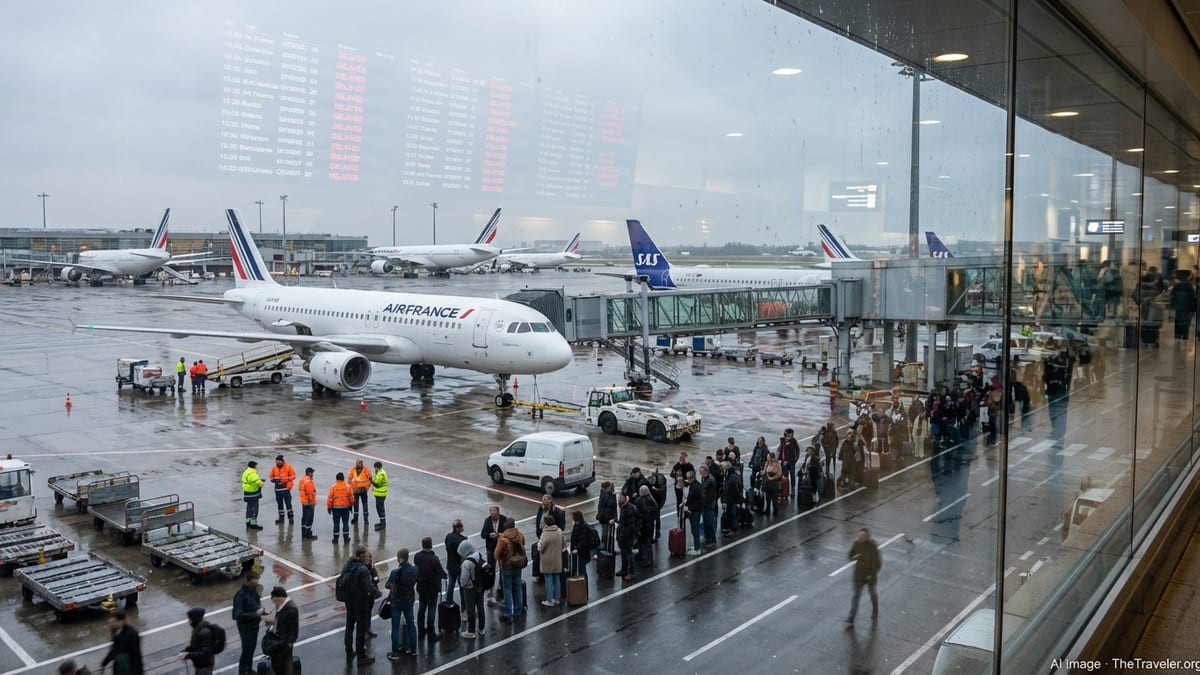
Air travel to and from Paris faced another setback this weekend as Scandinavian carrier SAS and French flag carrier Air France grounded three flights and reported multiple delays across key European routes, amplifying a broader wave of weather and staffing disruptions rippling through France and the wider region.
Grounded Flights Add New Strain to Paris Hubs
The latest disruptions center on three grounded flights operated by SAS and Air France, affecting services at Paris Charles de Gaulle and Paris Orly at a time when French aviation is already battling a volatile winter schedule. While the number of outright groundings is modest on paper, aviation analysts note that even a small cluster of cancellations can trigger a chain reaction across tightly timed European networks.
Air France, which maintains its primary hub at Charles de Gaulle, has spent much of February juggling rolling delays and cancellations as storms and saturated schedules leave aircraft and crews out of position. SAS, which connects Paris to Nordic gateways such as Copenhagen and Stockholm, has likewise been forced to adjust select departures, including at least one rotation from Paris to Scandinavia withdrawn from operation amid wider regional disruption.
For passengers, the immediate effect is felt not only on the grounded flights themselves but also on missed connections and rebooked itineraries. With long haul services funnelling through Paris and Nordic hubs, a single cancelled feeder can break onward journeys to North America, the Middle East, and Asia, compounding frustration at check in and transfer desks.
Airport operators in Paris have been working to contain the impact, reallocating gates and spreading passengers across alternative departures. However, ground handling teams report that the stop start pattern of cancellations and rolling delays is harder to manage than a single, clearly defined disruption event.
Weather Systems and Operational Pressures Behind the Setback
The grounded flights come against a backdrop of persistent winter weather systems across Europe, with recent storms bringing heavy rain, high winds, and low cloud that have repeatedly interfered with air traffic control flow rates. French airports from Paris to Nice have recorded spikes in delays and a steady trickle of cancellations in recent days, as airlines trim frequencies or consolidate services to protect core long haul operations.
Industry data collated this week shows France among several European countries grappling with hundreds of delays in a single day, with Air France frequently at the center due to its dominant presence at Charles de Gaulle. On particular storm hit days, the carrier has cancelled dozens of flights and delayed many more, with ripple effects into Italy, Germany, the Netherlands, and the United States as aircraft and crews fall out of sequence.
SAS is fighting similar headwinds in northern Europe, where winter conditions at hub airports like Copenhagen and Stockholm often require deicing procedures and runway inspections that slow departure banks. When knock on effects reach Paris, the airline may prioritize rotations with heavier passenger loads or critical connections, leaving select departures grounded or rescheduled at short notice.
Operational challenges extend beyond the weather. Airlines are still rebuilding resilience after years of pandemic era adjustments, with leaner staffing models and aircraft utilization plans that leave little slack when storms hit. Ground and cabin crew rosters can quickly become misaligned with aircraft locations, especially when overnight diversions or extended curfews are involved.
Impact on Charles de Gaulle and Orly Passengers
At Charles de Gaulle, Europe’s second busiest hub, the disruption is most visible in longer queues at airline service counters and self service kiosks as passengers attempt to salvage weekend trips, business meetings, or onward connections. Screens in all three terminals have shown clusters of delayed departures to key European cities, along with sporadic cancellations where operators, including Air France and SAS, have withdrawn flights entirely.
Travelers report that early morning and late evening waves have been particularly vulnerable, with aircraft and crews arriving late from weather affected cities. When those inbound services miss their scheduled turn times, the knock on effect pushes subsequent departures further into the day, occasionally forcing airlines to write off individual rotations, such as the three grounded flights that prompted the latest alert.
Paris Orly, traditionally focused on domestic and short haul European routes, has also experienced uneven operations as carriers rework schedules to accommodate weather and capacity constraints. Although Air France has shifted much of its legacy domestic network toward a mix of high speed rail partnerships and low cost subsidiaries, Orly still serves as a critical point for regional connectivity and leisure traffic, meaning that each delay or cancellation can strand passengers far from alternative transport options.
Airport authorities in Paris have maintained that safety remains the overriding priority and that flight plans will continue to be adjusted whenever conditions demand. Nevertheless, the repeated need to slow or suspend operations underscores the vulnerability of France’s aviation system to seasonal weather when combined with heavy traffic and tight turnaround times.
Knock On Effects Across European and Long Haul Networks
While only three flights have been formally grounded in this particular episode involving SAS and Air France, the broader operational picture shows a far more extensive pattern of disruption across Europe. Recent data snapshots highlight hundreds of delays and significant numbers of cancellations on peak days, with France, the Netherlands, the United Kingdom, Germany, and other markets collectively scrubbing or postponing thousands of services.
Paris’s role as a global hub means that even localized problems can quickly escalate into transcontinental headaches. When an Air France feeder from a regional European airport fails to operate, passengers bound for long haul services to North America, Africa, or Asia may miss their connections, forcing last minute rebookings on later departures or, in some cases, alternate routings via other European hubs.
SAS travelers face similar uncertainty when Paris bound services are disrupted, particularly those relying on onward Nordic connections. A grounded or heavily delayed flight from Charles de Gaulle to Copenhagen can unravel carefully planned itineraries for business travelers heading onward to smaller Scandinavian cities with limited daily frequencies.
These knock on effects are not confined to the day of disruption. Aircraft and crews that end up in the wrong place at the wrong time can impact operations for 24 to 48 hours afterward, as airlines work through backlogs and reposition resources. In some cases, carriers opt to cancel a lightly booked service the following day in order to restore network balance, further complicating travel plans for passengers who were not affected by the original weather system.
How Airlines Are Responding to Ongoing Disruptions
Both SAS and Air France have deployed a familiar playbook to manage the latest wave of delays and groundings, focusing on customer communication, flexible rebooking options, and efforts to prioritize high demand routes. Digital channels, including mobile apps and email alerts, remain the primary means of notifying passengers about last minute schedule changes, although high volumes and shifting timelines can still leave some travelers learning of cancellations only upon arrival at the airport.
Air France has encouraged passengers to check their flight status before leaving for the airport and, where possible, to accept rebooking proposals delivered through its website and mobile platforms. The airline has also activated its customer care teams at Charles de Gaulle and Orly to distribute meal vouchers and, in certain cases, overnight accommodation to those facing extended delays or missed connections, in line with European passenger rights rules.
SAS, which maintains a sales and support presence in Paris in addition to its Nordic bases, is similarly steering customers toward digital self service tools while reinforcing airport staffing to handle complex rebookings. For travelers affected by the grounded SAS flight in Paris, options have included rerouting via alternative hubs or accepting travel the following day, subject to seat availability on peak winter services.
Despite these efforts, social media posts and on the ground accounts suggest that some passengers still endure long waits to speak with airline representatives, especially during busy disruption windows when multiple carriers are affected at once. Travel agents and corporate travel managers are also reporting heightened workloads as they assist clients in navigating the shifting schedules.
What Travelers Passing Through Paris Should Expect
For travelers booked to fly into or out of Paris in the coming days, the latest setbacks serve as a reminder to build additional flexibility into their plans. Airlines and airport authorities advise allowing extra time at the airport, particularly for morning departures following an evening of weather related delays, and for connections involving separate tickets or tight minimum transfer times.
Passengers with onward long haul flights are encouraged to monitor their European feeder segments closely. In the event of a cancellation or significant delay affecting those legs, rebooking through another hub such as Amsterdam, London, or Frankfurt may be an option, though availability can tighten quickly when multiple cities are affected by the same weather system.
Travelers should also be prepared for aircraft swaps and last minute seat reassignments as airlines try to optimize fleet utilization. This may impact seating preferences and, in some cases, the availability of premium cabins, but can also help carriers preserve the overall number of departures in heavily trafficked markets such as Paris to major European capitals.
Experts note that while the majority of flights are still operating, the margin for error in the current environment is narrow. Even a modest cluster of grounded services, like the three SAS and Air France flights at the center of this latest episode, can widen into broader delays when combined with saturated airspace, constrained runway capacity, and the lingering effects of earlier storms.
Broader Questions Over Resilience in French and European Aviation
The repeated waves of disruption affecting Paris and other European hubs have sparked renewed debate about the resilience of the continent’s aviation infrastructure. With climate change contributing to more frequent and intense weather events, industry observers argue that airlines and airports will need to rethink schedule planning, buffer times, and contingency resources if they are to prevent relatively small operational shocks from spiraling into continent wide delays.
In France, these questions intersect with ongoing infrastructure projects designed to improve connectivity to major airports, including rail upgrades intended to provide more reliable alternatives to short haul flights. While such projects may, in the long term, reduce pressure on domestic air networks, they do little to address the immediate winter volatility that is currently stranding passengers at terminals across Paris.
Carriers such as Air France and SAS are also being pushed to examine crew and fleet deployment models that have grown progressively leaner in the quest for efficiency. The trade off between high aircraft utilization and operational resilience is under renewed scrutiny, particularly on days when even a single grounded flight exposes how little slack remains in the system.
For now, travelers to and from Paris face an uneasy balance: air connectivity across Europe and beyond remains robust, yet vulnerable to abrupt setbacks when weather, staffing, and infrastructure constraints collide. The latest grounded flights from SAS and Air France underscore that fragility, turning a handful of cancelled services into a wider test of patience for passengers and aviation planners alike.