

More news on this day
Passengers traveling through Raleigh–Durham International Airport on Wednesday faced a fresh round of operational disruptions, with publicly available flight tracking data indicating 39 delays and 10 cancellations affecting services operated by Republic Airways, Endeavor Air, American Airlines and Southwest Airlines across the United States.
Get the latest news straight to your inbox!
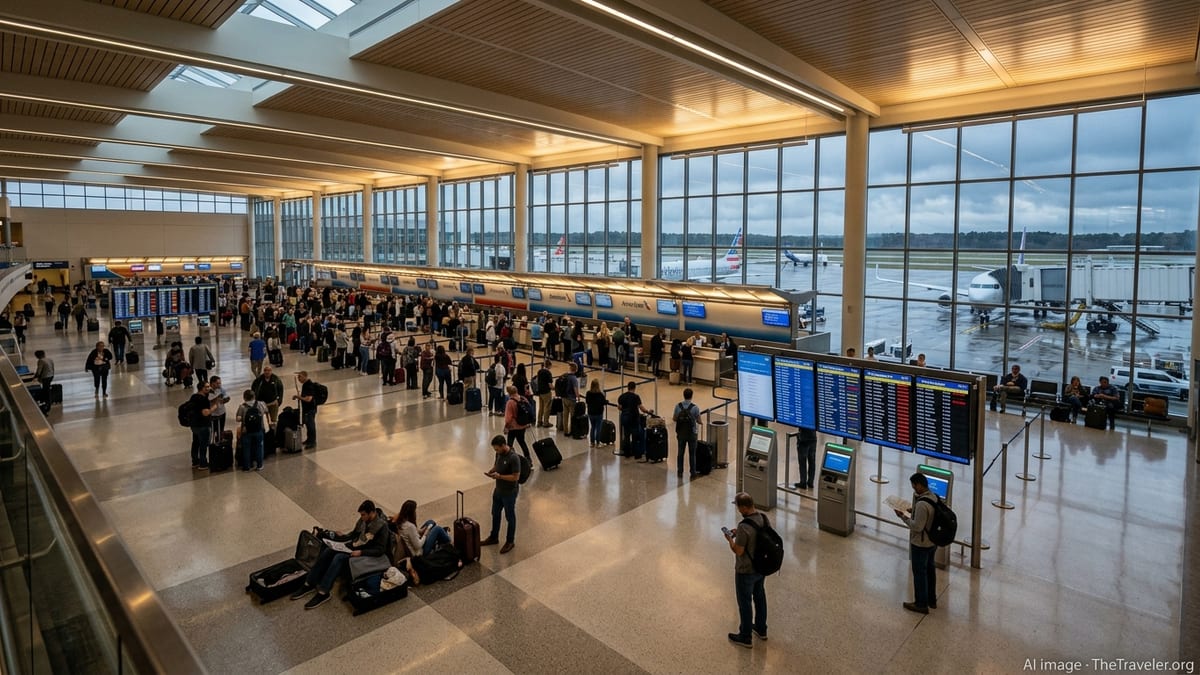
Operational Snags Ripple Through RDU Network
The latest disruptions at Raleigh–Durham International Airport, commonly known as RDU, are part of a broader pattern of schedule volatility seen across U.S. hubs in recent weeks. Flight status boards on Wednesday showed a cluster of delayed departures and arrivals, alongside a smaller but significant number of outright cancellations concentrated among regional and domestic carriers.
According to aggregated tracking information, operations tied to Republic Airways, Endeavor Air, American Airlines and Southwest Airlines accounted for 39 delayed flights and 10 cancellations linked to RDU. The impacts were felt not only by travelers starting or ending their journeys in Raleigh and Durham, but also by passengers at connecting airports nationwide as aircraft and crews cycled through the network.
While those numbers represent a small fraction of total daily movements at RDU, even modest disruption at a growing mid-sized hub can quickly cascade into missed connections and extended layovers. The airport has been steadily expanding its domestic and international reach, which means more itineraries now depend on tight connections through the Triangle region.
RDU’s role as a key connector in the Carolinas also amplifies the visibility of any disruption. Flights operated by Republic and Endeavor on behalf of major network airlines link the region to busy hubs such as Atlanta, New York and Chicago, where even short delays can translate into rebooking challenges during peak travel times.
Weather and Congestion Add Pressure Across US Routes
The timing of the latest RDU disruptions coincides with unsettled conditions along parts of the East Coast, where recent rounds of heavy rain and thunderstorms have affected multiple airports. Published aviation and weather coverage for March indicates that storm systems and lingering winter patterns have periodically slowed operations at key hubs, narrowing the margin for on-time performance.
Sector-wide analyses by U.S. transportation authorities have long shown that a significant portion of delays fall into categories such as air-carrier issues, routine weather and national aviation system constraints, including traffic management initiatives and congestion. In practice, that means a delay recorded at RDU may have its origins hours earlier at another airport where an incoming aircraft faced ground holds or longer taxi times.
On days with widespread convective weather, carriers often introduce temporary schedule adjustments and ground delay programs at major hubs. When those measures overlap with already tight aircraft and crew rotations, regional airports like RDU can see a spike in delayed departures followed by targeted cancellations as airlines attempt to rebalance their networks.
Industry observers note that the March and early spring period is particularly vulnerable to this kind of disruption. Airlines are transitioning from winter schedules while preparing for heavier late-spring demand, and systems can be strained by a mix of lingering cold-season storms and early-season thunderstorms, especially along the Eastern Seaboard.
Republic, Endeavor, American and Southwest Under Scrutiny
The cluster of 39 delays and 10 cancellations at RDU has drawn attention to the performance of the carriers involved, even as broader federal statistics show that most U.S. airlines complete a strong majority of their flights as scheduled. Publicly released on-time performance data indicate that regional operators such as Republic Airways and Endeavor Air, which fly under the brands of larger network airlines, typically post high completion rates but are vulnerable to cascading impacts when partner hubs experience weather or congestion.
American Airlines, a major player at RDU, and Southwest Airlines, which maintains an extensive domestic network, are similarly exposed to systemwide pressures. Operational metrics for recent months highlight how maintenance issues, crew availability and gate congestion can quickly translate into hold times and schedule slippage, particularly during busy morning and evening banks of flights.
In the case of Wednesday’s disruptions, the combined effect was felt across a mix of short-haul and medium-haul routes, including key connections to Northeast and Midwest cities. Travelers booked on multi-leg itineraries often bore the brunt of the complications, as a delay on a regional connector flown by Republic or Endeavor could jeopardize a subsequent mainline departure on American or another partner.
Travel industry analysts point out that the airlines involved have invested heavily in reliability initiatives, from schedule “padding” to improved crew planning and new technology tools designed to predict and mitigate day-of-travel issues. Yet episodic clusters of delays and cancellations, like those seen at RDU, underscore how fragile airline operations can be when multiple disruption factors align on the same day.
Impacts Felt in Raleigh, Durham and Beyond
For passengers in the Triangle region, the immediate effect of Wednesday’s disruptions was most visible on departure boards and at check-in counters, where revised departure times and rebooking notices appeared throughout the day. Travelers heading from RDU to other U.S. cities faced longer dwell times at the airport, while some return flights into Raleigh and Durham were pushed back as inbound aircraft arrived late from other parts of the country.
The knock-on effects extended well beyond North Carolina. Because RDU serves as both an origin and a connecting point, delays on flights operated by Republic, Endeavor, American and Southwest affected travelers at downstream destinations such as major Northeastern, Midwestern and Sun Belt hubs. Passengers already in transit sometimes encountered missed connections and unplanned overnight stays as they waited for open seats on later departures.
Travel planners note that even a limited number of cancellations can significantly complicate recovery when flights are near capacity. With spring break travel and business demand lifting load factors across much of the domestic network, options for same-day rebooking are often constrained, especially on popular routes and peak-time departures from RDU.
RDU’s recent growth trajectory, including added long-haul and international service, has brought more choice for local travelers but also increased reliance on seamless coordination between multiple carriers and their regional partners. When disruptions strike, that interconnectedness can mean that a single delayed aircraft affects passengers traveling between cities as far apart as Raleigh, Phoenix and New York.
What Travelers Can Do on Disruption-Prone Days
For passengers planning trips through RDU in the coming days, travel experts recommend paying close attention to real-time flight status updates and considering schedule buffers where possible. Early-morning departures are often favored because aircraft have typically overnighted at the airport, reducing exposure to upstream delays from previous flights.
Publicly available consumer guidance from aviation regulators emphasizes the importance of understanding the difference between a delay and a cancellation, as well as the rights that apply in each case. In general, airlines retain flexibility in how they respond to weather-related disruptions, but policies can differ when delays stem from factors within the carrier’s control, such as crew or maintenance issues.
On days when storms or high winds are forecast along the East Coast or in major hub cities, voluntary change waivers and flexible rebooking options are sometimes announced in advance. Travelers connecting through RDU or relying on regional links operated by carriers like Republic and Endeavor may benefit from adjusting itineraries ahead of time to avoid tight connections or the busiest departure windows.
As RDU continues to expand its domestic and international reach, operational resilience is likely to remain in focus for airlines and passengers alike. Episodes such as Wednesday’s bout of delays and cancellations highlight both the growing importance of the airport in the national network and the continuing need for flexible travel planning when skies over the Carolinas and beyond turn unsettled.