

More news on this day
Passengers traveling through Ronald Reagan Washington National Airport faced a wave of disruption today as regional carriers and major airlines suspended a series of departures and arrivals, with at least 13 flights canceled and many more delayed on routes connecting Washington with Toronto, Detroit, Augusta, Des Moines and other key cities.
Get the latest news straight to your inbox!
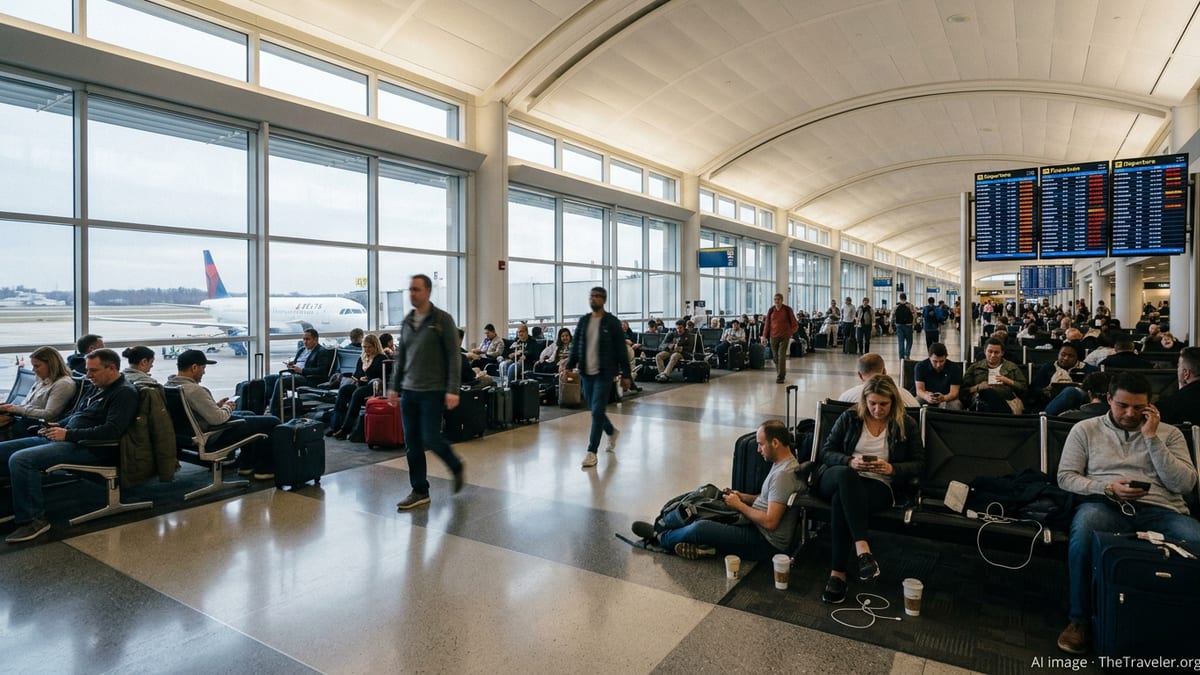
Cluster of Cancellations Concentrated at Reagan National
Publicly available flight tracking data for Sunday, March 22, 2026, shows a concentrated pocket of cancellations at Ronald Reagan Washington National Airport, affecting a mix of regional and mainline operations. At least 13 flights operated by regional carriers such as PSA Airlines and Jazz Aviation, alongside services flown for or by Delta Air Lines and other operators, were removed from schedules or listed as canceled over the course of the day.
The disruptions primarily involved short-haul and cross-border routes, a segment where regional partners operate under the brands of large network airlines. Patterns in the data indicate that several of the scrubbed flights linked Washington, D.C., to cities including Toronto, Detroit, Augusta and Des Moines, as well as other markets that depend heavily on connecting traffic through Reagan National.
While total cancellation volumes remain lower than during recent major winter weather events, the clustering of affected flights at a highly slot-constrained airport has created outsized impacts for travelers. The tight scheduling environment at Reagan National leaves limited room for additional recovery flights or last-minute re-accommodation, amplifying the effect of each scrubbed departure.
Airline operational statistics compiled by the U.S. Department of Transportation show that regional carriers such as PSA Airlines regularly handle thousands of flights a month for major brands, meaning even a relatively small percentage of cancellations can translate into a significant number of disrupted journeys on a given day.
Weather and Network Strain Add Pressure to Short-Haul Routes
The latest wave of disruptions comes in the wake of a turbulent late winter and early spring period for North American aviation. A powerful blizzard in February 2026 and a subsequent multi-day storm system in mid-March led to widespread cancellations across the eastern United States and Canada, leaving airlines with little margin to absorb new operational challenges.
Although conditions at Reagan National on March 22 were less severe than during those earlier events, residual network strain is still visible. According to recent storm analyses and airline operations updates, carriers have been working through aircraft repositioning, crew availability issues and persistent congestion at some hub airports, all of which can cascade into delays and cancellations on regional routes.
Short-haul flights in and out of Washington, Toronto and Detroit are particularly vulnerable to these knock-on effects. These routes often rely on tight turnaround times and coordinated connections, so a delay on one leg can quickly force schedule revisions later in the day. When multiple carriers make similar adjustments at once, the result can be the type of focused disruption now being seen at Reagan National.
In addition, some of the affected markets, such as Augusta and Des Moines, depend on a relatively small number of daily frequencies. On such routes, the loss of even a single round-trip can significantly reduce same-day travel options, increasing the likelihood of missed business commitments and extended overnight stays for travelers.
Passenger Experience: Rebookings, Missed Connections and Longer Journeys
For travelers, the operational challenges at Reagan National are translating into missed connections, last-minute rebookings and, in some cases, multi-stop itineraries that were not part of original plans. Publicly visible booking and schedule data indicate that passengers on canceled regional services are being shifted to later flights from Reagan National, or rerouted through nearby Washington Dulles International Airport and Baltimore/Washington International Thurgood Marshall Airport when space allows.
Routes connecting Washington with Toronto and Detroit are seeing particular pressure, as these flights serve both point-to-point travelers and those connecting onward across airline networks. A Washington-bound passenger from Des Moines or Augusta whose flight is canceled may now find themselves routed through a different hub entirely, adding hours to their journey and increasing the risk of luggage delays.
Travel forums and social media posts over the past week have documented a broader pattern of passengers sleeping at airports, juggling backup bookings and weighing alternate routings as carriers continue to adjust spring schedules. While today’s issues at Reagan National are smaller in scale than the mass cancellations seen during the recent major storms, they reflect an ongoing period of heightened uncertainty for frequent flyers.
Re-accommodation options are further constrained by the airport’s slot controls, which limit the total number of takeoffs and landings in a given hour. Even when aircraft and crews become available, airlines have less flexibility to add extra sections or upgauge aircraft sizes at short notice, extending the time it takes to clear backlogs and get passengers to their destinations.
Operational Context: Regional Partners and System Resilience
The cluster of cancellations at Reagan National highlights the central role that regional airlines such as PSA Airlines and Jazz play in the broader North American air travel system. Operating as branded feeders for larger carriers, these airlines link smaller cities to major hubs, making it possible for passengers from places like Augusta and Des Moines to access global networks via Washington, Toronto or Detroit.
Federal aviation data and recent consumer reports have shown that regional operators often face unique operational pressures, including tighter crew bases, smaller fleets and greater exposure to weather-related disruptions. When regional flights are suspended, the impact tends to be felt disproportionately in smaller markets, where alternatives can be limited and driving to a larger airport is not always practical.
Major carriers, including Delta, typically rely on a mix of mainline jets and regional aircraft on their Reagan National schedules. In periods of strain, airlines may prioritize maintaining long-haul and high-demand trunk routes while trimming or temporarily suspending some regional frequencies. The pattern of today’s cancellations at Reagan National appears consistent with that approach, with several shorter routes seeing cuts or extended delays while core hub-to-hub services remain in operation.
Observers note that the current situation also underscores broader questions about system resilience. After several years marked by weather extremes, air traffic control staffing constraints and infrastructure bottlenecks at key airports, relatively modest localized disruptions can still ripple widely through the network, particularly on days when schedules are already tight and load factors are high.
What Travelers Can Expect in the Coming Days
Looking ahead, schedule updates and airline advisory pages suggest that carriers will continue to adjust Reagan National operations dynamically as they work to stabilize their networks following the recent stormy period. While there is no indication of a prolonged shutdown or wholesale reduction in service, travelers using the airport in the next several days may encounter additional day-of-travel changes on select routes.
Passengers booked on flights connecting Washington with Toronto, Detroit, Augusta, Des Moines and other regional destinations are being encouraged, through public advisories, to monitor their reservations closely and to verify departure times before heading to the airport. Same-day schedule shifts, including aircraft swaps and gate changes, remain possible as airlines rebalance aircraft and crews.
Industry data from the U.S. Department of Transportation shows that, in typical months, the overall cancellation rate for U.S. carriers remains under 3 percent, but that figure can spike significantly during and immediately after major weather events. This seasonal volatility means travelers planning late winter and early spring journeys should build extra flexibility into itineraries when possible.
For Reagan National, today’s 13 cancellations and associated delays serve as a reminder that even a relatively contained operational issue at a single hub can reverberate across a wide geography of connected routes. With the broader system still recovering from recent storms, passengers across the network are likely to feel some residual turbulence before conditions fully normalize.