

More news on this day
Brazil’s busiest aviation hub faced fresh turbulence on February 20, 2026, as cancellations and cascading delays involving LATAM and AeroMéxico flights disrupted operations at São Paulo’s Guarulhos and Congonhas airports, stranding passengers and rippling through domestic and international connections.
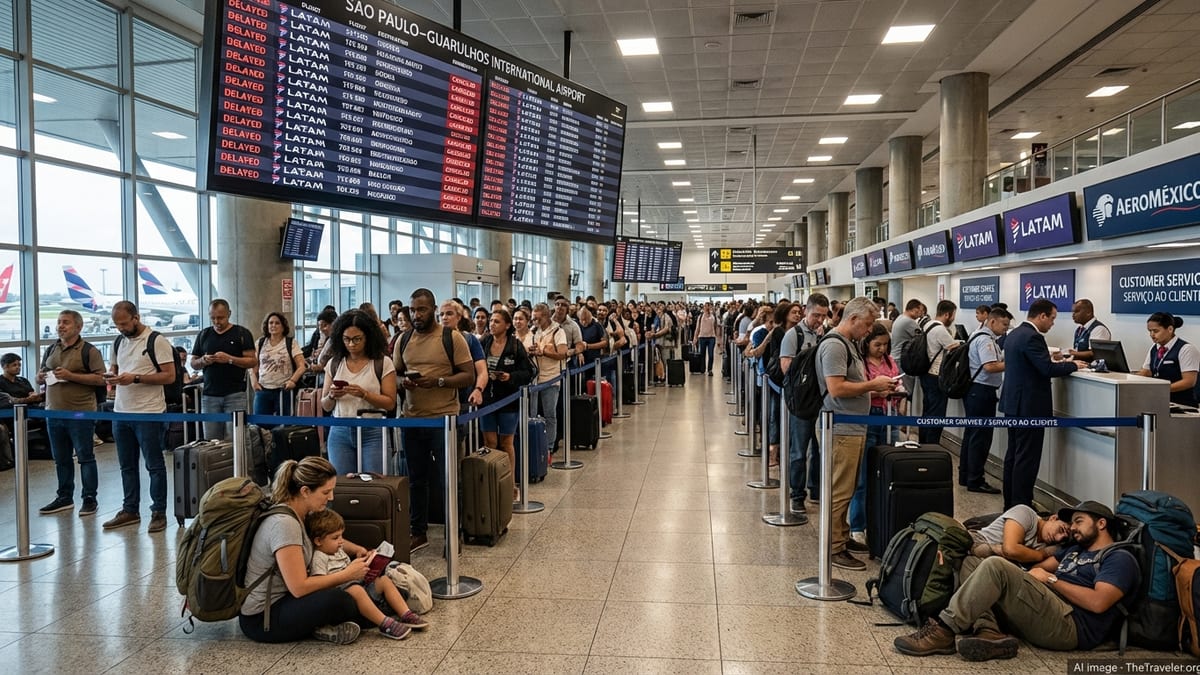
Fresh Disruptions at Brazil’s Main Aviation Gateway
The latest wave of travel turmoil unfolded on Friday at São Paulo–Guarulhos International Airport, Brazil’s primary international gateway, and at centrally located São Paulo–Congonhas Airport. Flight tracking boards showed clusters of delayed departures and arrivals alongside at least five cancellations impacting operations by LATAM Airlines and AeroMéxico, compounding what has already been a volatile start to the year for Brazil’s air travel network.
While Guarulhos typically handles the bulk of international traffic, Congonhas is a critical connector for Brazil’s vast domestic market. The disruptions hit both segments, inconveniencing business travelers on tight schedules, families heading off on holidays, and international passengers using São Paulo as a hub to reach other Latin American and European destinations.
The cancellations, while modest in raw numbers, came on top of a high volume of delayed flights, magnifying the pressure on ground crews, slot management, and passenger services. For travelers already fatigued by recent episodes of widespread disruption across Brazil’s skies, Friday’s problems were yet another reminder of the fragility of the country’s overloaded aviation infrastructure.
LATAM and AeroMéxico Routes Caught in the Turbulence
LATAM, the region’s largest carrier and a dominant presence at São Paulo’s airports, once again found itself at the center of operational challenges. The airline’s domestic and regional flights through Guarulhos and Congonhas have shown signs of strain in recent months, with on time performance for several routes slipping and a pattern of rolling delays afflicting peak day schedules.
AeroMéxico, which operates key links between São Paulo and Mexico City and feeds onward connections to North America, was also affected by the latest episode. Passengers on Mexico bound services reported extended waiting times at departure gates as crew and aircraft rotations backed up, with some flights pushed into late evening windows that jeopardized onward connections to cities in the United States and Canada.
Although only a handful of departures were fully canceled, the intertwined nature of hub operations meant that even a small number of scratched flights created operational headaches. Ground handling teams had to reassign parking stands and manage aircraft that were no longer departing on schedule, while airline operations centers worked to reshuffle crews to ensure legal duty times were not breached.
Pressure Builds After Earlier Incidents and a Difficult January
Friday’s problems did not occur in isolation. In mid February, a high profile rejected takeoff involving a LATAM Brasil Boeing 777 on flight LA 8146 from Guarulhos to Lisbon led to an emergency response and the disembarkation of passengers on the taxiway, drawing attention to both safety procedures and knock on scheduling effects across the long haul network.
That incident, while ultimately classified as an engine temperature issue that did not lead to injuries, contributed to a backlog of aircraft maintenance and schedule rebalancing. Widebody aircraft rotations on South Atlantic routes have remained tight, leaving LATAM with limited flexibility when unplanned technical checks or crew availability problems arise at short notice.
The February setbacks have come on the heels of a particularly difficult January. Data compiled by aviation and travel industry monitors showed that mid January saw dozens of cancellations and hundreds of delays across Brazil, with São Paulo–Guarulhos and São Paulo–Congonhas among the most heavily affected airports. LATAM Brasil logged significant disruption days in that period, adding to passenger frustration and stretching staffing resources.
Although AeroMéxico was less exposed to those earlier domestic disruptions, its reliance on Guarulhos as a key South American gateway means the carrier is vulnerable whenever bottlenecks appear in São Paulo’s complex web of arrivals and departures. Even when its own flights depart relatively on time, congestion in airspace, gate allocation delays, and baggage handling slowdowns can still ripple through its operation.
Passengers Face Long Queues, Missed Connections and Uncertain Plans
For travelers on the ground on Friday, the operational story translated into very personal inconveniences. At Guarulhos, snaking queues formed at check in areas and airline help desks as passengers scrambled to rebook itineraries or secure hotel vouchers. Families returning from holidays, corporate travelers en route to meetings in Mexico City, and tourists headed for Brazil’s northeast beach destinations all jostled for assistance.
At Congonhas, where many of São Paulo’s business commuters pass through on short haul domestic flights, delays extended into the afternoon and early evening, disrupting same day return plans and forcing some meetings to move online. The compact inner city terminal quickly became crowded, with portable chargers, shared power outlets, and food court seats at a premium.
International passengers were particularly vulnerable to missed onward connections. A delayed LATAM or AeroMéxico arrival into Guarulhos could translate into a missed evening departure to Europe or North America, with limited same day alternatives during shoulder season. Travel insurers and airline call centers reported higher than usual contact volumes as passengers sought to understand their rights and options under Brazilian aviation regulations.
Operational Strains at Guarulhos and Congonhas
The disruptions once again exposed the structural challenges facing São Paulo’s dual airport system. Guarulhos, located on the city’s outskirts, is a sprawling complex that handles the lion’s share of international arrivals and departures. High traffic density, a tight runway configuration, and peak time congestion can quickly translate even small delays into bottlenecks that take hours to clear.
Congonhas, by contrast, is constrained by its location in the heart of São Paulo’s urban core. It has shorter runways, limited expansion options, and strict noise and operating restrictions. When schedules slip, buffer times are thin and turnaround operations are heavily choreographed, leaving minimal margin for equipment changes or extended ground servicing.
Both airports rely on intricate coordination between airlines, air traffic control, ground handlers, and security and immigration authorities. Recent episodes of bad weather and runway restrictions, combined with high load factors during the southern summer holiday period, have frequently pushed that system to its limit. Friday’s cancellations and delays came amid this already tense operational backdrop.
Industry analysts note that São Paulo’s airport infrastructure has improved over the past decade but still struggles under peak loads, particularly when combined with airline schedules that aim to maximize aircraft utilization. The result is a network in which any technical incident, crew shortage, or weather related slowdown can quickly cascade into a daylong disruption.
Airlines Respond With Rebooking and Operational Adjustments
In response to Friday’s problems, LATAM and AeroMéxico activated contingency protocols, offering rebooking options, prioritizing vulnerable passengers such as those traveling with children or with tight international connections, and deploying additional staff at customer service points. Digital channels, including mobile apps and messaging platforms, were used to issue updated departure times and gate changes.
Operations teams also sought to smooth out the day’s schedule. Where possible, aircraft were swapped onto high demand routes to preserve capacity, and some flights were consolidated to reduce the number of separate departures that needed slots and ground resources. For services operating later in the day, airlines worked closely with airport authorities and air traffic control to secure favorable departure windows and minimize further knock on disruption.
Nevertheless, the scale of the delays meant that not all passengers could be accommodated on the same day. Some travelers were offered hotel accommodation near the airport or the option to rebook on alternative dates. Others elected to cancel nonessential trips entirely, particularly for discretionary leisure travel or flexible business meetings, underscoring the reputational impact of recurring reliability issues.
Regulators and Consumer Advocates Increase Scrutiny
The latest episode of travel turmoil has drawn renewed scrutiny from Brazilian consumer protection bodies and aviation authorities, who have been tracking the frequency and severity of flight disruption events since the start of the year. Regulators have reminded airlines of their obligations to provide clear information, meals, and lodging when delays or cancellations exceed specified thresholds.
Consumer advocates argue that, while individual incidents may be unavoidable, the pattern of repeated disruption suggests deeper structural issues in planning, maintenance scheduling, and capacity management. They are calling for more transparent reporting of on time performance, stronger enforcement of passenger rights, and clearer communication to travelers when operational difficulties arise.
Airline industry representatives counter that carriers have been operating under challenging conditions, including volatile demand patterns, high fuel costs, and limited spare capacity in aircraft and crews. They emphasize the sector’s strong safety record and note that incidents such as the rejected takeoff at Guarulhos in mid February highlight the effectiveness of safety systems rather than a decline.
The debate is likely to intensify if Brazil experiences further high impact disruption days in the coming weeks, particularly as Carnival related travel and late summer holidays drive passenger numbers through São Paulo’s airports.
What Travelers Through São Paulo Should Expect Next
For now, aviation experts advise travelers using Guarulhos or Congonhas to build additional buffer time into their itineraries, particularly for international connections and same day domestic returns. Arriving earlier at the airport, keeping contact details updated in airline booking profiles, and monitoring flight status through official channels can help mitigate the impact of last minute changes.
Frequent flyers have also been encouraged to familiarize themselves with Brazil’s passenger rights framework, including entitlements to rebooking, refunds, meals, and accommodation when disruptions exceed certain thresholds. Having this knowledge in advance can make interactions with airline staff smoother during stressful situations.
In the medium term, airlines operating in and out of São Paulo are expected to continue fine tuning schedules, adjusting aircraft rotations, and investing in digital tools to better predict and manage irregular operations. However, with high demand forecast to persist on many domestic and regional routes, observers caution that travelers should be prepared for further bouts of disruption, even as carriers and airports work to restore confidence in Brazil’s busiest air corridors.