

More news on this day
Travelers passing through São Paulo’s Congonhas Airport faced a fresh wave of disruption this weekend, as cancellations and delays on LATAM, GOL, and Azul flights rippled across key domestic routes linking São Paulo with Rio de Janeiro, Brasília, and Recife.
Get the latest news straight to your inbox!
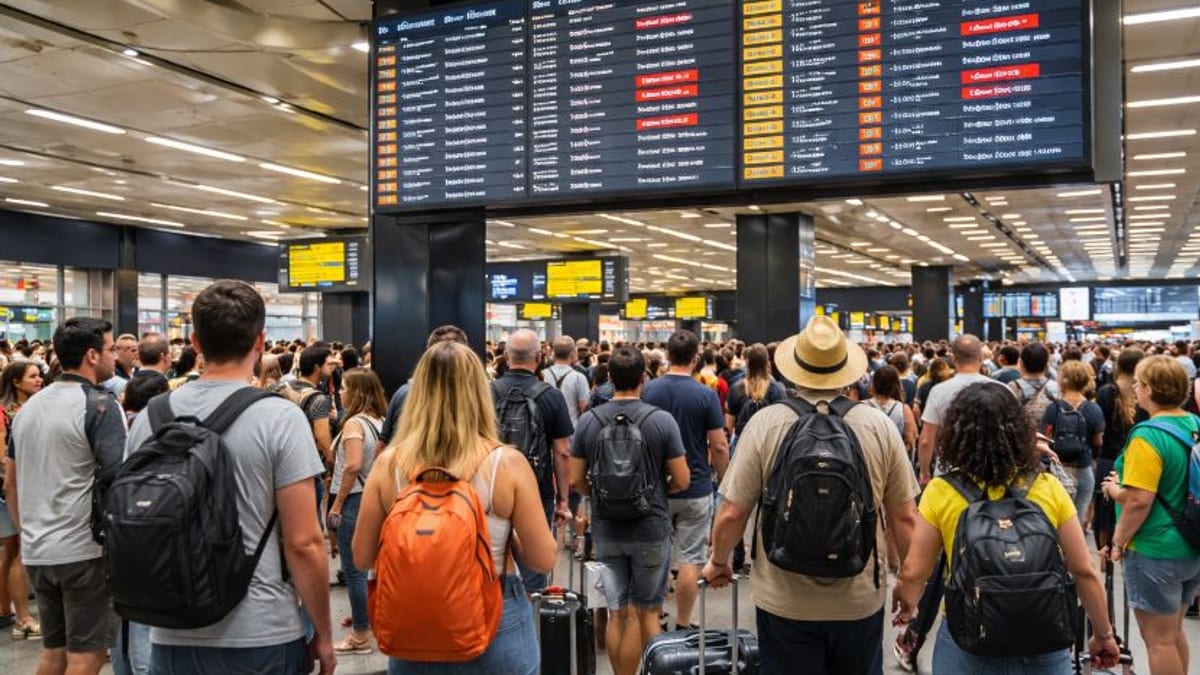
Image by travelandtourworld.com
Operational Snags Trigger Cancellations and Delays
Publicly available tracking data for Sunday reports a cluster of three cancellations and at least eight delayed departures and arrivals involving Brazil’s three largest carriers, LATAM, GOL, and Azul, on services touching São Paulo’s Congonhas Airport. The disruption has affected high‑demand city pairs, including shuttle flights to Rio de Janeiro, business routes to Brasília, and popular leisure and business services to Recife.
The pattern points to localized operational snags rather than a single nationwide shutdown. Industry data and published coverage indicate that weather variations over the southeast, congestion in peak morning and late‑afternoon banks, and tight aircraft rotation schedules are combining to push departure times back and force selective cancellations. With Brazil’s domestic market heavily concentrated around a few core airports, relatively small scheduling shocks at Congonhas can quickly cascade into other cities.
Congonhas, situated in São Paulo’s dense urban core, serves almost exclusively domestic traffic and is a critical node for frequent flyers and day‑trip corporate travelers. When even a handful of flights are canceled, same‑day connections and short business itineraries can unravel, straining already busy rebooking desks and online support channels.
Key Routes to Rio, Brasília, and Recife Affected
The disruptions are most visible on the high‑frequency air shuttle between São Paulo and Rio de Janeiro, where LATAM and GOL operate numerous daily frequencies linking Congonhas with Santos Dumont and Galeão. On Sunday, some of these shuttle flights have been flagged with extended delays, while at least one rotation was canceled outright, prompting passengers to seek space on later departures or alternative airports in the São Paulo and Rio systems.
Traffic between São Paulo and Brasília, a vital corridor for government, legal, and corporate travel, has also been hit. Delay reports show Congonhas departures to the federal capital leaving behind schedule, with knock‑on effects for travelers booked on tight same‑day returns or onward evening services. Given the route’s heavy reliance on punctuality for official and business agendas, even modest disruption can have outsized consequences.
Farther northeast, Recife has registered late arrivals and departures tied to aircraft and crew coming from São Paulo. Published flight status boards indicate that at least one Congonhas–Recife service has been canceled, while others are operating with delays large enough to disrupt planned connections to secondary destinations in the Northeast. Azul, which maintains an extensive network from Recife, appears particularly exposed when inbound aircraft from São Paulo arrive significantly behind schedule.
LATAM, GOL, and Azul Manage Knock‑On Effects
Brazil’s three major carriers have been managing the situation through a mix of rebooking, schedule adjustments, and operational recovery measures. Publicly available information on airline channels shows that LATAM, GOL, and Azul have been reallocating passengers from canceled flights onto later departures where seats are available, and in some cases shifting travelers to alternative airports within the same metropolitan area.
Analysts note that the current pattern of three cancellations and multiple delays is relatively small compared with the total number of daily movements through Congonhas but still significant for those directly affected. Because LATAM, GOL, and Azul all operate dense, high‑utilization schedules, any unplanned maintenance, crew rostering issue, or weather‑related holding pattern can reduce operational flexibility and leave little slack to absorb further disruptions.
Recent corporate filings and industry commentary also highlight broader structural pressures on Brazil’s airlines, including fuel costs, currency volatility, and infrastructure bottlenecks at major airports. While these factors do not directly explain a particular morning’s cancellations, they shape how much resilience carriers can build into their schedules and how quickly they can recover from irregular operations.
Passengers Face Longer Travel Days and Crowded Terminals
For travelers at Congonhas and in affected destination cities, the immediate impact has been longer travel days, crowded gate areas, and intense competition for remaining seats. Social media posts and forum discussions from passengers transiting São Paulo, Rio de Janeiro, Brasília, and Recife on Sunday describe queues at service counters, last‑minute gate changes, and uncertainty around connection times.
Reports from frequent flyers suggest that travelers with separate tickets or tight onward connections are bearing the brunt of the disruption. Passengers connecting from domestic flights at Congonhas to international departures at São Paulo Guarulhos or Rio Galeão are particularly vulnerable when initial segments are delayed or canceled, because missed long‑haul flights can lead to overnight stays and complex rebookings.
Travel discussion boards that track Brazilian aviation regularly advise leaving generous buffers between domestic and international segments, especially when itineraries involve multiple airports or different airlines. Sunday’s disruption pattern at Congonhas is likely to reinforce that guidance, demonstrating how quickly a minor schedule adjustment can jeopardize onward connections in a tightly timed itinerary.
What Travelers Should Watch in the Coming Days
While Sunday’s tally of three cancellations and eight delays is modest in statistical terms, it comes at a moment when Brazil’s air network is already operating close to capacity on key trunk routes. Travel analysts say passengers planning trips through São Paulo, Rio de Janeiro, Brasília, and Recife in the coming days should anticipate possible residual delays as airlines reposition aircraft and crews and work through backlogs of rebooked travelers.
Publicly available data on infrastructure projects also show that Congonhas and its surrounding transport links are in the midst of longer‑term upgrades intended to improve connectivity and reduce congestion over time. The planned integration of the airport with new urban rail links, for example, is expected to ease surface access once completed, but construction timelines and phased openings mean near‑term relief for airside congestion is limited.
For now, travel advisories from consumer groups and aviation watchers emphasize proactive planning. Passengers are encouraged to monitor flight status frequently on airline and airport channels, check in as early as possible, and allow extra time when connecting between domestic and international flights or between different airports in the same metropolitan area. With LATAM, GOL, and Azul all affected to some degree by the latest disruptions at São Paulo Congonhas, flexibility and contingency planning remain crucial for anyone flying these busy Brazilian routes.