

More news on this day
Travelers across Saudi Arabia are facing mounting disruption as widespread delays and cancellations affect services operated by Saudia, Flynas and Flyadeal at major gateways in Riyadh, Jeddah and Dammam, with knock-on effects for passengers heading to the holy city of Mecca.
Get the latest news straight to your inbox!
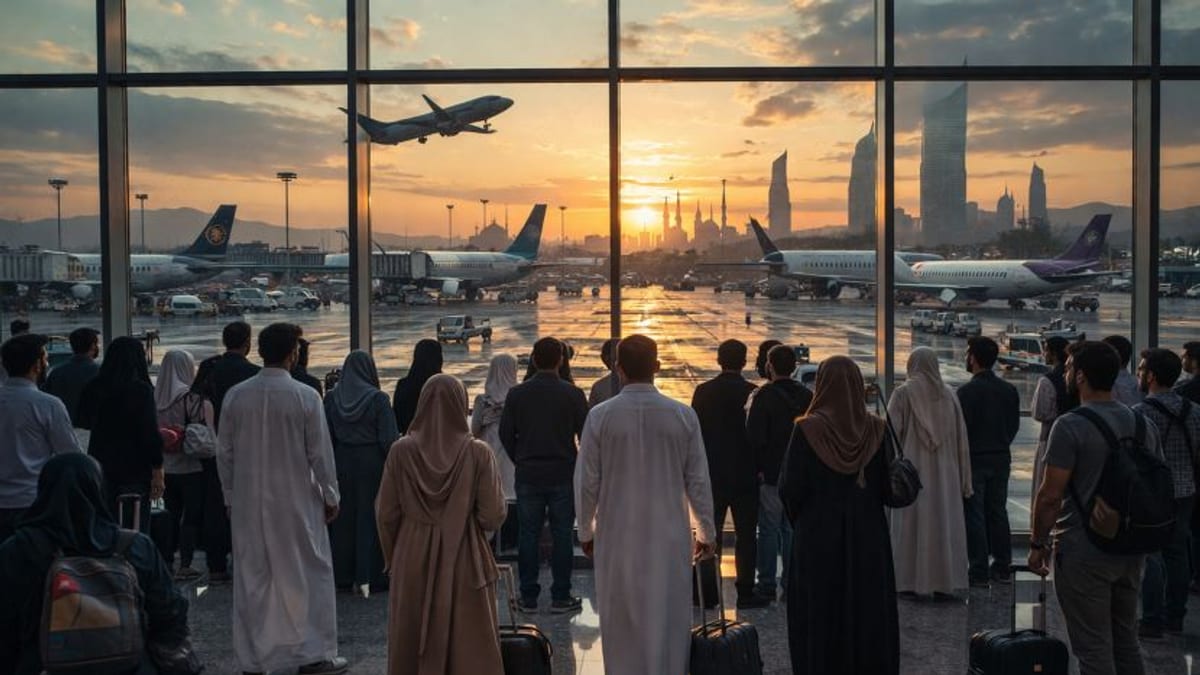
Image by Travel And Tour World
Wave of Delays and Cancellations Across Key Saudi Airports
Reports from flight-tracking dashboards and airport information screens show an unusual spike in operational disruption, with around 286 flights facing delays and at least 15 services canceled across major Saudi airports. The disruption is concentrated at King Khalid International Airport in Riyadh, King Abdulaziz International Airport in Jeddah and King Fahd International Airport in Dammam, affecting both domestic connections and international links that feed into Mecca-bound itineraries.
The bulk of the impact appears to fall on short-haul domestic routes, particularly the busy Riyadh–Jeddah and Dammam–Jeddah corridors operated by Saudia, Flynas and Flyadeal. These routes are critical for business travel and for religious journeys, as Jeddah is a primary access point for Mecca. Extended holding patterns, rolling gate changes and late aircraft rotations are contributing to lengthening delays on the ground.
Although airport operations continue, the scale of disruption has been enough to create visible congestion in terminal departure areas and force many travelers to rework tightly planned itineraries. For some passengers, particularly those with onward long-haul connections, even short delays have translated into missed flights and unexpected overnight stays.
Knock-on Effects for Pilgrims and Domestic Travelers
The timing of the disruption is particularly challenging for passengers traveling for religious purposes. Many itineraries into Mecca rely on tight domestic connections through Riyadh, Jeddah or Dammam, and the current pattern of late departures and last-minute cancellations is undermining those plans. Travel forums and social media posts describe pilgrims having to reroute via alternative domestic airports or switch carriers at short notice to keep their journeys on track.
Domestic business travelers are also feeling the strain. Routes such as Riyadh to Jeddah and Riyadh to Dammam are among the country’s busiest, serving corporate travelers who often depend on same-day returns. With aircraft arriving late from previous sectors, subsequent departures have been pushed back, eroding schedule reliability and complicating meetings and events set on tight timelines.
Some passengers report multiple rebookings on the same itinerary as flights that initially appeared on time later slipped into delay or were removed from departure boards entirely. In several cases, short-haul legs that feed into long-haul connections have been the weak link, leaving travelers stranded mid-journey when downstream flights could not be reaccommodated the same day.
Saudia, Flynas and Flyadeal Struggle to Maintain Schedules
The disruption has highlighted how tightly scheduled the operations of Saudia, Flynas and Flyadeal have become on core domestic routes. Publicly available aviation data and previous corporate disclosures show that these carriers already operate with relatively high utilization of their fleets, which can amplify the impact of even minor perturbations in aircraft or crew availability.
For Saudia, the country’s flagship airline, any slowdown on the high-frequency shuttle routes linking major cities quickly cascades into the broader network. When domestic flights arrive late into Riyadh or Jeddah, aircraft are not available on time for onward international services, prompting further knock-on delays. Low-cost rivals Flynas and Flyadeal, which typically operate point-to-point networks with rapid turnarounds, face similar vulnerability when a single delayed aircraft is scheduled to operate multiple rotations in one day.
In this latest episode, travelers have reported repeated schedule changes on certain Flynas and Flyadeal services and difficulty securing prompt alternatives once a flight is formally canceled. As seats tighten on unaffected services, last-minute fares have climbed sharply, adding financial strain for travelers forced to rebook at short notice.
Passenger Experience: Long Waits, Reroutings and Uncertainty
Accounts shared on public platforms describe a familiar pattern of modern travel disruption: long queues at customer service desks, shifting departure times on screens and anxious checks of airline apps as passengers attempt to anticipate whether their flight will operate. Some domestic flights have reportedly diverted to secondary airports when congestion or airspace constraints made direct arrivals impractical, adding further complexity for passengers trying to reach Saudi Arabia’s main cities.
Travelers attempting to transit through Saudi hubs on their way to other destinations have encountered particular difficulties. When domestic feeder flights from cities such as Dammam arrive late into Riyadh or Jeddah, international connections can be missed, and reaccommodation options are limited by capacity and curfews at destination airports. This has led some passengers to seek alternative routings via neighboring Gulf hubs when seats can be found.
For those heading to Mecca, the uncertainty has been especially stressful. Many itineraries are structured around fixed accommodation dates and pre-booked ground transport slots. When flights arrive several hours late or are canceled outright, the entire chain of arrangements can unravel, forcing costly last-minute changes on the ground as well as in the air.
What Travelers Can Do as Saudi Flight Disruptions Continue
With operational patterns still unsettled, industry observers recommend that travelers build extra time into their itineraries when connecting through Riyadh, Jeddah or Dammam and avoid very tight connections, especially when planning onward international travel or time-sensitive religious journeys. Passengers are also advised to monitor airline apps and airport information boards frequently, as same-day schedule changes have been common during the current disruption.
Flexible ticket conditions and comprehensive travel insurance have become more valuable in this environment. Many carriers provide options such as free date changes or credit vouchers when flight times shift significantly or services are canceled, but passengers sometimes need to proactively request these solutions and keep detailed records of updates to their itineraries.
For now, publicly available information suggests that Saudi Arabia’s air transport system remains operational but strained on its busiest corridors. Until schedules stabilize and the backlog of displaced passengers clears, those flying with Saudia, Flynas and Flyadeal through Riyadh, Jeddah, Dammam and onward to Mecca are likely to continue facing a higher-than-normal risk of disruption.