

More news on this day
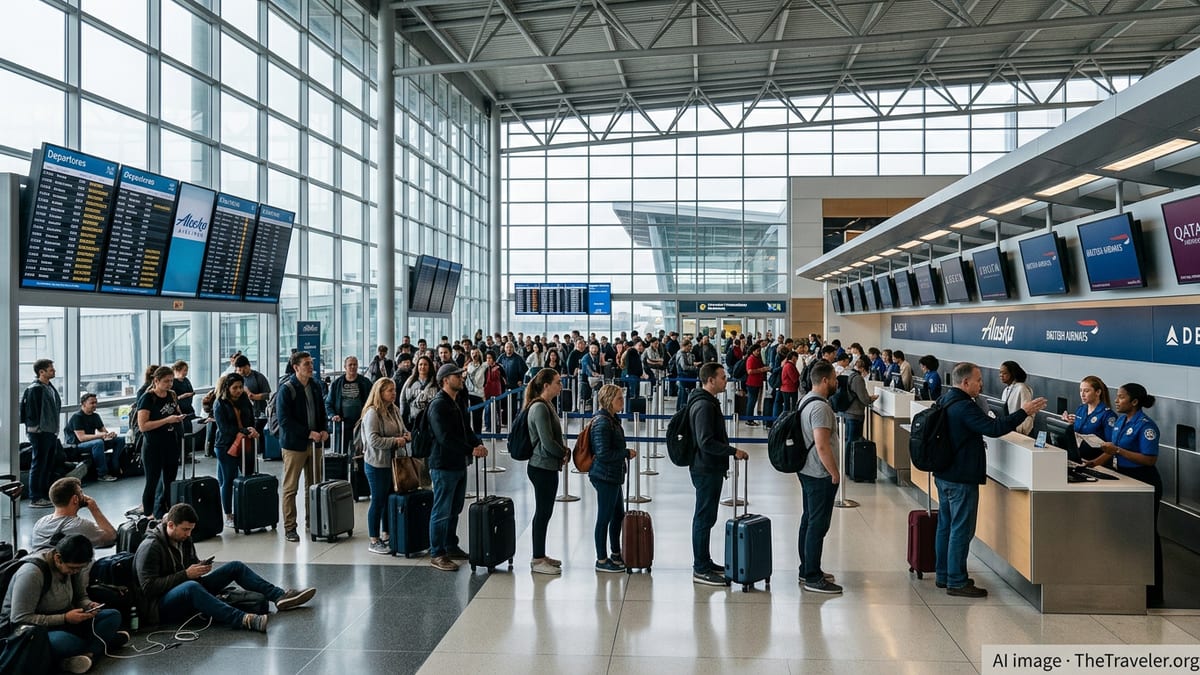
Travelers across Seattle, Los Angeles, New York and London faced mounting frustration on March 8, 2026, as Seattle-Tacoma International Airport (SEA) recorded around 130 delays and eight cancellations affecting services operated by Alaska Airlines, Qatar Airways, Delta Air Lines and British Airways.
Knock-on Disruptions Focus Attention on Seattle Hub
The wave of delays and cancellations at Seattle-Tacoma on Sunday followed a turbulent 48 hours for the US air travel system, with severe weather, low clouds and operational constraints disrupting flight schedules nationwide. While Seattle itself woke to misty conditions and low ceilings early on March 8, the more severe storms that battered major hubs including Chicago and Atlanta on March 7 continued to reverberate through airline networks into Sunday, complicating crew rotations and aircraft availability.
Seattle-Tacoma, a key hub for Alaska Airlines and an important West Coast gateway for Delta, Qatar Airways and British Airways, saw a broad mix of domestic and international routes affected. Services linking Seattle with Los Angeles, New York and other major US cities were among those delayed, while knock-on impacts stretched to long-haul connections for London and onward Middle East flights operated through Qatar’s network partners.
Port of Seattle officials did not immediately release a full breakdown of affected departures and arrivals, but operational data from airline status pages and independent flight tracking services indicated roughly 130 delayed movements and eight cancellations tied to mainline and codeshare services operated by Alaska, Qatar, Delta and British Airways. Many of the delays were in the 45 to 90 minute range, but several services reported longer holdups as aircraft and crew repositioning lagged behind schedule.
Passengers arriving into SEA on early morning services reported crowded gate areas and long lines at customer service desks as travelers with missed connections sought rebooking and overnight accommodation. Although the airport’s core infrastructure remained fully operational, the cumulative effect of rolling delays left many flights departing out of their allotted windows and put additional pressure on already tight turn times.
Weather, Airspace Constraints and Crew Positioning Drive Delays
Industry analysts pointed to a combination of persistent weather issues across the country and the lingering impact of recent airspace disruptions as key drivers behind Sunday’s operational strain. On Saturday, March 7, powerful thunderstorms, snow and low-visibility conditions triggered hundreds of cancellations and more than five thousand delays nationwide, with major hubs such as Chicago O’Hare and Atlanta Hartsfield-Jackson requesting ground delay programs to manage traffic flows. Those constraints left aircraft and crew out of position across multiple networks by the time Sunday’s schedules ramped up.
Qatar Airways, which operates Seattle services both directly and through codeshare arrangements with Alaska, has also been managing route adjustments and temporary disruptions related to a recent regional airspace closure that affected parts of its global network. Although flights through Seattle continued to operate, some services recorded extended delays as the carrier rebalanced aircraft and crews across long-haul routes, tightening connection windows for passengers heading to and from Los Angeles, New York and London via Doha or partner hubs.
For Alaska and Delta, the combination of residual weather disruptions and crew duty time limitations proved particularly challenging. Crews delayed on Saturday often hit regulatory duty limits, forcing airlines to scramble for replacements or hold flights until legal rest periods were complete. That dynamic can quickly cascade at a hub like Seattle, where a single delayed inbound aircraft and crew can disrupt multiple onward departures to US cities including Los Angeles, San Francisco, Chicago, Denver and New York.
While conditions at Seattle-Tacoma itself remained manageable, with only mist and low cloud reported early Sunday morning, air traffic managers still had to sequence arrivals carefully to accommodate delays rippling in from other parts of the country. As a result, several flights that departed US East Coast and Midwest hubs behind schedule arrived late into Seattle, compressing turnaround times and forcing departures to push back later in the day.
Impact Felt on Key Routes to Los Angeles, New York and London
The disruptions were most visible on some of Seattle’s highest-profile routes. Flights to Los Angeles and other West Coast cities operated by Alaska and Delta, which normally see high frequency and tight scheduling, reported a series of rolling delays as aircraft arrived late from earlier segments. Passengers connecting in Los Angeles to onward Hawaii and Mexico services faced particularly tight margins, with some missing their connections altogether as boarding doors closed on time despite inbound delays.
Transcontinental services linking Seattle with New York area airports also felt the strain. With East Coast operations already affected by Saturday’s weather and lingering air traffic restrictions, several Sunday departures from Seattle left late, compressing overnight connection windows and complicating schedules for business travelers expected in New York on Monday morning. Some passengers reported being automatically rebooked onto later flights or rerouted through alternate hubs such as Minneapolis and Salt Lake City.
Across the Atlantic, British Airways customers connecting through Seattle onto London services encountered a patchwork of delays and schedule adjustments. With long-haul operations subject to stricter crew duty limits and aircraft rotation requirements, even modest delays on the ground in Seattle can knock a London departure into a less favorable time slot, in turn affecting arrival slots at Heathrow and onward European connections. Travelers reported revised departure times, gate changes and, in a small number of cases, last-minute cancellations requiring overnight stays in the Seattle area.
For Qatar Airways, Seattle’s role as part of a broader transpacific and transatlantic network meant that delays on feeder flights from US cities to Seattle had knock-on effects for passengers seeking to connect to long-haul services through partner hubs. Some travelers reported being offered reroutes through alternative gateways such as Chicago, Dallas or New York to protect onward connections to London and other European destinations.
Passengers Confront Long Lines, Rebooking Challenges and Limited Options
Inside the terminal, the human impact of the disruption was most visible at check in counters and customer service desks. As delays accumulated through the morning and afternoon, lines for rebooking and assistance stretched across parts of the main ticketing hall. Travelers spoke of waiting more than an hour to speak with airline staff about missed connections and overnight arrangements, while others turned to mobile apps and call centers in search of faster solutions.
With only eight confirmed cancellations linked to the current disruption, most passengers ultimately departed on the same day, albeit later than planned. However, the timing and destination mix of the affected flights left some travelers with limited options, especially those aiming to make same day international connections in London or other US hubs. Hotels close to Seattle-Tacoma reported a bump in last minute bookings from stranded passengers and airline-issued vouchers.
Airlines reminded customers that compensation rules vary widely depending on the origin, destination and operating carrier. Travelers departing from or flying into the European Union on British Airways services may be entitled to regulated compensation for long delays and cancellations, while US domestic flights on Alaska and Delta fall under more limited US Department of Transportation consumer protections. Qatar Airways passengers, many traveling on complex itineraries booked through partners or using frequent flyer miles, faced a particularly intricate set of fare rules when seeking rerouting and refunds.
Social media channels for all four airlines saw a surge in passenger complaints and requests for help, with many customers urging carriers to bolster staffing at call centers and airport desks during major disruption events. While some praised individual agents for going “above and beyond” to secure alternative routings, others criticized what they saw as inconsistent information and a lack of proactive communication about expected delays.
Airlines Pledge Recovery as Operations Gradually Stabilize
By late Sunday, airlines signaled that they were working to stabilize schedules and clear backlogs created over the weekend. Alaska Airlines, the dominant carrier at Seattle-Tacoma, added extra staff at its hub and sought to tighten turnaround times to prevent further slippage across its dense network of West Coast and transcontinental routes. Delta focused on restoring regular operations at key hubs that feed Seattle, aiming to reduce late arriving aircraft that had fueled much of the day’s disruption.
Qatar Airways and British Airways both emphasized that their core long-haul services remained largely intact, even where departure times shifted. However, both carriers acknowledged that downstream connections in London and other transfer points would continue to feel the impact for at least another news cycle as passengers rebooked and crews and aircraft were repositioned across continents.
Travel advisors and frequent flyer groups urged passengers scheduled to travel through Seattle-Tacoma, Los Angeles, New York or London over the next 24 to 48 hours to monitor flight status closely and build extra time into connection plans. With weather systems still moving across parts of the US and international airspace constraints not yet fully normalized, even modest new disruptions could trigger additional delays for carriers already operating with thin buffers.
For now, the situation at Seattle-Tacoma serves as a reminder of how quickly local conditions and distant events can intertwine in a tightly coupled global aviation network. A mix of storms, airspace restrictions and crew scheduling rules, compounded across several major carriers, was enough to turn a typical early March travel weekend into a prolonged test of resilience for airlines and passengers alike.