

More news on this day
Travelers at San Francisco International Airport faced fresh disruption as 67 flights were delayed and three were canceled, affecting services operated by United Airlines, Delta Air Lines, American Airlines, Alaska Airlines, and other carriers on busy routes to New York, Chicago, Los Angeles, Miami, and several international destinations.
Get the latest news straight to your inbox!
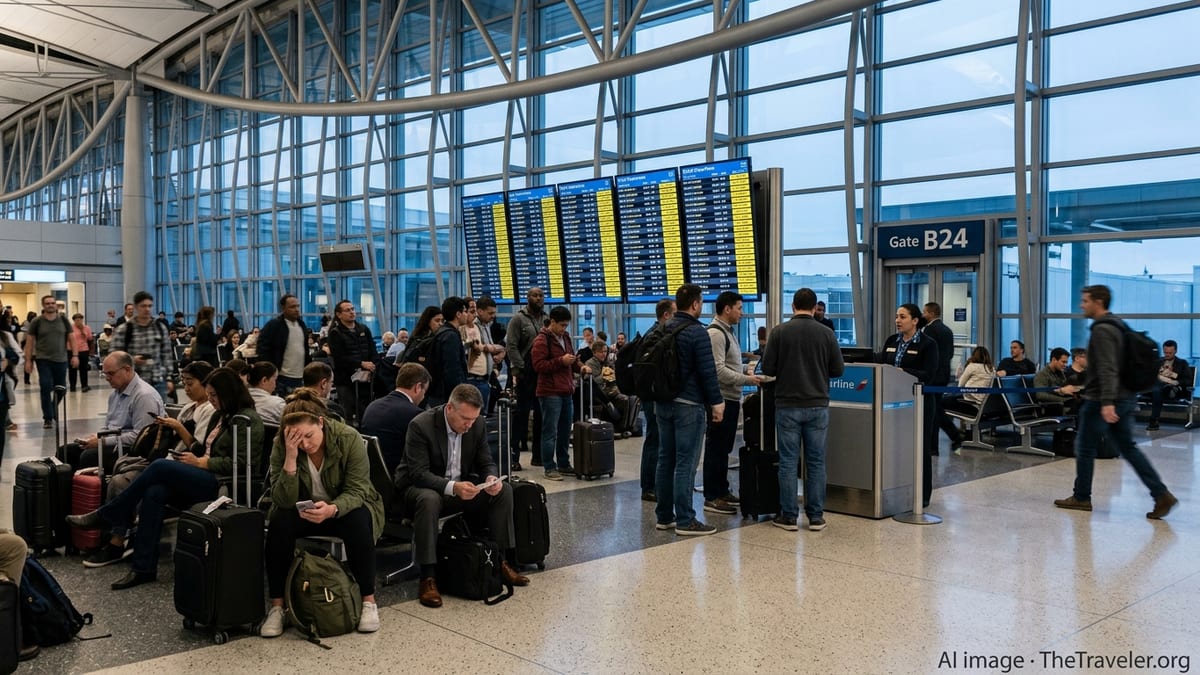
Operational Strain Slows One of the Nation’s Busiest Hubs
The latest wave of delays and cancellations at San Francisco International Airport underscores the operational strain facing one of the United States’ busiest gateways. Publicly available flight-tracking data shows that dozens of departures and arrivals experienced schedule changes, with knock-on effects for connecting traffic across the country.
While the total number of affected flights represents a fraction of the airport’s daily movements, even a relatively modest disruption at a major hub can rapidly cascade. When departures from San Francisco leave late, aircraft and crews often arrive behind schedule at downstream airports, which can in turn trigger further delays on later rotations.
Reports indicate that the disruptions were spread across multiple terminals and time bands, rather than being concentrated in a single carrier bank or weather window. That pattern suggests a combination of factors, including tight scheduling, high aircraft utilization, and broader congestion in the national airspace system.
San Francisco’s role as a critical West Coast gateway for both domestic and long-haul international traffic means that schedule irregularities are felt well beyond the Bay Area. Even a handful of cancellations can strand passengers far from their final destinations, particularly those traveling on the last departures of the day.
Major U.S. Carriers Face Knock-On Effects
The latest disruptions affected several of the country’s largest airlines with operations at San Francisco. United Airlines, which maintains a significant hub at the airport, experienced delays on a range of domestic and international services, according to flight-status boards and tracking platforms. Delta Air Lines, American Airlines, and Alaska Airlines also saw select departures push back from the gate later than expected.
Because San Francisco functions as a connecting node for many of these carriers, even a single delayed inbound flight can ripple through an airline’s network. Aircraft scheduled to turn quickly for departures to other cities may arrive late, forcing airlines to adjust boarding times, swap equipment, or reassign crews to stay within duty limits.
Publicly available information shows that airlines typically respond to such conditions by prioritizing high-demand trunk routes and long-haul international services, where rebooking options are more limited. Shorter regional flights are sometimes more vulnerable to cancellation or consolidation, as carriers attempt to restore their schedules and reposition aircraft.
Airlines generally advise passengers to monitor their flight status closely on days when operational performance is under pressure. Same-day schedule changes are common during disruption events, particularly when congestion builds at peak departure times or when weather and air-traffic constraints interact.
Key Routes to New York, Chicago, Los Angeles, and Miami Disrupted
The impact of the delays and cancellations was most visible on some of San Francisco’s busiest corridors. Flights to and from New York, especially services linking San Francisco with John F. Kennedy International Airport and Newark Liberty International Airport, are among the airport’s most time-sensitive and revenue-critical routes, and even minor delays can disrupt business and long-haul connections.
Chicago and Los Angeles, both major hubs in their own right, also felt the effects as late departures from San Francisco arrived behind schedule into O’Hare International Airport and Los Angeles International Airport. For travelers connecting onward through those hubs, tighter connection windows increased the risk of missed flights and forced rebookings onto later services.
Services to Miami and other East Coast leisure destinations were similarly affected. When flights on these longer domestic routes depart late from San Francisco, the return journeys often land back in California near or after curfew-sensitive overnight windows, which can complicate crew scheduling and aircraft availability for the following morning.
According to data from previous disruption events, trunk routes tend to recover more quickly once conditions stabilize because of higher flight frequencies and larger aircraft. However, during the height of irregular operations, the very popularity of these routes can amplify crowding at gates, lounges, and customer service counters as large numbers of passengers seek assistance at the same time.
International Connections and Long-Haul Travelers Affected
San Francisco’s status as a transpacific and transatlantic gateway means that irregular operations frequently spill over into international markets. Long-haul departures to Europe and Asia often rely on a steady flow of domestic feeder flights bringing passengers from around the United States into San Francisco for same-day connections.
When domestic arrivals are delayed, some passengers miss their onward long-haul flights, especially where minimum connection times are tight. Publicly available information on past disruption patterns shows that airlines may respond by rebooking travelers via alternative hubs or partner carriers, or in some cases by arranging overnight accommodation when misconnects occur late in the day.
International flights can be particularly challenging to recover after a disruption because they typically operate less frequently and use widebody aircraft with high passenger loads. A single canceled or significantly delayed departure from San Francisco can therefore affect hundreds of travelers and leave limited immediate rebooking options.
Travelers connecting from international flights into San Francisco also face uncertainty when onward domestic departures run late. Missed connections can lead to extended waits in transit areas and require re-screening, adding to congestion in already busy terminals and security checkpoints.
What Travelers Can Expect and How to Navigate Disruptions
For travelers passing through San Francisco International Airport during periods of disruption, the most immediate effects are longer waits at gates, more crowded concourses, and a heightened risk of missed or tight connections. On days when delays accumulate, publicly available guidance from airlines and airports typically emphasizes arriving early, traveling with flexible plans where possible, and keeping close track of real-time flight information.
Passenger experiences often vary by time of day and terminal. Early-morning departures sometimes leave closer to schedule before congestion builds, while afternoon and evening banks can see more pronounced knock-on delays as the day progresses. Travelers with important same-day commitments at their destination are generally advised to schedule earlier flights to preserve a buffer in case of irregular operations.
Frequent disruption at major hubs like San Francisco has also encouraged more travelers to build longer connection times into their itineraries, even when booking separate tickets. While this approach can lengthen total journey time, it can reduce the stress and financial impact of missed connections, particularly on international trips or during peak travel seasons.
Industry data from previous years indicates that flight delays and cancellations are a recurring feature of modern air travel, driven by a complex mix of weather, airspace congestion, crew and aircraft availability, and infrastructure constraints. The latest episode at San Francisco International Airport fits into that broader pattern, highlighting the vulnerability of tightly wound global flight networks when conditions begin to fray.