

More news on this day
Air travel across the Gulf has been thrown into turmoil as Dubai and Abu Dhabi, two of the world’s busiest aviation hubs, grapple with mounting flight cancellations, diversions and delays linked to the latest surge in regional tensions and airspace restrictions.
Get the latest news straight to your inbox!
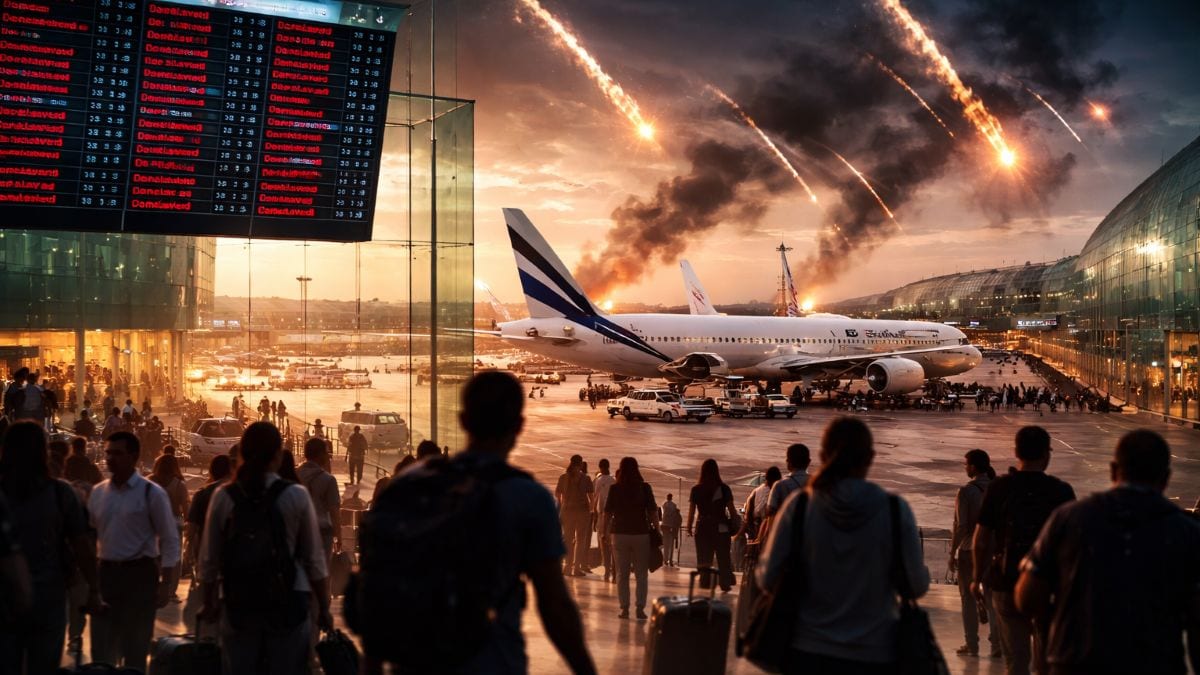
Image by Travel And Tour World
Limited Schedules and Sudden Shutdowns at Key UAE Airports
Publicly available flight information shows that operations at Dubai International Airport and Abu Dhabi International Airport have shifted to significantly reduced and irregular schedules since late February, when airspace closures and conflict-related risks began spreading across the Gulf. Airlines serving the United Arab Emirates have repeatedly thinned out their timetables, prioritising essential routes and stranded passengers while warning that services may change at short notice.
Industry advisories circulated in early March described what they termed “exceptional” operations at UAE airports, with only a fraction of normal commercial movements taking off or landing. Travel management alerts indicate that Etihad Airways temporarily suspended most departures from Abu Dhabi, while Emirates has been running a cutback schedule from Dubai focused on key long-haul connections rather than full regional coverage.
In mid March, the situation around Dubai tightened again after reports of drone activity near airport infrastructure. Social media posts and traveller accounts referenced smoke and damage close to fuel facilities and described long queues at service desks as flights were abruptly cancelled or grounded for extended safety checks. Some foreign carriers briefly halted services to Dubai altogether, citing security assessments and operational uncertainty.
Despite intermittent resumptions, traffic at both hubs remains well below typical late-winter volumes. Flight tracking data indicates that departures and arrivals are bunching into narrow operating windows that align with available air corridors, while many overnight and off-peak services that normally support hub connectivity are still absent from schedules.
Regional Conflict and Airspace Closures Ripple Through Global Routes
The disruption in the UAE is directly tied to a broader aviation crisis across the Middle East, triggered by an escalating conflict involving Iran and several neighbouring states. Open-source risk assessments and government travel advisories point to a patchwork of partial or full airspace closures affecting Iran, Iraq, Israel, Qatar, Bahrain, Kuwait and others, forcing airlines to reroute or cancel large numbers of flights.
Analysts note that the closure or severe restriction of key flight information regions across the Gulf has undermined the viability of many east–west routes that normally traverse the area. Long-haul flights between Europe and Asia, as well as services linking North America with South Asia and Australasia, have been especially affected, since many depend on overflight rights and refuelling stops in the region.
Corporate risk briefings issued in early March highlighted that Dubai and Abu Dhabi, despite remaining technically open, are exposed to these wider constraints because many origin or destination airports on their networks are in countries where airspace has been curtailed. Carriers therefore face a dual challenge: ensuring safe routings around potential conflict zones and coping with the knock-on effects of closures in neighbouring states.
As the conflict has moved closer to strategic maritime and energy infrastructure in and around the Strait of Hormuz, aviation risk models have incorporated elevated concerns over drone and missile activity, electronic interference and the possibility of sudden airspace withdrawals. Operators have responded by building in broader diversions, higher fuel loads and alternate airport plans, all of which add cost, reduce capacity and increase the likelihood of last-minute timetable changes for passengers travelling through the UAE.
Stranded Passengers, Rebooking Backlogs and Pressure on Alternatives
For travellers, the evolving situation has translated into a wave of disruptions that has left many stranded in or en route to the UAE. Online passenger forums and airline updates describe travellers spending days in transit hotels or departure halls in Abu Dhabi and Dubai as they await rebooked flights, often with limited information about when safe corridors will reopen or when their destination airports will resume normal operations.
Advisories from major travel management companies recommend that passengers heading to or connecting through the UAE reconfirm their bookings frequently and avoid travelling to the airport without explicit confirmation that their flight is operating. Rebooking backlogs have built up as airlines attempt to prioritise customers whose flights were previously cancelled, meaning that fresh availability on popular routes can be scarce even when some services restart.
With traditional Gulf hub connections under stress, secondary airports in the wider region are experiencing increased interest as potential alternatives. Industry analyses single out Muscat and some airports on the Arabian Sea and Red Sea coasts as relative “resilience hubs” thanks to their distance from the most intense conflict zones. However, limited capacity, visa rules and the logistical challenges of rerouting large numbers of passengers mean these alternatives can only partially absorb the traffic displaced from Dubai and Abu Dhabi.
Travel insurers and risk consultancies are emphasising that itineraries involving multiple regional stops or tight connections carry heightened disruption risk at present. Many are advising corporate travellers to build in longer layovers, allow for contingency days at either end of journeys and prepare for the possibility of being rerouted through entirely different hubs, including in Europe or South Asia, at short notice.
Economic and Operational Impact on UAE Aviation Sector
The turbulence hitting UAE airports arrives at a sensitive moment for the country’s aviation and tourism sectors, which had been reporting a strong rebound in passenger volumes following the pandemic-era downturn. Dubai International is routinely ranked among the world’s busiest international airports, and Abu Dhabi has invested heavily in expanding its own hub role and attracting long-haul traffic.
Transport and aviation analysts suggest that the current wave of disruptions is likely to dent near-term passenger numbers, transit traffic and tourism receipts. Airlines based in the UAE are incurring additional fuel and crew costs as they reroute flights and operate longer paths around conflict areas, as well as facing revenue losses from cancelled services and seats that must be taken out of inventory to accommodate rebooked passengers.
Airport operators are also navigating higher operational complexity, with enhanced security postures, dynamic air traffic control arrangements and more intensive coordination with airlines to manage irregular operations. Ground handling, catering and retail concessions all experience knock-on effects when passenger flows become unpredictable and large numbers of travellers are stranded for extended periods in terminals.
Despite these challenges, industry commentary notes that the UAE’s aviation sector has built significant experience in managing large-scale disruptions, from sandstorms and rare weather events to health-related travel restrictions. This operational resilience, combined with substantial infrastructure and staffing, is expected to help Dubai and Abu Dhabi gradually stabilise operations once regional conditions allow, although a full return to pre-crisis traffic patterns may depend on a broader easing of tensions across the Gulf.
What Travellers Using Dubai and Abu Dhabi Should Expect Now
For those scheduled to travel through UAE hubs in the coming days and weeks, publicly available guidance from airlines and travel-risk specialists converges on a set of practical expectations. Passengers are being urged to prepare for sudden schedule changes, extended layovers and potential re-routing via alternative hubs, even if their original flights currently appear confirmed.
Airlines are increasingly relying on digital channels to communicate changes, making it important for travellers to keep contact details up to date and monitor airline apps and email notifications closely. Some carriers are allowing flexible rebooking or route changes without additional fees for tickets involving affected airports, though exact policies vary by airline and fare type.
Observers add that demand for remaining seats on operating services into and out of Dubai and Abu Dhabi is pushing up loads and, in some cases, fares. Travellers needing to reach the region for essential reasons are advised to book as early as possible, consider alternative routings that avoid the most constrained airspace zones, and be ready for additional security screening and longer processing times once at the airport.
While there is no clear timeline for a full normalisation of flights, regional aviation sources suggest that a gradual reopening of key air corridors could ease some of the pressure on UAE hubs if the security situation stabilises. Until then, Dubai and Abu Dhabi are likely to remain at the centre of a highly volatile travel environment in which flexibility, preparation and close monitoring of airline communications are vital for anyone planning to fly.