

More news on this day
Travelers moving through Hartsfield Jackson Atlanta International Airport faced another round of disruption this week, as new figures show 129 delayed flights at the country’s busiest hub for passenger traffic.
Get the latest news straight to your inbox!
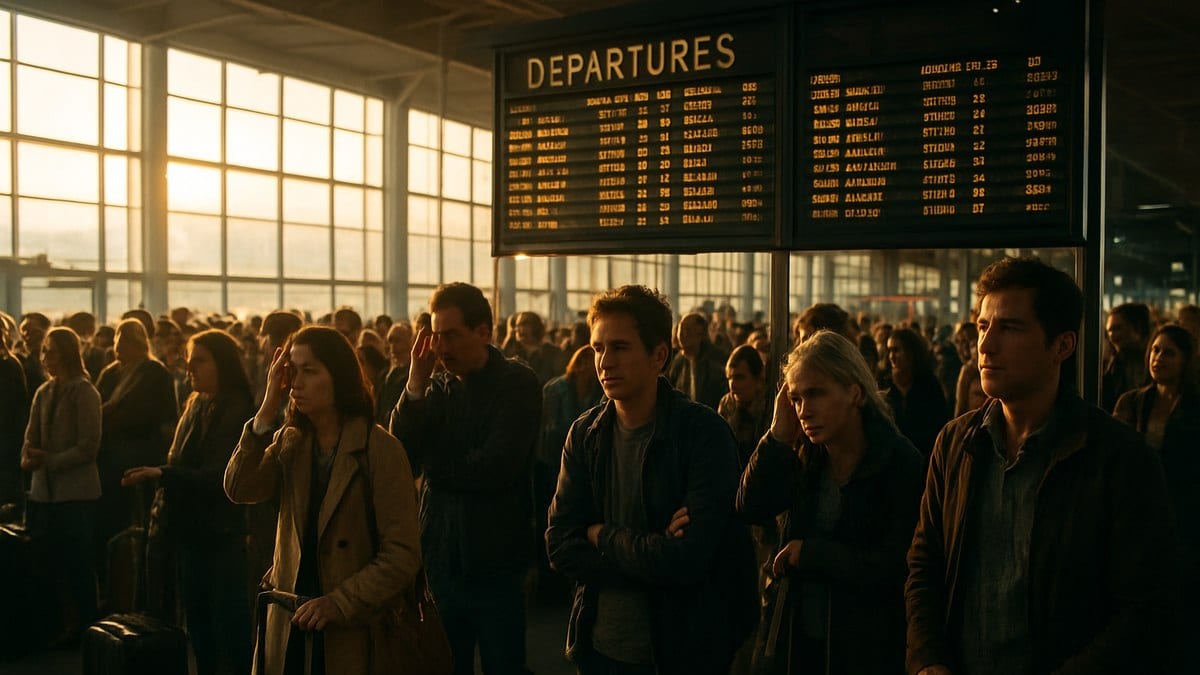
New Delay Figures Highlight Atlanta’s Persistent Bottlenecks
The latest operations report from Hartsfield Jackson Atlanta International Airport lists 129 delayed flights in a single recent period, underscoring how even routine disturbances can ripple quickly through such a large hub. The figure appears in a performance table released by the airport’s Department of Aviation, which tracks monthly delay counts alongside passenger volumes and on time metrics.
Atlanta already ranks among the most delay affected airports in the United States in comparative benchmarking by federal and international aviation bodies. Recent performance reviews of major hubs have described Atlanta as both a critical connector and a delay amplifier, where minor schedule disruptions can expand rapidly because of dense traffic patterns and tightly timed connections.
Separate disruption tallies compiled this week by aviation and travel publications show Atlanta recurring on lists of top U.S. delay hotspots, alongside Chicago, Houston, Los Angeles and New York area airports. Nationwide, those snapshots point to several thousand delays and more than one hundred cancellations on peak days, with Atlanta consistently contributing a notable share of the totals.
Despite strong overall punctuality scores relative to many busy airports, Atlanta’s combination of hub banking, high transfer traffic and exposure to volatile Southeast weather continues to keep delay numbers elevated. The 129 flight figure illustrates how quickly operational strain can materialize, even outside of headline making storm events.
World’s Busiest Hub Feels Strain From Growing Demand
For more than two decades, Hartsfield Jackson has routinely appeared at or near the top of global rankings by passenger volume. Industry data for 2025 show Atlanta once again as the busiest airport in the United States, handling more than 50 million passengers and functioning as a mega hub for domestic and regional traffic.
Although a recent industry journal notes that Dubai International has edged past Atlanta in some worldwide throughput measurements, the Georgia hub remains a central interchange in U.S. aviation. It connects more domestic city pairs than almost any other airport and serves as a primary transfer point for one of the country’s largest airline networks.
That scale is central to understanding the impact of 129 delayed flights. In a point to point airport, such a tally might inconvenience a limited number of origin and destination passengers. In Atlanta’s hub and spoke model, however, every late arriving aircraft can disrupt onward connections across multiple regions, affecting travelers far beyond the Southeast.
Recent disruption reports from other large hubs, including Denver, Phoenix and Detroit, show how interconnected these systems have become. Flights leaving or heading to Atlanta often appear in delay statistics at distant airports, reinforcing the idea that bottlenecks at the world’s busiest hubs can have national consequences for schedule reliability.
Weather Systems and Tight Schedules Drive Rolling Disruptions
Publicly available weather and operations summaries for early April indicate that storm systems across the eastern United States have played a significant role in recent disruptions. Aviation coverage this week has highlighted thunderstorms near Detroit and along key air traffic corridors that link Midwestern and Southern hubs, including Atlanta. These patterns tend to trigger flow control restrictions, ground stops or slower arrival rates, which then cascade into departure delays.
Historical examples from past summers in Atlanta show similar dynamics. Local and national outlets have documented days when storm threats around the airport produced hundreds of delays in a matter of hours, even when severe conditions were intermittent. In those cases, airlines often faced long recovery periods as crews and aircraft fell out of position, and some flights were cancelled outright to reset schedules.
Industry analyses point to schedule density as another driver behind episodes such as the 129 delays now recorded at Atlanta. With airlines operating near capacity on many peak days, there is limited slack to absorb unexpected weather reroutes, air traffic control restrictions or maintenance issues. As a result, relatively short disruptions can lead to late evening banks of flights departing behind schedule, particularly at hub airports.
Data from independent on time performance trackers show that some individual routes serving Atlanta have struggled to maintain reliability in recent months, with a portion of flights experiencing significant lateness. While these figures fluctuate by season and carrier, they reinforce the broader picture of an airport operating close to its limits during busy travel periods.
Knock On Effects for Travelers Across the U.S. Network
The 129 delayed flights in Atlanta do not only affect passengers starting or ending their journeys in Georgia. Travel coverage over the past week has emphasized how delays at one hub can strand or reroute travelers at far flung airports, as missed connections force rebookings and overnight stays. Reports from Detroit and other Midwestern gateways describe passengers bound for cities across the South and East Coast waiting on aircraft and crews that originated or passed through Atlanta earlier in the day.
Travel news outlets also note that many of the most delayed flights nationally involve hub to hub sectors. When Atlanta experiences a surge in late departures, it can send those delays onward to other major airports, where follow on flights may then depart behind schedule. This knock on effect is visible in nationwide statistics that show thousands of delays and more than a hundred cancellations scattered across multiple airports on the same day.
Passengers connecting through Atlanta in the coming days are being encouraged by travel advisers and consumer advocates to build in longer layovers, especially when traveling through afternoon and evening banks that are more vulnerable to earlier disruptions. Some guidance suggests considering morning departures when possible, since statistical reviews of on time performance often show better reliability in the first half of the day.
At the same time, analysts point out that Atlanta’s massive scale also gives airlines options to recover more quickly than at smaller airports. With extensive gate infrastructure, large pools of crews and significant spare aircraft capacity during some periods, operators can sometimes consolidate flights, swap equipment or reroute passengers more efficiently once the immediate source of disruption begins to ease.
What Today’s Numbers Signal for the Spring Travel Season
The appearance of 129 delays in Atlanta’s latest performance tables arrives just as the spring travel season accelerates. Early April typically brings a mix of school holidays, business travel and growing leisure demand, pushing hub airports like Atlanta close to peak summer volumes. Disruption snapshots from multiple U.S. airports over the past several days suggest that this year is following a similar pattern, with weather sensitive hubs seeing spikes in delays during unsettled conditions.
Recent national disruption reports compiled by travel data firms show that days with more than 3,000 flight delays across the United States are becoming more common. Atlanta’s role as a primary domestic connector makes it a frequent contributor to those totals, even when its own on time percentages remain comparatively strong against global peers.
For travelers, the latest Atlanta figures are a reminder that route choice and timing can play an important role in avoiding the worst of the disruption. Travel analysts often recommend that passengers routing through the world’s busiest hubs monitor forecasts closely, use airline and airport tools to track inbound aircraft, and consider backup options if storms or other constraints appear likely to affect operations.
As spring rolls into the busy summer period, Atlanta’s 129 recorded delays offer a snapshot of the pressures facing large hubs in an era of strong demand and constrained capacity. The airport’s ability to manage these recurring spikes in disruption will be closely watched by airlines, industry observers and millions of passengers who rely on the city as a central link in the national air travel network.