

More news on this day
Hundreds of travelers at Hartsfield-Jackson Atlanta International Airport faced hours of disruption on April 5 as a wave of delays and cancellations involving Delta Air Lines, Spirit, Frontier, SkyWest and other carriers rippled across transatlantic and domestic networks linking the United States, the United Kingdom and mainland Europe.
Get the latest news straight to your inbox!
Disruptions Mount at the World’s Busiest Hub
Publicly available flight-tracking data for Sunday, April 5, indicate that Hartsfield-Jackson Atlanta International Airport, one of the world’s busiest hubs and a primary base for Delta, is once again at the center of a broader U.S. disruption pattern. While nationwide figures show hundreds of cancellations and several thousand delays, Atlanta’s share includes dozens of affected departures and arrivals, many of them on high-demand routes to major U.S. cities and key European gateways.
Reports compiled from airline status boards and tracking platforms point to at least 285 delays and 76 cancellations tied to routes touching Atlanta and connecting hubs on both sides of the Atlantic. Flights operated by or on behalf of Delta, Spirit, Frontier, SkyWest and additional carriers were among those impacted, stranding passengers at departure gates, in transit lounges and on inbound services forced into extended ground holds.
The disruption comes at the tail end of the Easter travel rush, when schedules are heavily loaded and aircraft utilization is tight. Under these conditions, even moderate weather issues or airspace constraints at one hub can create a cascading effect that quickly spreads through an interconnected network, amplifying the impact felt at a mega-hub such as Hartsfield-Jackson.
Travel industry coverage notes that Atlanta has already featured prominently in several nationwide disruption events in recent weeks, making Sunday’s difficulties part of a broader pattern rather than an isolated incident. The cumulative effect has been a growing backlog of displaced travelers struggling to secure timely alternatives.
Carriers Hit: Delta, Spirit, Frontier, SkyWest and More
Operational data reviewed on April 5 show that Delta and its regional partners, including SkyWest, continue to shoulder a substantial share of the disruption at Atlanta. As Delta’s primary hub, Hartsfield-Jackson handles a dense banked schedule built around tight connection windows that feed both domestic and long-haul services, including flights to the United Kingdom and continental Europe.
SkyWest, which operates regional flights under the brands of several major U.S. carriers, appears prominently among the affected operators, reflecting how disruptions on feeder routes can ripple into long-haul operations. When regional flights into Atlanta arrive late or are canceled, passengers attempting to connect to overseas departures may find themselves stranded despite transatlantic services technically operating.
Low-cost operators Spirit and Frontier also feature in disruption tallies for the day, particularly on point-to-point routes that either originate in Atlanta or rely on it as a critical connecting waypoint. With leaner schedules and fewer backup aircraft, any operational irregularity can be harder for these carriers to absorb, increasing the likelihood of rolling delays and last-minute cancellations.
Publicly accessible performance statistics from the U.S. Department of Transportation have long documented relatively higher volatility in on-time performance and cancellation rates among some low-cost and regional carriers compared with the largest legacy airlines. Sunday’s events appear to echo these broader trends, with passengers on budget and regional operators facing a disproportionate share of extended waits and missed connections.
Impact on Routes to the U.S., UK and Europe
The disruption in Atlanta has had a particular impact on transatlantic connectivity, as delayed feeder flights from around the United States have complicated efforts for travelers to reach UK and European departures on time. Reports indicate that some passengers booked on evening flights to London, Paris, Amsterdam and other key European hubs missed onward connections after initial short-haul legs into Atlanta experienced multi-hour delays.
In some cases, cancellations on domestic sectors into Atlanta left passengers with no same-day options to reach long-haul departures. While airlines have attempted to reroute travelers through alternative hubs such as New York, Chicago or Dallas, seat availability during a busy holiday period has been limited, resulting in overnight stays and extended layovers.
The knock-on effects are also visible in Europe, where arriving flights from the United States have landed significantly behind schedule, compressing connection times for onward services to secondary cities. Travelers heading from the U.S. via UK or European hubs to final destinations in the EU have reported missed onward flights and baggage delays as ground handlers and air traffic managers work through the backlog.
Transatlantic schedules are particularly vulnerable when disruption occurs late in the day in the United States. Because many flights to Europe are overnight services that depart in closely timed waves, a cluster of delays at a hub like Atlanta can translate into a single, concentrated period of strain on airports and airlines at both ends of the route network.
Patterns Behind the Latest Wave of Delays
According to published coverage and aggregated flight statistics, Sunday’s disruption at Atlanta and other major hubs forms part of a wider pattern of operational stress across the U.S. airline system in early April. Industry reports link the latest wave of delays and cancellations to a mix of factors, including lingering weather issues in parts of the country, tight crew scheduling, and congestion in key sections of U.S. airspace.
Analysts note that when airlines operate on thin buffers, especially during peak periods, even modest weather or technical constraints can quickly trigger ground delay programs and downstream schedule changes. A delayed aircraft arriving from one city may then depart late to the next, contributing to a chain reaction that can last throughout the day and spread from domestic to international services.
Historical performance data suggest that regional and ultra-low-cost carriers can be especially sensitive to such chain reactions, as they often have fewer spare aircraft and crews available to recover from operational shocks. The presence of SkyWest, Spirit and Frontier among the more affected operators on April 5 aligns with that pattern, although larger carriers are not immune when disruption becomes systemwide.
The Easter travel surge has amplified these vulnerabilities. With demand running high and flights heavily booked, airlines have less flexibility to accommodate displaced passengers without resorting to multi-stop routings or overnight stays, which in turn adds pressure to hotels and ground transportation around major airports like Atlanta.
What Stranded Travelers Are Experiencing On the Ground
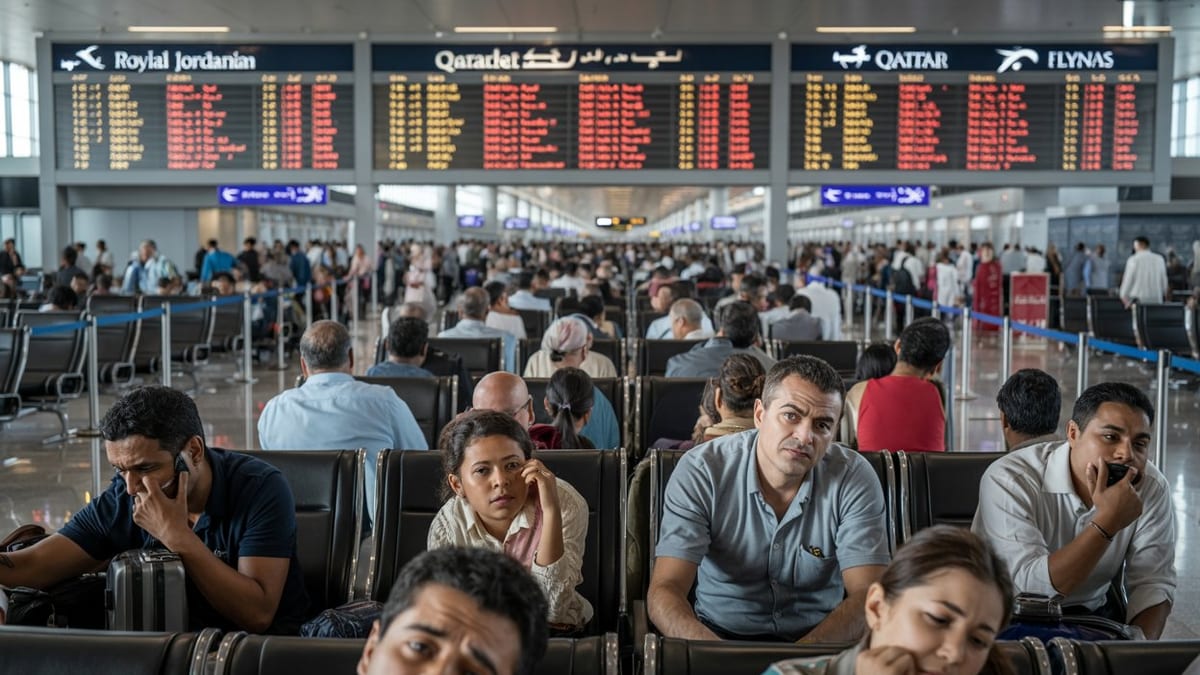
Scenes at Hartsfield-Jackson on April 5, as described in news and social media reports, include long lines at customer service counters, crowded gate areas and improvised overnight arrangements as travelers wait for rebooked flights. Families with children, international visitors unfamiliar with local procedures and business travelers on tight schedules are all contending with uncertainty and extended stays in the terminal.
Passengers report being shifted between carriers, rerouted through alternate hubs and, in some instances, offered new itineraries that depart a day or more after their original bookings. Those bound for the UK and Europe face additional complications around immigration, onward train connections and prepaid hotel reservations that may no longer align with updated arrival times.
Consumer advocacy information circulated on Sunday has reminded travelers that, in the United States, airlines are generally required to refund passengers if flights are canceled and the traveler chooses not to rebook, even when the original ticket was nonrefundable. However, compensation rules for delays and for hotel or meal expenses vary widely by carrier and depend on the cause of disruption.
Travel experts frequently advise that, during widespread disruption, passengers monitor both airline communications and independent tracking tools, keep digital copies of all receipts and reservation details and consider flexible itineraries when possible. For those passing through Atlanta on April 5, such preparation has been the difference between securing an early rebooking and facing an extended, uncertain wait at the terminal.