

More news on this day
As Nigeria edges into another rainy season, air travelers are being warned to brace for fresh waves of delays, diversions and cancellations, with forecasts of heavier storms and persistent flooding likely to strain already fragile domestic flight schedules.
Get the latest news straight to your inbox!
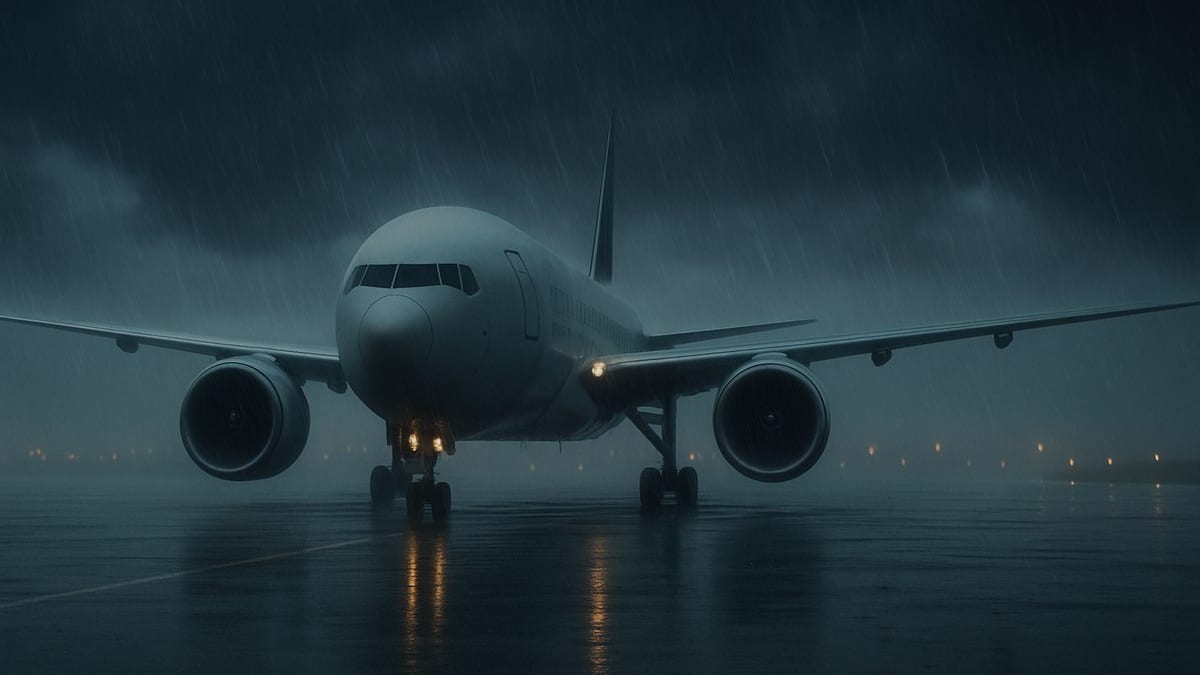
Stormier Skies and a Busier Aviation Map
Publicly available climate outlooks for 2026 indicate a wetter-than-usual season in parts of West Africa, increasing the likelihood of intense thunderstorms during peak travel hours. For Nigeria’s aviation sector, that pattern typically translates into more frequent weather-related disruptions, particularly on busy Lagos, Abuja and Port Harcourt routes where convective storms can form with little notice.
The Nigerian Meteorological Agency’s latest Seasonal Climate Prediction highlights thunderstorms, squall lines and episodes of low cloud as recurring hazards for aviation, especially at the onset and peak of the rains. The agency’s technical tables explicitly link severe thunderstorms, microbursts and downdrafts to flight delays or cancellations and uncomfortable, turbulent conditions in flight.
At the same time, Nigeria’s route network is expanding. Newly upgraded facilities such as Victor Attah International Airport in Akwa Ibom State, which recently secured federal approval for full international operations, are drawing more traffic into regions that experience some of the country’s heaviest rainfall. As more airports handle higher volumes during stormy months, operational buffers that once existed on thinner schedules are narrowing.
Sector analysts note that this combination of stronger seasonal storms and rising passenger demand means even routine squalls can rapidly cascade into missed connections, overnights and aircraft out of position, particularly for carriers operating tight turnarounds with limited spare capacity.
Historical Data Shows Weather as a Major Delay Driver
Recent reporting on Nigeria’s domestic performance records shows that weather is one of the top contributors to schedule disruption. Coverage of Nigeria Civil Aviation Authority data for 2024 indicated thousands of delays and scores of cancellations within just two months, with aviation experts identifying harmattan haze and rainy-season thunderstorms as key factors behind late departures and turn-backs.
Research published in early 2026 in an engineering and management journal reached similar conclusions, finding that poor visibility, wet runways and storm activity during the rainy months significantly increase the likelihood of delays across Nigerian airports. The study framed weather as part of a wider web of operational challenges but emphasized that storms and low cloud ceilings remain beyond the control of airlines and airport operators.
Operational reviews carried by Nigerian business outlets during previous rainy seasons also underline how adverse weather interacts with infrastructure gaps. Analysts have pointed to runway lighting, instrument landing systems and approach aids as areas where limitations can force conservative operating minima, particularly when cloud bases are low or heavy rain is falling at touchdown.
While navigation agencies regularly stress that core systems meet regulatory standards, experienced pilots and former regulators quoted in local coverage continue to describe weather as a central, structural driver of delays, especially when combined with tight scheduling and limited diversion options.
New Season, Familiar Risks: Thunderstorms, Haze and Flooding
Although the harmattan season, with its dust haze and poor visibility, typically wanes before the main rains, remnants of that pattern can overlap with the early onset of thunderstorms. In January 2026, weather bulletins widely reported dust haze and embedded storms over parts of Nigeria, prompting fresh advisories to airline operators to obtain detailed, airport-specific forecasts for flight planning.
For the coming months, the primary threats shift toward towering cumulonimbus clouds, lightning, wind shear and microbursts around major hubs. Historical accident investigations in Nigeria have repeatedly cited wind shear and intense rainfall near the runway as aggravating factors, reinforcing industry caution around landing or taking off when storms sit close to the airport environment.
Beyond the immediate aeronautical risks, ground conditions are a growing concern. Nigeria’s 2025 floods, which followed heavy and prolonged rainfall, inundated multiple communities and transport corridors. With urban drainage in Lagos, Abuja and other cities already under strain, prolonged downpours in 2026 raise the prospect of access roads to airports becoming waterlogged or gridlocked, preventing passengers and staff from reaching terminals even when aircraft and crews are ready.
Observers warn that the convergence of saturated ground, poor drainage and intense bursts of rainfall can also affect airport perimeters and airfield operations, from surface water on runways to disruptions in ground handling and refueling when lightning is in the vicinity.
Operations Under Pressure: Airlines, Regulators and Weather Services
Airlines in Nigeria routinely highlight safety as the overriding factor in weather-related decisions, and recent seasons have provided examples of carriers suspending or curtailing operations when meteorological information became unavailable. In 2025, publicly reported industrial action at the Nigerian Meteorological Agency led at least one major airline to halt flights temporarily, citing the absence of critical real-time weather data.
The incident underscored how dependent the aviation system is on continuous delivery of up-to-date forecasts and nowcasts. Sector commentary following the disruption emphasized that, without precise information on storm cells, winds and visibility at departure and destination airports, risk calculations become more conservative, and cancellations become more likely.
Regulatory and navigation agencies have, in turn, used harmattan and rainy-season disruptions to reiterate existing protocols. Public advisories over the past two years have urged pilots and operators to obtain departure, en route and destination weather briefings, plan alternates carefully and avoid attempts to operate in conditions below published minima. These reminders are expected to intensify as the 2026 rainy season takes hold.
Aviation specialists writing in Nigerian newspapers argue that improving on-time performance through the wet months will require not only strict adherence to weather guidance but also deeper investments in airfield lighting, instrument approaches and wider use of performance-based navigation to give pilots more options when storms or low cloud affect a single runway direction.
Passengers Face Longer Queues and Tougher Choices
For travelers, the practical impact of the rainy season is likely to be felt in longer queues, shifting departure boards and more uncertain arrival times. Domestic passengers in Nigeria are already familiar with spending hours in terminals during intense showers while airlines wait for conditions to improve along the route or at destination airports.
Consumer advocates note that when those delays coincide with broader shocks, such as fuel shortages, technical issues or industrial disputes, compensation and rebooking become more complex. Coverage of previous seasons shows peaks in fare volatility and crowded re-accommodation desks whenever multiple carriers are forced into simultaneous cancellations due to weather.
Industry commentary ahead of the 2026 rains suggests that travelers may need to plan more buffer time into itineraries, especially for same-day connections to international flights, and to monitor airline advisories closely on days when storms are forecast along key corridors. Choosing earlier flights in the day, when convective activity is often lower, is also being framed as a practical strategy for reducing exposure to evening thunderstorm disruptions.
With forecasts pointing to another unsettled season, Nigeria’s aviation system is preparing once more to balance safety margins against mounting demand. For passengers, the message from recent experience is clear: wet-season skies tend to mean slower journeys, and flexibility may be as essential as a boarding pass in the months ahead.