

More news on this day
Air travel across parts of Malaysia and China is facing fresh disruption as Juneyao Airlines, Malindo Air and Xiamen Air record dozens of cancellations and more than a hundred delays, leaving passengers stranded or rebooked at major hubs including Kuala Lumpur, Shanghai and Beijing.
Get the latest news straight to your inbox!
What Is Happening Across Key Asian Hubs
Publicly available flight-tracking data and airport operations dashboards for late March 2026 indicate a notable spike in schedule disruptions affecting routes in and out of Kuala Lumpur International Airport, Shanghai’s Pudong and Hongqiao airports, and Beijing’s main gateways. Within a recent 24-hour window, combined figures for Juneyao Airlines, Malindo Air and Xiamen Air show around 43 cancellations and more than 160 delayed departures or arrivals across their regional networks.
The impact is being felt most visibly at Kuala Lumpur, Shanghai and Beijing, where these carriers operate dense short and medium haul schedules. Delays of 30 to 90 minutes were common on intra-Asia routes, while some long haul and overnight services faced longer holds, forcing rolling knock-on effects to subsequent rotations.
Operational dashboards suggest that weather-related flow restrictions at several Chinese airports, together with tight turnarounds and congested evening banks of departures, amplified the disruption. As flights pushed back late from one hub, aircraft and crew were, in turn, unavailable on time at the next point in their rotations.
Although larger flag carriers in the region also reported delays, the concentration of disruptions on selected narrow-body fleets and certain regional corridors meant that passengers booked on specific city pairs bore the brunt of cancellations and missed connections.
How Juneyao Airlines, Malindo and Xiamen Air Are Affected
Juneyao Airlines, a Shanghai-based carrier with an expanding international footprint, appears to be handling a sizable share of the current schedule pressures. Real-time status boards show clusters of delayed departures from Shanghai Pudong toward Southeast Asian cities and onward connections to Europe, with additional hold-ups on return services feeding back into China’s domestic network.
Malindo Air, operating out of Kuala Lumpur and serving multiple points in China and across Southeast Asia, has registered several cancellations alongside a high volume of late departures. These are particularly visible on heavily trafficked regional routes from Kuala Lumpur to Chinese coastal cities and neighboring ASEAN hubs, where even modest delays can quickly cascade due to tightly planned aircraft utilization.
Xiamen Air’s disruption profile is more concentrated around key Chinese coastal airports and connections into major hubs such as Beijing and Shanghai. Delays on trunk routes have affected both domestic passengers and international travelers relying on through tickets that combine Xiamen-operated segments with other carriers’ long haul services.
Operational adjustments reported through public schedules include aircraft swaps, consolidation of lightly booked flights and selective cancellations of off-peak services. While these measures help stabilize network operations over several days, they have also contributed to pockets of stranded passengers awaiting reaccommodation.
Airports and Passengers Feeling the Strain
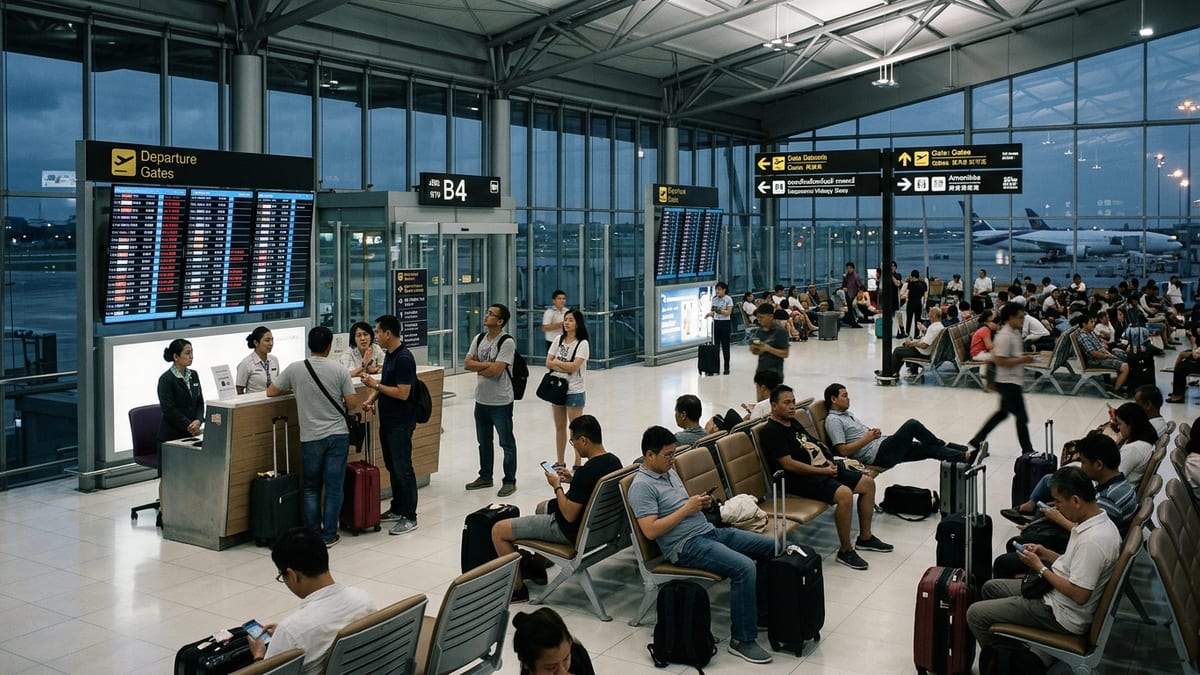
At Kuala Lumpur International Airport, reports from travelers and airport information feeds describe long lines forming at airline counters and transfer desks as passengers seek new routings, hotel vouchers or meal assistance. Many affected travelers are transiting between Southeast Asia and China, with missed onward connections requiring rerouting through alternative hubs such as Bangkok, Singapore or Hong Kong.
Shanghai’s airports have experienced similar pressure, particularly during evening peaks when multiple delayed arrivals coincide with tightly scheduled outbound banks. Passengers arriving late from regional points may discover that their onward services to Europe, the Middle East or other parts of Asia have already departed, prompting last-minute rebooking and overnight stays.
In Beijing, operational data highlights a build-up of delays on domestic legs feeding into long haul departures. Even when flights are not cancelled, extended waits at the gate and in holding patterns increase overall journey times, while putting additional strain on airport amenities, lounges and ground transport connections.
Travelers with checked baggage have reported concerns about misrouted or delayed luggage when tight connections are replaced with improvised routings. In disruption scenarios involving multiple carriers and hubs, baggage tracing and recovery can take several days, adding to passenger frustration even after they reach their final destination.
Practical Steps for Travelers Caught in the Disruption
For passengers already en route, the most important step is to monitor flight status frequently through airline apps, airport display systems and independent flight-tracking platforms. Same-day changes to departure times and gate assignments are common during rolling disruption, and some carriers open complimentary rebooking windows or allow same-day standby when delays cross certain thresholds.
Those with imminent departures are advised to arrive at the airport earlier than usual, particularly at Kuala Lumpur, Shanghai and Beijing, where check-in and transfer counters can become congested as multiple delayed flights converge. Extra time helps accommodate secondary security checks, reissued boarding passes and potential terminal changes.
Travelers whose flights are cancelled should document the disruption carefully, keeping boarding passes, booking confirmations and any written notifications from airlines. This documentation can be important when seeking refunds, compensation where applicable, or reimbursement for accommodation and meals from travel insurance providers, especially for itineraries that combine multiple carriers.
Passengers with flexible plans may also benefit from considering alternative routings that bypass the most affected hubs, even if that means an intermediate stop elsewhere in Asia. Reaccommodation options can include partner airlines, later services operated by the same carrier or, in some cases, full refunds that allow travelers to construct entirely new itineraries.
What to Watch in the Days Ahead
Network specialists note that clusters of cancellations and delays of this magnitude rarely resolve in a single operational day. Aircraft and crew are often displaced around the region, and it can take several days for schedules to fully realign, particularly for carriers that operate complex webs of short and medium haul flights.
Travelers planning to fly with Juneyao Airlines, Malindo Air or Xiamen Air in the coming days should track their specific flight numbers and pay attention to any schedule changes that appear in booking systems. Even if a service is currently shown as on time, minor adjustments to departure times or aircraft types may signal ongoing efforts to rebalance capacity.
Industry observers also point to broader pressures on Asian aviation, including high load factors on popular routes, constrained spare capacity in some fleets and seasonal weather patterns that can trigger flow restrictions at short notice. When several of these factors combine, even routine operational challenges can escalate quickly into widespread disruption.
For now, passengers facing upcoming journeys through Kuala Lumpur, Shanghai, Beijing and neighboring hubs are encouraged to build in additional buffer time, ensure that contact details in bookings are correct, and review the disruption policies of both airlines and travel insurers before departure.