

More news on this day
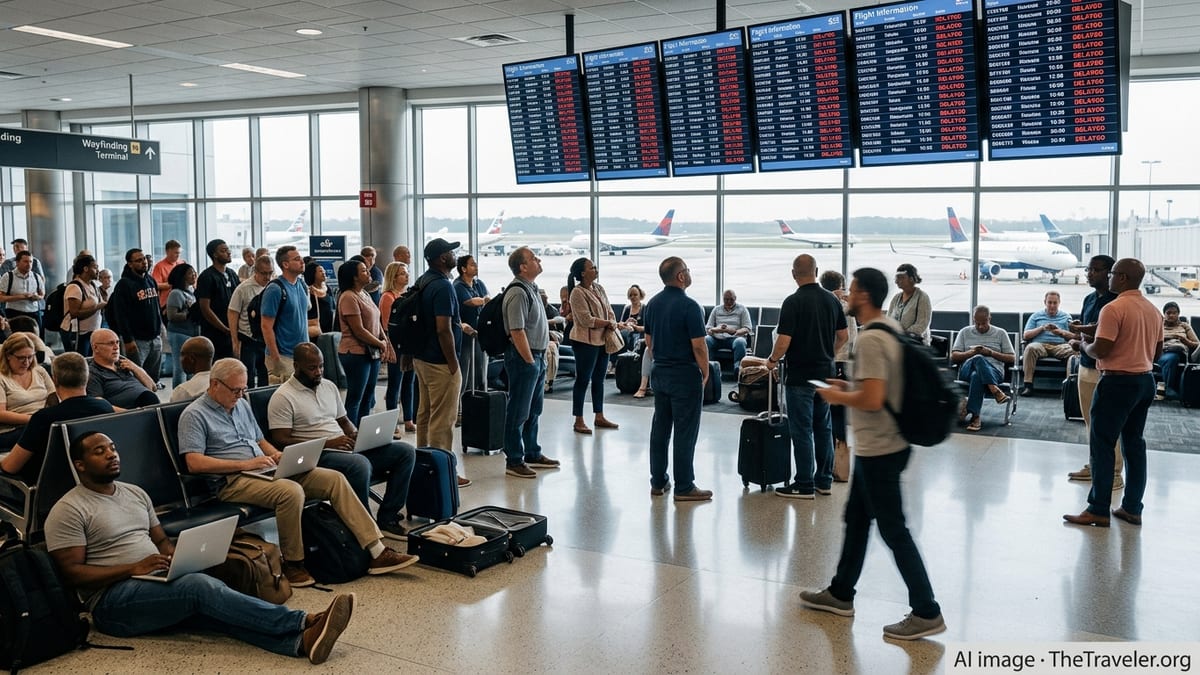
A fresh bout of travel disruption hit the United States this weekend as San Francisco International Airport recorded more than 130 delayed flights and 10 cancellations, snarling operations for United Airlines, Alaska Airlines, SkyWest and other carriers on busy routes to Los Angeles, Denver, Dallas/Fort Worth and beyond.
Get the latest news straight to your inbox!
Runway Limits Turn SFO Into a Bottleneck
San Francisco International Airport has been under mounting operational pressure after federal regulators moved to restrict the number of arrivals permitted each hour. Publicly available aviation data and recent coverage indicate that arrivals at SFO have been reduced from about 54 an hour to roughly 36, a cut of one third that has sharply reduced the airport’s capacity to absorb weather or scheduling hiccups.
The newly tightened arrival cap coincides with runway construction and long-standing concerns over the safety of closely spaced parallel runways. The combination has turned even routine peak periods into chokepoints, particularly in the late morning and evening banks when transcontinental and regional flights converge.
On one of the latest high-impact days, flight-status tallies showed 138 departures and arrivals delayed at SFO and 10 flights cancelled. While those figures represent a fraction of the airport’s daily schedule, they were sufficient to spark rolling congestion that fed into the broader national system.
For travelers, the constraints translate into longer gate holds, airborne holding patterns and tighter margins for making connections, especially for those relying on SFO as a transfer point for transcontinental and international itineraries.
United, Alaska and SkyWest Bear the Brunt
United Airlines, the dominant carrier at San Francisco, has been particularly exposed to the latest disruptions. As the primary hub operator, United funnels a large share of its domestic and international network through SFO, meaning even modest schedule dislocations can cascade through flights bound for major markets including Los Angeles, Denver and New York.
Alaska Airlines, which ranks as SFO’s second-largest carrier by passenger share, has also faced knock-on impacts. Recent performance snapshots have shown Alaska swings from days with double-digit delays out of San Francisco to relatively smooth operations, underscoring how quickly conditions can deteriorate when arrival slots tighten or weather moves in.
Regional operator SkyWest, which flies under United Express and Alaska codes on many West Coast and mountain routes, has emerged as a critical pressure point. Because SkyWest operates dense schedules with smaller regional jets, delays at SFO can rapidly multiply across shorter sectors to cities such as Los Angeles, San Diego, Portland and smaller California markets.
Other airlines with smaller but still significant presences at SFO, including low-cost and foreign carriers, have faced schedule adjustments as they jockey for space in the constrained arrival stream, often accepting longer flight times or schedule shifts to keep aircraft and crews in position.
Ripple Effects Across Los Angeles, Denver and Dallas/Fort Worth
The latest wave of San Francisco disruptions has not been contained to the Bay Area. Flight-tracking snapshots and nationwide disruption tallies this week show that major hubs including Los Angeles International, Denver International and Dallas/Fort Worth International have all reported elevated levels of delays and scattered cancellations, in part tied to SFO-linked operations.
Los Angeles, already one of the country’s busiest and most delay-prone airports, has seen crowded departure banks as late-arriving aircraft from San Francisco push back subsequent flights. Routes such as SFO to LAX and onward transcontinental services have been particularly sensitive when aircraft and crews miss their planned turns.
Denver, an important connecting point for United and other carriers, has also absorbed a share of the disruption. Late departures from San Francisco have led to missed connections for travelers heading into the Rocky Mountain region and onward to Midwest and East Coast destinations, compounding congestion during already busy spring travel days.
Dallas/Fort Worth, a central hub in the national network, has registered secondary effects as aircraft repositioning and crew-availability challenges stemming from the West Coast ripple through schedules. While SFO-related cancellations there have been limited in raw numbers, added delays place further strain on an airport that also contends with frequent weather and traffic-management initiatives.
Nationwide Disruption Shows a System Under Strain
The turmoil centered on San Francisco comes against a backdrop of broader flight reliability challenges across the United States. Recent daily tallies compiled from airport and airline data have shown thousands of delayed flights and hundreds of cancellations nationwide, with major hubs such as Chicago O’Hare, Atlanta, Houston and New York area airports all reporting significant disruption on some days.
Within that national picture, SFO’s pattern has been distinctive. On certain days the airport has logged fewer cancellations than inland hubs but a relatively high share of arrivals and departures operating behind schedule. Even when only dozens of flights are formally delayed, the timing and concentration of those delays during peak periods can create outsized impacts for passengers and airline operations.
Analysts tracking operational data note that carriers such as United and SkyWest appear particularly exposed during seasonal peaks, when limited slack in schedules makes it harder to recover from weather events, air-traffic control programs or runway restrictions. San Francisco’s new arrival limits add yet another structural constraint to that equation.
The cumulative effect has been a travel environment where even routine trips can be subject to last-minute changes. Many travelers now face a heightened risk of missed meetings, lost vacation time and unexpected overnight stays when itineraries pass through one or more of the most delay-prone hubs.
What Travelers Can Expect in the Weeks Ahead
Public guidance from airport and aviation sources suggests that the reduced arrival capacity at San Francisco will remain in place for the foreseeable future while construction and safety-driven operating changes are implemented. That means the pattern of episodic but sometimes sharp disruption is likely to continue into the heart of the spring and early summer travel seasons.
Travel industry observers recommend that passengers connecting through SFO build extra time into their itineraries where possible, particularly on routes linking to other busy hubs such as Los Angeles, Denver and Dallas/Fort Worth. Travelers on United, Alaska and SkyWest, which collectively operate a large share of SFO’s schedule, may experience more frequent schedule adjustments as airlines attempt to keep aircraft and crews balanced across their networks.
In the near term, a combination of more conservative scheduling, tactical use of larger aircraft on constrained routes and rebooking across alternative hubs may help airlines manage the pressure. However, until San Francisco regains greater arrival flexibility, even modest storms or air-traffic flow restrictions could again tip the system into another round of widespread delays.
For now, the latest count of 138 delayed and 10 cancelled flights at SFO stands as a clear signal that the airport’s operational challenges are feeding directly into a broader wave of travel turmoil across the United States, with repercussions felt from the West Coast to the central and eastern hubs that depend on San Francisco as a vital link in the national air network.