

More news on this day
Flight disruptions at Cairo International Airport are intensifying in early April 2026, as a mix of regional airspace closures, weather events and knock-on scheduling pressures disrupt travel for thousands of passengers.
Get the latest news straight to your inbox!
Spike in Delays and Cancellations as April Begins
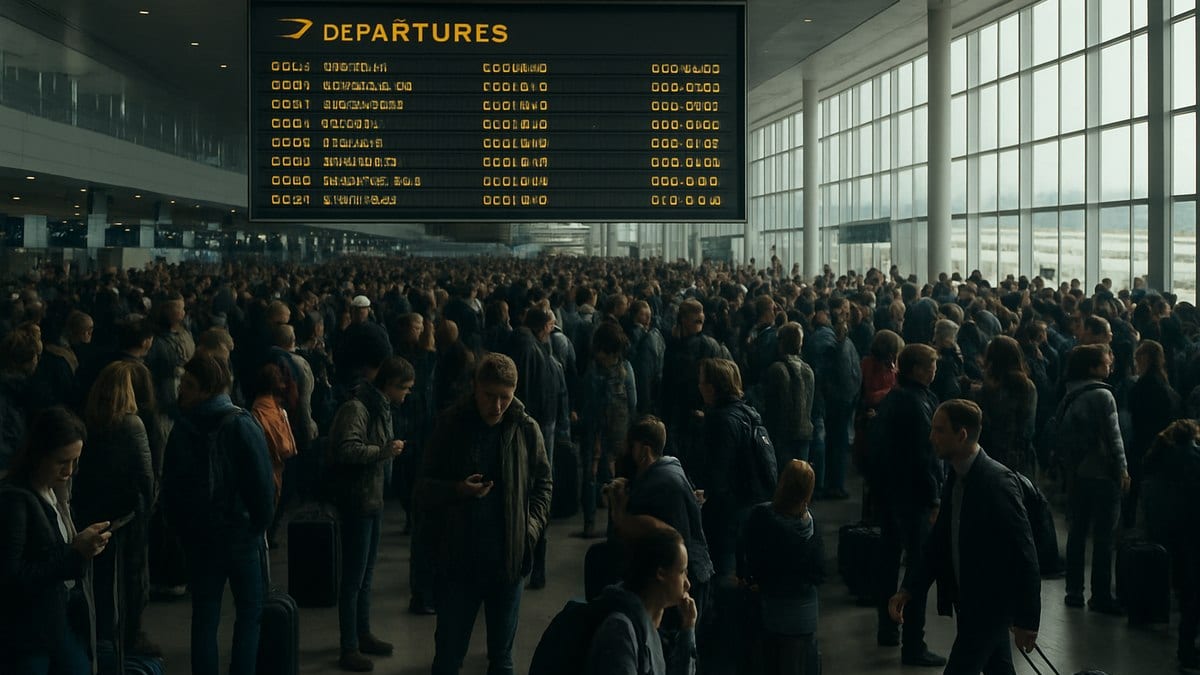
Operational data and industry coverage indicate a sharp jump in irregular operations at Cairo International Airport in the final days of March and the first week of April 2026. On March 30, monitoring of live departure and arrival boards pointed to more than 250 delayed flights and several outright cancellations at the airport, affecting services to key markets such as Dubai, Riyadh, London and Istanbul.
The trend continued into April. On April 6, travel trade reporting highlighted 155 delayed flights and six cancellations in a single day at Cairo, disrupting both domestic services and international routes to Frankfurt, Doha, Dubai, Istanbul and London. EgyptAir recorded the highest number of affected rotations, but airlines from the Gulf and Europe also reported substantial schedule slippage.
Publicly available flight-tracking snapshots suggest that these are not isolated events, but part of a pattern of wider disruption sweeping across Middle East hubs since late February. At Cairo, the mounting delays are amplifying the strain on connecting traffic, with late arrivals frequently missing tightly timed onward departures to Africa, the Gulf and Europe.
Despite this pressure, Cairo continues to handle high passenger volumes. Government and airport company statements on first quarter performance describe robust growth in passenger numbers through Egyptian airports, including Cairo, compared with the same period a year earlier. The result is a crowded hub facing record demand at the same time that on-time performance is deteriorating.
Regional Airspace Closures Reshape Route Networks
A key driver of the April disruption is the reshaping of regional airspace. Since late February, several countries in the Middle East have intermittently restricted or closed their airspace due to security concerns, according to airline advisories and travel risk assessments. These measures have forced carriers to reroute or suspend services on some of the busiest corridors linking Europe, the Gulf and South Asia.
EgyptAir, Cairo’s home carrier, has publicly acknowledged daily impacts on parts of its network since February 28, 2026. Company notices describe temporary suspensions and frequency cuts on routes to Gulf and Levant destinations and offer flexible rebooking or refunds for affected passengers through at least April 20. Other airlines serving Cairo have issued similar network advisories, citing airspace restrictions and evolving security assessments.
As air corridors over parts of the Middle East narrow, Cairo has taken on a more central role for rerouted traffic. Recent analysis published in regional media characterizes Egypt as a critical aviation bridge between Europe and Asia during the current wave of diversions. Flights avoiding certain conflict-affected areas are increasingly operating via Egyptian airspace and, in many cases, through Cairo as a connecting point.
This surge in through-traffic has brought additional banks of widebody arrivals into already busy peaks. Longer flight times on rerouted services limit crew availability and turnaround flexibility, making it harder for airlines to recover when one delay cascades into the next. The result is a hub that remains operational but more vulnerable to even minor disruptions.
Weather and Local Infrastructure Add Extra Strain
Weather has compounded the regional pressures. At the end of March, Egypt’s national carrier issued an emergency travel alert in response to a strong storm system sweeping across Greater Cairo and Suez Canal cities. Public updates referred to heavy rain, deteriorating visibility and road congestion that risked delaying passengers en route to the airport and slowing ground handling around aircraft.
In early April, residents and visitors in Cairo also reported severe sand and dust episodes that sent air quality indices soaring. Such conditions typically force aircraft to operate with greater separation and can slow inbound and outbound flows at hub airports when visibility drops or crosswinds intensify. While Cairo International Airport has remained open, these weather events have added delay minutes to a system already stretched by rerouted traffic and schedule changes.
Local ground access has been another factor. Cairo’s ring-road network and key arterials connecting the city to the airport are prone to congestion, especially during adverse weather. Airlines have urged travelers to arrive earlier than usual to offset the risk of missing flights because of traffic slowdowns or additional security queues. For many passengers, that has meant longer overall journey times, even when flights eventually operate close to schedule.
Airport infrastructure projects and modernization programs are continuing in the background, but capacity growth has not yet fully caught up with the rapid rebound in regional demand. Travel advisories from risk consultancies describe a system that is functioning, yet operating close to its limits during peak periods.
Airlines Adjust Schedules and Passenger Policies
Airlines using Cairo as a hub and destination are responding with a mix of tactical schedule changes and more flexible passenger policies. EgyptAir has outlined rebooking options for customers whose flights to certain Gulf and Middle Eastern cities were cancelled between February 28 and April 20, 2026, including the ability to change to alternative destinations on the carrier’s network without traditional change fees, within specified windows.
Separately, the airline has announced a gradual resumption of some services to United Arab Emirates destinations that had been reduced or suspended earlier in the disruption cycle. Statements carried by local media in early March described a phased increase in round-trip frequencies to Dubai and Dammam, alongside a staged restoration of flights to Abu Dhabi and Sharjah, contingent on ongoing security and operational assessments.
Foreign carriers have been adjusting as well. Gulf and European airlines serving Cairo have re-timed some departures and arrivals to account for rerouting and congestion along diverted air corridors. Some long-haul services have added extra flight time to schedules, which can improve on-time performance metrics but also extends duty periods for flight and cabin crews.
Ticketing practices are evolving in parallel. Travel agents in the region report that many carriers are waiving change fees for certain itineraries touching affected Middle Eastern airports, provided passengers retain the same origin and destination. Refund policies vary, but customers booked on cancelled flights are often being offered full refunds or vouchers, according to airline customer notices and traveler accounts published online.
What April Travelers Through Cairo Should Expect
For travelers planning to pass through Cairo International Airport in April 2026, the prevailing picture is one of a busy but disrupted hub. Flight schedules remain dense and most routes are still operating, yet the likelihood of delay is higher than usual, especially for connections linking Europe, the Gulf and South Asia via Cairo.
Publicly accessible advisories from EgyptAir and other airlines recommend that passengers monitor their flight status closely on the day of travel and build in additional time for check-in, security and immigration. Travel risk bulletins for the Middle East are advising corporate travelers to avoid tight connections through regional hubs, including Cairo, where a late inbound can easily jeopardize onward segments.
Industry analysts point to the potential for further volatility through the rest of April if regional tensions persist or new airspace advisories are issued. Even absent fresh shocks, it may take weeks for airlines to fully recalibrate schedules, crew rosters and aircraft rotations to the altered airspace environment. Until then, Cairo’s role as a major diversion and connection point is likely to sustain elevated levels of disruption.
For now, the mounting delays and cancellations at Cairo International Airport underline how sensitive Middle Eastern aviation remains to shifts in regional geopolitics and weather patterns. Passengers transiting the Egyptian capital this month are being urged by airlines and travel specialists to stay informed, allow extra time and be prepared for last minute changes to their plans.