

More news on this day
Flight disruptions at Cairo International Airport have intensified in early April 2026, as a mix of regional airspace constraints, surging passenger volumes and scheduling knock-on effects drives a sharp uptick in delays and cancellations.
Get the latest news straight to your inbox!
Delays Spike as April Gets Under Way
Operational tallies from the opening week of April indicate a pronounced deterioration in on-time performance at Cairo International Airport, with hundreds of flights affected in a matter of days. On 6 April alone, publicly available data compiled by travel industry outlets pointed to more than 150 delayed departures and several cancellations at the Egyptian hub, with disruption rippling across both regional and long haul networks.
Coverage by specialist travel publications described Cairo as one of the hardest hit airports in the Middle East during this period, with more than 170 delays and a cluster of cancellations logged in a single day as congestion built through successive departure banks. Airlines most exposed included EgyptAir and a roster of major Gulf and European carriers operating to destinations such as Frankfurt, Doha, Dubai, Istanbul and London.
These operational strains follow weeks of mounting schedule volatility across the region. In late February and March, military tensions and subsequent airspace closures triggered diversions, lengthier routings and rolling timetable adjustments. By early April, the cumulative impact of rerouted traffic and aircraft out of position was increasingly visible in Cairo’s departure boards, where rolling delays became commonplace even on flights not directly overflying affected airspace.
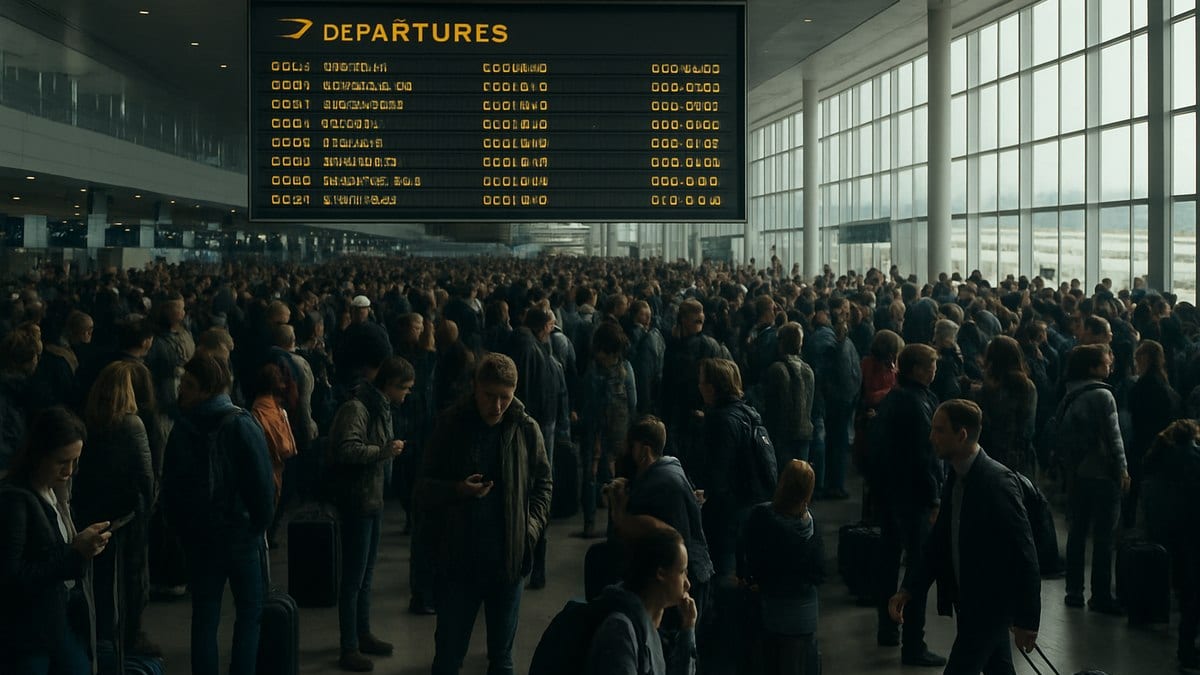
For travelers, the result has been long queues at check in and transfer desks, missed onward connections and crowded gate areas as airlines work to reset schedules. Reports shared by passengers and travel advisers highlight overnight stays in terminal areas, difficulty securing hotel vouchers and uncertainty over rebooking options, particularly for those traveling on separate tickets or through third party agents.
Regional Airspace Turmoil Filters into Cairo
The disruption pattern at Cairo cannot be viewed in isolation from wider turbulence in Middle East airspace. Since late February 2026, missile strikes and heightened regional tension have prompted temporary airspace closures and route restrictions affecting key hubs including Doha, several airports in the United Arab Emirates and parts of Israel and the Gulf. In some cases, traffic has been funneled southwards through corridors that place additional pressure on Egyptian airspace and airports.
Analyses by regional media and aviation observers describe Egypt’s air corridors as an increasingly important bridge between Europe, Africa and Asia while neighboring countries adjust flight paths for security reasons. This role has brought additional overflights and diversions into Egypt’s air traffic system, including to Cairo International Airport, during periods when other routings were constrained.
Earlier in the year, Egypt’s civil aviation authorities highlighted a series of diversions from neighboring states into Egyptian airports during spikes in regional tension, underscoring how quickly disruptions elsewhere can reshape traffic patterns over Cairo. While those diverted flights helped maintain continuity for passengers whose original destinations were temporarily unavailable, they also added pressure to ground handling, slot availability and terminal capacity.
By early April, the layered effect of these regional adjustments was evident in Cairo’s day to day operations. Longer flight times on rerouted services, crew duty time limitations and tight turnaround windows all increased the risk that even minor operational issues could cascade into significant delays. Aviation risk advisories issued in March warned that such dynamics would likely persist as long as route structures and airspace availability remained fluid.
Passenger Growth Outpaces Operational Flexibility
The April disruption comes against a backdrop of rapid traffic growth at Cairo International Airport. Recent figures from Egyptian media show that the hub handled more than 8 million passengers in the first quarter of 2026, representing around 9 percent year on year growth and extending a trend of rising volumes recorded in 2025. Flight movements have also climbed, indicating a busier runway environment and more intense use of terminal and apron infrastructure.
In normal conditions, such growth can be managed through incremental capacity additions, process changes and technology upgrades. In the current context of regional volatility, however, the higher traffic base leaves less room for error. When delays emerge, the sheer number of daily movements makes it more challenging to absorb disruption without visible knock on effects to subsequent waves of departures and arrivals.
Industry coverage suggests that EgyptAir, as the primary home carrier at Cairo, has been particularly affected by these strains, with dozens of delayed departures and a modest number of cancellations logged in early April. Other airlines operating through the hub, from Gulf network carriers to European legacies, have also reported irregular operations as they adjust schedules to account for longer routings and slot constraints.
This combination of structural growth and external shocks has made Cairo more vulnerable to sudden spikes in disruption. While published data still points to strong overall demand for travel into and through Egypt, the operational environment at the capital’s main gateway has become more fragile, with each new day of regional turbulence adding another layer of complexity to schedule planning.
Operational Changes and Traveler Experience
Local media coverage shows that Cairo International Airport is continuing to introduce procedural changes aimed at easing passenger flows and modernizing processing, even as disruption intensifies. A recent example is the announcement that paper arrival and departure cards for Egyptian passengers will be discontinued from 11 April, part of an effort to streamline border procedures and reduce manual paperwork at passport control.
At the same time, the lived experience for many travelers transiting Cairo has remained challenging through the first days of April. Accounts shared on travel forums and social platforms describe crowded transfer zones, limited seating, and uncertainty over where to obtain reliable information when flights are delayed or retimed. Some passengers report confusion around rebooking responsibilities when itineraries involve multiple airlines or online travel agencies.
These anecdotal reports align with the scale of disruption depicted in operational tallies for 6 April, where more than 150 delayed flights translated into thousands of affected passengers across the course of the day. With regional carriers, European airlines and EgyptAir all adjusting schedules, even travelers whose flights operated close to time have encountered longer security lines and congested boarding gates as overall terminal throughput fluctuates.
For those planning journeys through Cairo in the coming days and weeks, aviation advisories and travel trade guidance emphasize the importance of monitoring flight status frequently, building generous connection buffers and reviewing ticket conditions and travel insurance coverage. Publicly available information from airlines indicates that standard disruption policies remain in place, but the high volume of affected passengers can slow access to call centers, chat support and airport service desks when irregular operations spike.
Outlook for the Remainder of April
With the month still in its early stages, the outlook for operational stability at Cairo International Airport hinges heavily on the evolution of regional security dynamics and associated airspace restrictions. If route structures stabilize and airspace closures ease, airlines may gradually recover punctuality as aircraft and crew rotations return to more predictable patterns.
However, risk assessments circulated in March caution that the situation remains fluid, with the potential for renewed disruptions if tensions escalate or additional airspace segments are temporarily restricted. Under such conditions, Cairo’s role as a major connector between Europe, Africa and Asia would continue to expose it to sudden surges in diverted or rerouted traffic.
In the meantime, available data on traffic volumes suggests that demand for travel to and through Egypt remains robust, supported by tourism, labor flows and connecting itineraries. This resilience provides a measure of confidence for airlines investing in the Cairo market, but it also means that any future shock is likely to be felt quickly on the airport’s departure boards.
For now, the pattern emerging in early April 2026 is one of a busy regional hub striving to accommodate rising passenger numbers, evolving security realities and complex route adjustments, with the immediate cost measured in longer waits, missed connections and an unusually high number of delayed flights.