

More news on this day
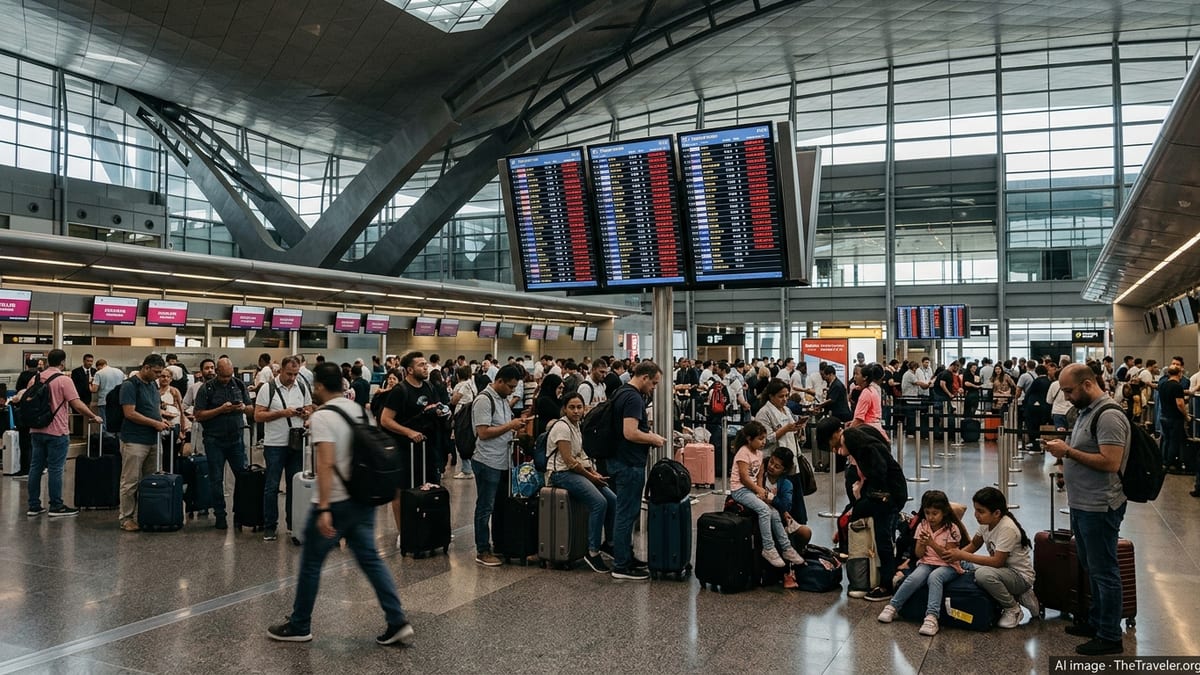
Hamad International Airport in Doha is facing a fresh wave of disruption as 11 flights involving Gulf Air, Malaysia Airlines, Virgin Australia and Qatar Airways are reported cancelled, alongside multiple delays affecting routes that link Doha with Kuala Lumpur, Bahrain, Cairo, Miami and other key hubs.
Get the latest news straight to your inbox!
Regional Tensions Keep Pressure on Doha’s Main Hub
Operational data and recent travel advisories indicate that disruptions at Hamad International Airport are unfolding against the backdrop of an ongoing regional security crisis. Qatar’s airspace was initially closed on 28 February 2026 following Iranian missile strikes connected to the wider Iran conflict, leading to widespread cancellations and a sharp reduction in traffic through Doha. Although limited corridors later reopened for controlled movements, commercial schedules have remained constrained, leaving airlines with fewer takeoff and landing slots than usual.
Reports from aviation analysts and risk consultancies describe Hamad International as technically open but operating with curtailed capacity and heightened safety protocols. This combination has reduced flexibility for carriers that rely on Doha as a transfer point between Europe, the Middle East, Asia and Oceania. When irregular operations occur, such as an extended security sweep or airspace flow restrictions, airlines have less room to recover, translating quickly into rolling delays and cancellations across multiple routes.
Qatar Airways, headquartered at Hamad International, has been operating a mix of essential services, repatriation flights and a gradually expanding roster of commercial routes. However, the latest cluster of 11 cancellations suggests that normality is still distant. Partner and codeshare airlines that route passengers through Doha are also being forced to adjust, magnifying the effect well beyond Qatar’s borders.
This week’s cancellations and delays, affecting flights connected with Gulf Air, Malaysia Airlines, Virgin Australia and Qatar Airways, underscore the fragility of the regional network. Even modest changes in airspace availability or airport throughput can cascade across schedules, especially at a hub that normally functions as a tightly timed interchange for long-haul travel.
Cancellations Hit Key Routes Linking Doha, Asia and the Gulf
The latest operational setback has centered on 11 flights tied to itineraries through Hamad International, touching routes between Doha and cities including Kuala Lumpur, Bahrain, Cairo and Miami. Publicly available flight-tracking and schedule information for 28 March 2026 show a pattern of short-notice cancellations and extended delays on services involving these destinations, with knock-on effects for connecting passengers.
Malaysia Airlines services connecting Kuala Lumpur with Doha, often operated in partnership with Qatar Airways, appear among those most affected. Disruptions on this corridor have a particularly wide impact, as many travelers use Kuala Lumpur as a Southeast Asian gateway to onward connections across the region. When the Doha leg is cancelled, entire multi-sector itineraries can unravel, forcing travelers to seek new routings through alternative hubs such as Dubai, Singapore or Istanbul.
In the Gulf, Gulf Air links between Bahrain and Doha are also experiencing instability. The relatively short hop between the two hubs is a crucial feeder for long-haul flights departing from Doha, especially for passengers originating in Bahrain and the Eastern Province of Saudi Arabia. Cancellation of a single feeder flight can cause dozens of missed onward connections, adding pressure to already stretched customer service and rebooking systems.
North African and North American routes are not immune. Services connecting Doha with Cairo and Miami have faced extended delays and at least one cancellation each within the current disruption window, according to compiled schedule data. For long-haul travelers, even moderate timetable changes can push connections outside of legal minimum transfer times, requiring complete itinerary redesigns at a moment when alternatives via Doha remain limited.
Qatar Airways Capacity Constraints Ripple to Partner Airlines
Qatar Airways, which normally runs an intensive hub-and-spoke model through Hamad International, continues to operate with reduced capacity as it navigates the effects of the airspace restrictions and heightened security environment. Industry briefings and traveler reports suggest that the airline is prioritizing certain trunk routes and repatriation services while trimming or suspending others that are harder to operate reliably under current constraints.
Because many of the affected flights are marketed through codeshare arrangements, the disruption extends to partner airlines such as Malaysia Airlines, Gulf Air and Virgin Australia. Travelers may book through those carriers but ultimately rely on Qatar Airways aircraft or Doha transfers. When a Qatar Airways-operated segment is cancelled, passengers often must work through multiple reservation systems, adding time and complexity to rebooking efforts.
Virgin Australia passengers connecting to or from Doha for onward travel to Europe and the Middle East are particularly exposed. The carrier has marketed Doha as a bridge between Australian cities and destinations across Europe, relying heavily on seamless transfers at Hamad International. With limited slots and changing operational priorities in Doha, some of these connections are no longer viable on their original timetables, prompting cancellations or long delays.
Travel forums and social media posts over recent days describe travelers being shifted to alternative routings, sometimes via different partner hubs, or being offered later travel dates once capacity is available. In several cases, passengers whose flights were nominally scheduled to operate until late March report receiving cancellation notices only a few days before departure, underscoring the day-to-day volatility of the operation.
Knock-on Effects for Global Itineraries and Passenger Plans
The operational turbulence at Hamad International is producing consequences far beyond the immediate 11 cancellations. Given Doha’s role as a global interchange, even a modest reduction in throughput reverberates across itineraries touching Europe, Asia, Africa, Oceania and the Americas. Travelers on multi-city trips frequently find that a cancelled Doha segment invalidates carefully sequenced hotel bookings, tours and onward flights.
Recent traveler accounts describe difficulties securing timely alternative flights at comparable fares, particularly for last-minute rebookings in peak travel windows. With capacity through Doha constrained and demand spilling over to rival hubs in the Gulf and beyond, remaining seats can be significantly more expensive than original tickets. Some passengers are choosing to delay or abandon trips entirely rather than absorb the extra cost.
Travel insurers and consumer advocates are also monitoring the situation, as shifting airline policies on refunds, vouchers and rerouting shape how travelers recover value from disrupted trips. Publicly available airline notices show a series of rolling policy updates covering travel dates from late February through late March, including expanded options for date changes and, in some cases, refunds. However, the complexity of these rules and the rapid pace of operational change have led to confusion among passengers trying to understand what they are entitled to.
The instability has prompted renewed calls from some traveler groups for clearer, more standardized disruption policies when large hubs are affected by security or airspace events. For now, passengers connecting through Doha are being urged by travel advisors and online communities to monitor flight status frequently, consider flexible tickets where possible and allow extra time between connections to absorb potential delays.
Outlook for Hamad International as Airlines Adjust Schedules
The short-term outlook for Hamad International remains uncertain. Official advisories and aviation risk assessments describe a dynamic security situation in which airspace restrictions and operational limitations could tighten or ease with little notice. While there are signs that more routes are gradually being restored, the pattern of selective cancellations indicates that a full return to pre-crisis scheduling is still some way off.
Airlines are increasingly adopting a cautious approach to future schedules involving Doha, trimming frequencies or temporarily suspending marginal routes to create more buffer in their operations. By reducing the number of daily movements, carriers aim to increase their ability to absorb delays without triggering large-scale cancellations. However, this strategy inherently means fewer available seats for passengers who still need to travel through the hub.
In practical terms, the next few weeks are likely to see continued day-to-day variability for Gulf Air, Malaysia Airlines, Virgin Australia and Qatar Airways services linked to Doha. Travel agencies and online booking platforms are advising customers to pay close attention to fare rules and flexibility options when planning journeys that involve Hamad International, particularly for departures scheduled through April.
For now, Hamad International Airport remains a critical but constrained node in global aviation. As long as airspace and security conditions limit operations around Doha, cancellations and delays on routes connecting the city with Kuala Lumpur, Bahrain, Cairo, Miami and other destinations will continue to test the resilience of airlines and the patience of travelers.