

More news on this day
Travelers at Kuwait International Airport faced mounting disruption this week as Gulf Air, Qatar Airways, Saudia, EgyptAir and Kuwait Airways collectively canceled 24 flights to Doha, Jeddah, Cairo and Manama, adding fresh strain to an already fragile Gulf aviation network.
Get the latest news straight to your inbox!
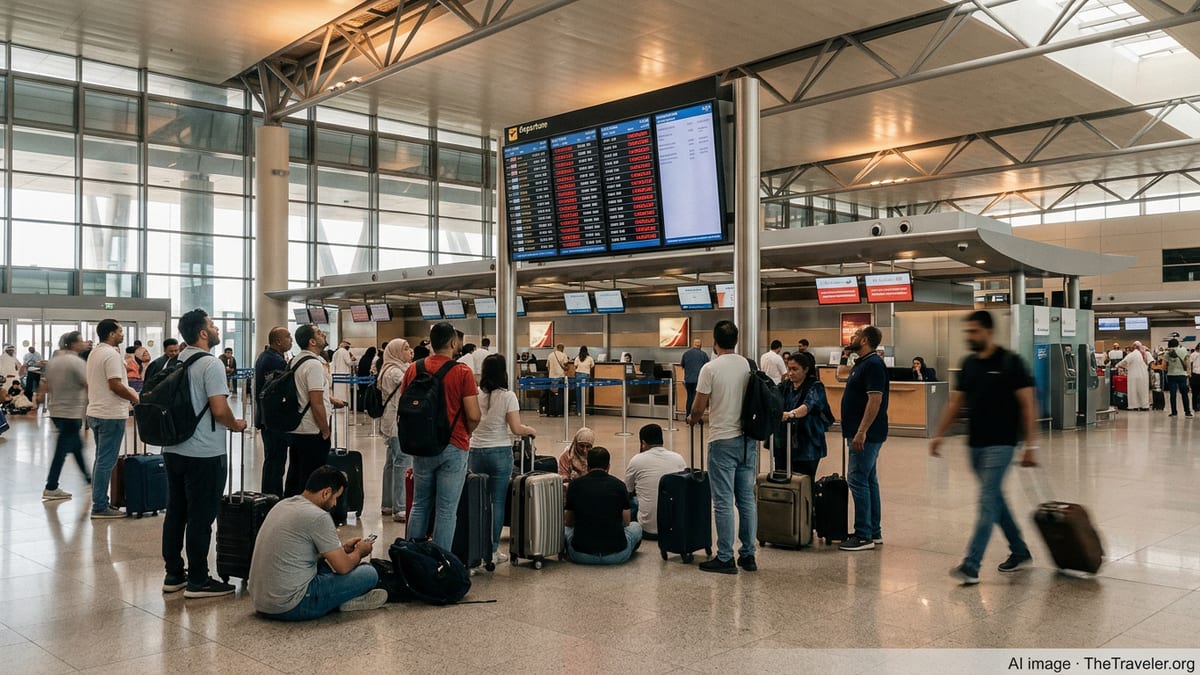
Wave of Cancellations Hits Key Regional Routes
Publicly available flight information shows that services linking Kuwait to key regional hubs in Qatar, Saudi Arabia, Egypt and Bahrain were sharply reduced as multiple Gulf carriers pulled departures with little advance notice. The 24 canceled flights, concentrated on routes to Doha, Jeddah, Cairo and Manama, disrupted travel plans for hundreds of passengers relying on Kuwait as a primary connection point.
Schedules tracked by aviation data platforms indicate that the cancellations affected both morning and evening peaks, eroding connectivity across some of the most heavily traveled short-haul corridors in the Gulf. Passengers reported abrupt status changes from “scheduled” to “canceled” within hours of departure, limiting options to rebook or reroute on the same day.
The move comes as the wider region continues to grapple with volatile airspace conditions and intermittent operational suspensions at major hubs, with Kuwait International already under pressure from prior disruptions. The latest reductions by five different airlines underline the extent to which network reliability across the Gulf remains fragile.
While airlines have not issued a unified explanation for the Kuwait-specific cancellations, their concentration on high-frequency regional links highlights a strategy of trimming short-haul services first when conditions tighten.
Regional Security Turbulence Deepens Gulf Aviation Strain
Recent weeks have seen a series of security-related disruptions across Gulf airspace, with reports indicating temporary closures, reroutings and wider regional flight suspensions linked to the ongoing 2026 Iran conflict. Kuwait’s main airport has already been subject to repeated operational interruptions as carriers adjusted routes to avoid affected air corridors.
Publicly available information from regional media and aviation trackers shows that airspace restrictions over multiple Gulf states have forced airlines to cancel or divert thousands of flights since late February. Kuwait, Qatar and neighboring countries have all experienced periods in which commercial traffic has been sharply reduced or halted, creating knock-on effects for transit passengers far beyond the Middle East.
In this environment, short regional sectors such as Kuwait to Doha, Jeddah, Cairo and Manama are particularly vulnerable. These flights typically operate at high frequency and rely on tight turnaround times and predictable routings. When airspace is constrained or military activity increases, these thinner-margin routes are often the first to be rationalized.
The latest cancellations at Kuwait International therefore reflect a broader pattern rather than an isolated incident. The airport’s role as both an origin and connection point has left it exposed to regional shocks, magnifying the impact of each new wave of schedule changes.
Passengers Face Confusion, Delays and Limited Alternatives
For travelers on the affected Kuwait routes, the immediate effect has been uncertainty and extended delays. Passenger reports on social channels describe long queues at airport service desks, limited information at departure boards and difficulties securing timely rebookings on remaining services.
With several Gulf carriers cutting or suspending Kuwait flights in recent weeks, options to switch to alternative airlines or nearby hubs have narrowed. Some passengers have turned to road links or secondary airports in neighboring countries, adding hours to journeys that would typically take less than an hour in the air. Others have opted to postpone trips entirely amid concerns that new bookings may also be disrupted at short notice.
Travel industry observers note that the combination of rolling airspace restrictions and staggered airline announcements has complicated planning for both leisure and business travelers. Many passengers are facing repeated itinerary changes as airlines revise schedules in short, incremental windows rather than issuing long-range cancellations.
The Kuwait disruptions also pose challenges for those with onward long-haul connections via Doha, Jeddah or Cairo. Missed regional feeders can cascade into multi-day delays for flights to Europe, Asia and Africa, particularly where hub carriers have already reduced frequencies because of the broader Gulf security environment.
Airlines Adjust Policies as Disruption Drags On
As cancellations multiply, Gulf carriers have gradually expanded their customer-service policies, with some offering broader options for refunds, rebooking and route changes on affected sectors. Publicly available airline advisories show that travel waivers now cover a widening set of departures across late February and March, though specific conditions vary by carrier.
Qatar Airways, Saudia and EgyptAir have each issued security-related updates over recent days and weeks, outlining flexible rebooking windows, fare difference waivers on certain routes and options to reroute around disrupted hubs. Gulf Air has also adjusted its schedules and customer guidance in response to the evolving situation, while Kuwait Airways has been updating its policies in stages as airspace restrictions persist.
However, passengers at Kuwait International report that policy details are not always clearly reflected in booking systems or at airport counters. Some travelers describe being advised to wait until their flight is formally canceled before accessing more flexible options, a practice that can prolong uncertainty and limit the ability to secure seats on remaining services.
Travel agents and frequent flyers caution that, in the current environment, itineraries relying on multiple Gulf connections carry elevated risk. They recommend building in longer connection times, avoiding tight same-day links and monitoring airline advisories closely in the days before departure.
What Travelers Through Kuwait Should Do Now
For passengers with upcoming trips involving Kuwait International Airport, publicly available guidance from airlines and aviation agencies suggests a cautious, closely monitored approach. Travelers are advised to check their booking status repeatedly in the 48 hours before departure, as many cancellations are being processed in short rolling windows tied to evolving airspace assessments.
Where possible, passengers are encouraged to register contact details with airlines and enable app notifications so that cancellation or rebooking options are received in real time. Given the concentration of cancellations on short regional legs, some travelers may find it prudent to consolidate itineraries onto a single carrier or consider alternative routings that avoid multiple Gulf connections.
Industry analysts expect that schedule instability at Kuwait International will continue as long as regional security conditions remain unpredictable. Even if airspace closures ease, it may take time for airlines to restore full frequencies to Doha, Jeddah, Cairo and Manama, particularly on routes where demand has softened or aircraft have been redeployed.
For now, Kuwait remains a flashpoint in a wider Gulf aviation disruption, with the latest wave of 24 cancellations by five major carriers underscoring how swiftly regional tensions can upend travel plans across some of the world’s busiest air corridors.