

More news on this day
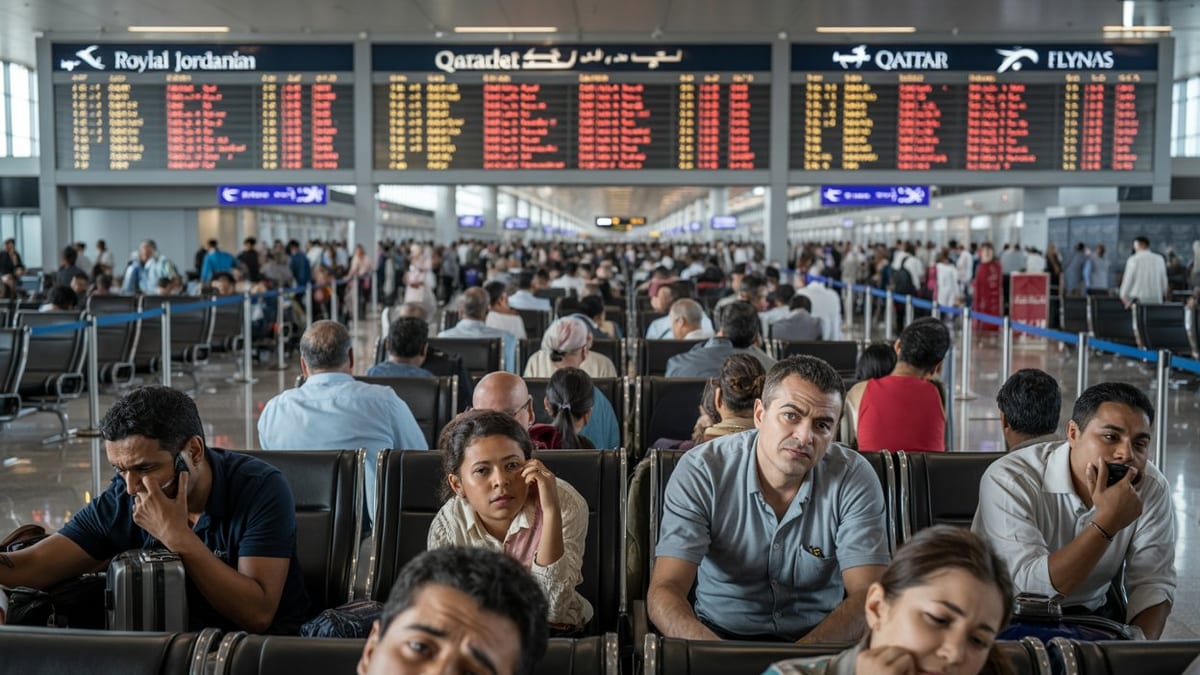
Passengers at Los Angeles International Airport on April 10 are facing mounting disruption as publicly available flight-tracking tallies indicate 69 delays and 10 cancellations affecting major carriers including Delta Air Lines, Lufthansa and United Airlines, snarling routes to San Francisco, Detroit, Honolulu, New York City and other key destinations.
Get the latest news straight to your inbox!
Major Carriers Hit by Concentrated Operational Strain
Open flight-status dashboards for Los Angeles International Airport on April 10 show a cluster of disruption across several large network carriers, with Delta Air Lines, Lufthansa, United Airlines and additional operators collectively accounting for dozens of delayed departures and a series of cancellations. The pattern is most visible on trunk routes connecting LAX with other major hubs, suggesting that relatively small schedule changes in Southern California are rippling through domestic and transpacific networks.
Flights to San Francisco, Detroit and New York City appear particularly affected, with multiple departures pushed back well beyond their scheduled times. On the West Coast, services linking LAX and San Francisco, one of the country’s busiest short-haul corridors, show rolling departure-time revisions that compress gate space and complicate aircraft rotations over the course of the day.
Honolulu connections are also seeing knock-on effects, as late-arriving aircraft from the mainland reduce the buffer built into turn times. For travelers headed to Hawaii, even moderate delays can cascade into missed hotel check-in windows, disrupted tour bookings and tighter flight connections onward to neighboring islands.
The delays and cancellations at LAX coincide with a broader period of strain in global aviation. Across the Atlantic, monitoring by travel and aviation outlets has highlighted several days of heavy disruption in European airspace in early April, underlining how quickly local operational issues can translate into wider schedule instability.
Lufthansa Strike Fallout Adds Pressure to Transatlantic Links
The turbulence at LAX comes as Lufthansa grapples with industrial action in its home market. A nationwide cabin-crew strike at the German carrier and its regional subsidiary Lufthansa CityLine, called for April 10, has already led to hundreds of cancellations across Europe and on long-haul routes, according to strike notices and aviation-focused reporting.
Travel-industry coverage indicates that Lufthansa has cut back or rerouted a portion of its US-facing schedule, with knock-on effects for codeshare partners and alliance members that rely on coordinated transatlantic operations. Where aircraft and crews are out of position, delays can extend far beyond the strike window, pulling additional flights into the disruption zone over subsequent days.
At LAX, that context matters for passengers booked on services that interline with Lufthansa in Europe or use the airline’s German hubs as onward gateways. Even when a specific Los Angeles flight is shown as operating, tighter connections in Frankfurt or Munich, and altered aircraft rotations, can translate into later departure times or last-minute aircraft swaps in California.
The industrial action also serves as a reminder that aviation reliability is shaped not only by weather and technology, but by labor dynamics. With summer schedules approaching, analysts across the travel sector are watching closely for signs that disputes at one major airline could encourage similar moves elsewhere, potentially adding another layer of uncertainty for long-haul travelers.
Domestic Networks Struggle to Absorb Delays
Within the United States, the LAX disruption highlights how sensitive large domestic networks remain to relatively small clusters of delays. Delta Air Lines and United Airlines, both running dense schedules into and out of Los Angeles, rely on tight aircraft utilization and complex hub banks in cities such as Atlanta, Detroit, San Francisco and New York.
When one leg in that chain runs late, subsequent flights can inherit the delay, particularly on high-frequency business routes. A late-morning push that slips by 45 minutes can compress afternoon departure waves, leaving less margin to recover from further minor glitches in ground handling, crew scheduling or air-traffic flow management.
Recent Air Travel Consumer Reports from the US Department of Transportation show that, even in periods without headline-grabbing meltdowns, major carriers regularly see significant tarmac and gate delays at hub airports. Those statistics underscore that what passengers experience at LAX today is part of a broader pattern in which on-time performance can deteriorate quickly when conditions are less than ideal.
For travelers on affected domestic routes from Los Angeles, practical consequences are immediate. Missed connections in San Francisco or Detroit can convert a short delay into an overnight stay, while late-arriving aircraft on transcontinental routes to New York squeeze already long travel days for business and leisure passengers alike.
Passenger Options and Rights in the US System
The disruption at LAX again raises questions about what passengers can expect when flights are delayed or canceled. Aviation-law summaries note that, unlike in the European Union, there is no single nationwide cash-compensation regime in the United States tied automatically to delay length. Instead, the level of assistance often depends on airline policies, the cause of the disruption and whether an itinerary is purely domestic or includes international legs.
Publicly available consumer guidance from the US Department of Transportation indicates that carriers are generally required to provide prompt refunds when a flight is canceled and a traveler chooses not to be rebooked, even for nonrefundable tickets. For delays, airlines may offer meal vouchers, hotel accommodations or alternative routing as a matter of customer service, particularly when operational or mechanical issues are within the carrier’s control.
Travel advocates frequently recommend that passengers document delay times carefully, monitor rebooking options via airline apps and request written confirmation of any promises made at the airport. In complex hubs such as LAX, being proactive can make the difference between securing a same-day alternative and waiting hours in a customer-service line only to find remaining seats are gone.
For those on itineraries involving Lufthansa or other foreign carriers, additional layers of regulation can apply. Flights that depart from the European Union or are operated by EU-based airlines may fall under European compensation rules in cases of long delay or cancellation, depending on the exact routing and cause of disruption.
What Travelers at LAX Can Do Right Now
With 69 delays and 10 cancellations shaping the day’s operations at Los Angeles International, travel specialists suggest that affected passengers focus on real-time information and flexibility. Airline and airport status boards, along with independent flight-tracking platforms, generally update faster than gate announcements and can reveal emerging patterns, such as a particular carrier’s departures consistently slipping behind schedule.
Same-day change options, including voluntary rebooking to earlier or later departures, may help some travelers avoid the worst of the congestion, especially on high-frequency routes between LAX and San Francisco or New York where multiple alternatives exist. In cases where cancellations are already confirmed, rebooking quickly is important, as remaining seats on later flights can disappear rapidly on busy Fridays.
Passengers with critical onward connections, such as international departures from another hub or time-sensitive events, may consider contacting their airline through multiple channels at once, including mobile apps and call centers, to increase the odds of securing favorable rerouting. For some, accepting a different connecting city or an overnight layover can ultimately result in a more predictable arrival than waiting on a heavily delayed nonstop.
As the day’s operations unfold, the situation at LAX illustrates how interconnected today’s aviation system has become. A strike in Germany, a series of late turns on US domestic routes and crowded hub schedules together create a fragile environment in which even a handful of cancellations and several dozen delays can reverberate far beyond a single airport’s terminals.